
Key Takeaways
- Real business insight drives Amazon PPC success. When ad decisions reflect margins, pricing, inventory, and product roles, results become easier to predict.
- Your setup must match how your business runs. Strong PPC in amazon starts with bids based on profit, scaling based on stock, and keywords based on where products are in their lifecycle.
- Better alignment leads to Amazon advertising success. When teams share data on stock, pricing, and creatives, ads waste less money and perform more consistently.
- Planning ahead supports Amazon ad business growth. Cash flow, lead times, and demand patterns help decide when to push harder and when to slow down.
- The right partner accelerates Amazon business success. A team that understands your operations builds systems that scale safely and avoid costly mistakes.
Most brands try to grow ads with surface-level changes. They adjust bids, test keywords, or tweak ads. These steps only work when they sit on top of strong business understanding. Real PPC in Amazon growth comes from knowing your margins, stock limits, pricing position, product stage, and how your catalog really makes money.
If your team doesn’t understand these basics, Amazon PPC success will stay unstable and expensive. Results will swing, costs will rise, and it will be hard to predict what happens next.
This guide shows why business insight drives Amazon advertising success and how aligning ads with real business signals helps you make smarter, more confident decisions.
Amazon PPC Only Works When It Reflects Your Core Business Model
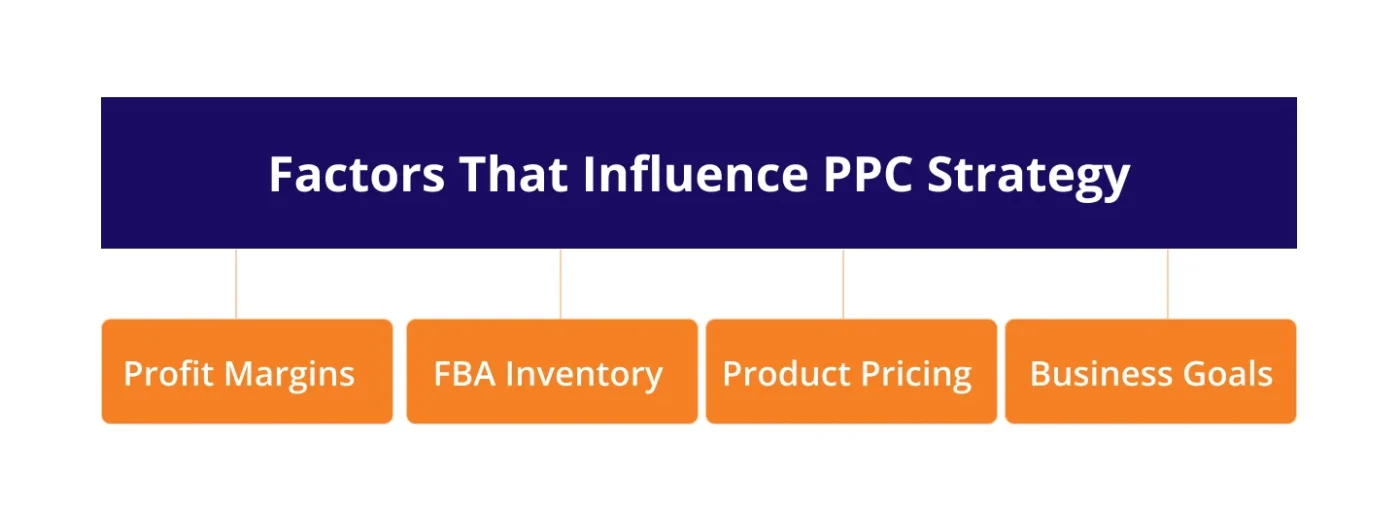
You can’t separate Amazon PPC from how your business actually runs. Every campaign choice connects to your margins, stock, pricing, and goals. When your Amazon PPC team works alone, they chase numbers that don’t support what the business really needs.
Your ACOS targets, budgets, keywords, and scaling plans all depend on your unit costs. When those basics are ignored, money gets wasted, rankings weaken, and results swing. Amazon ad business growth only happens when ads support real profit, not vanity numbers.
To win, you need a setup built around your financial reality. That’s what brings predictability and protects long-term Amazon business success.
Your Margin Drives Bids and Scaling
Your margin is the base of your Amazon PPC strategy. If you don’t know your real profit per sale, it’s impossible to set the right bids or decide how fast to grow. Many sellers focus only on ACOS and ignore how much profit they can safely invest in ranking. That’s why Amazon PPC success often stays unstable.
Contribution Margin Sets Your Bid Ceilings and Scale Potential
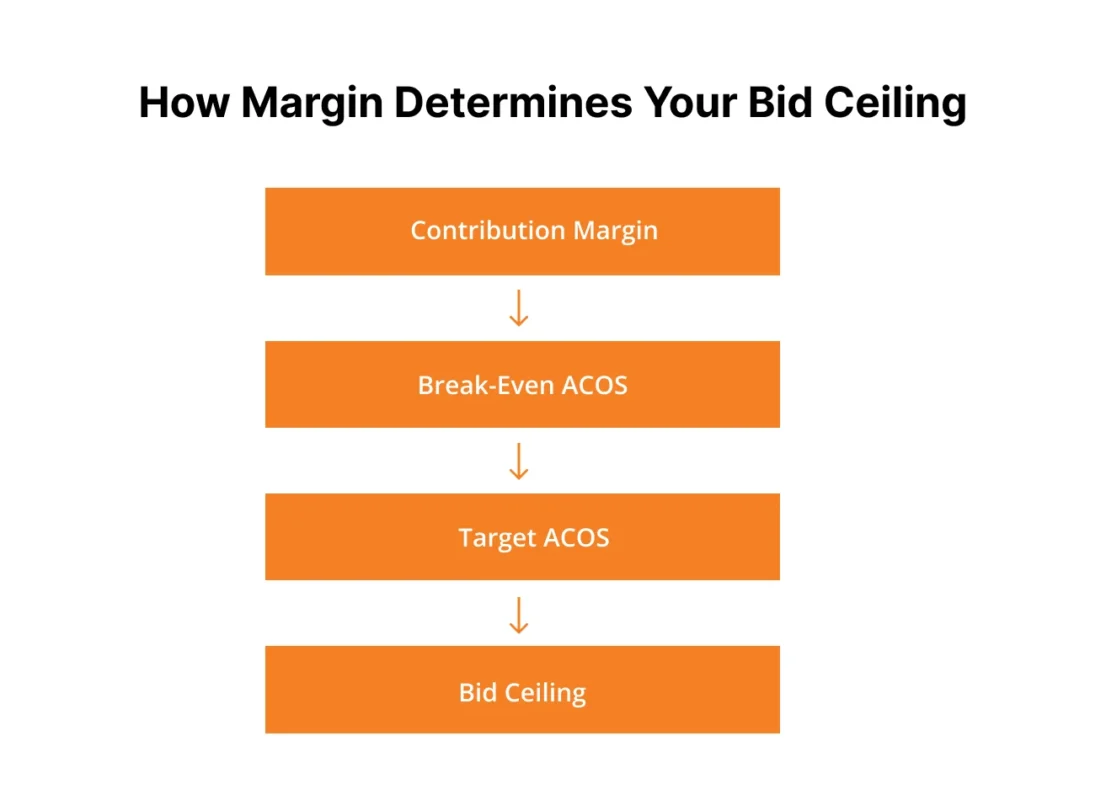
You have a clear limit on how much you can spend to win a sale, and that limit changes by product. A strong team running ads on Amazon needs to work out your break-even point and what ACOS you can afford based on real profit. These numbers guide whether you push for ranking or slow down to protect margins.
Bids set without profit in mind lead to unstable results. Bids guided by margin create steady growth you can control.
TACOS Efficiency Depends on Margin Reinvestment Ability
TACOS improves when your organic visibility grows. Organic visibility grows when you put profit back into ads. If margins are weak, you can’t reinvest much. If margins are strong, you can scale faster. That’s how Amazon advertising business growth really happens.
Your margin sets your TACOS limit, your ranking potential, and how steady your results can be. That’s why business knowledge must guide your campaign choices if you want long-term Amazon PPC success.
Inventory Realities Must Shape Your PPC Plan
FBA inventory management is one of the strongest signals for ad decisions. If your team doesn’t have a clear view of stock levels, they can’t make safe choices. Ignoring this puts Amazon PPC success at risk because spend may rise when products can’t support demand.
Amazon PPC Strategy Must Change With Stock Levels
Your inventory position should guide how you use your budget in Amazon for business setups.
- Overstock means spending more to move products faster.
- Healthy stock lets you balance ranking and profit
- Low stock means bidding carefully so you don’t sell out too soon.
If this isn’t followed, you either waste money or lose ranking momentum that supports Amazon PPC success.
Signal Consistency Dies Without Inventory Awareness
When stock runs out, signals reset. Rankings drop. Conversion history weakens. The cost to rebuild visibility rises. No ad change can fix poor inventory planning. Business-aware decisions are critical to protect Amazon PPC success and keep performance stable.
Pricing Strategy Shapes Conversion and Ad Efficiency
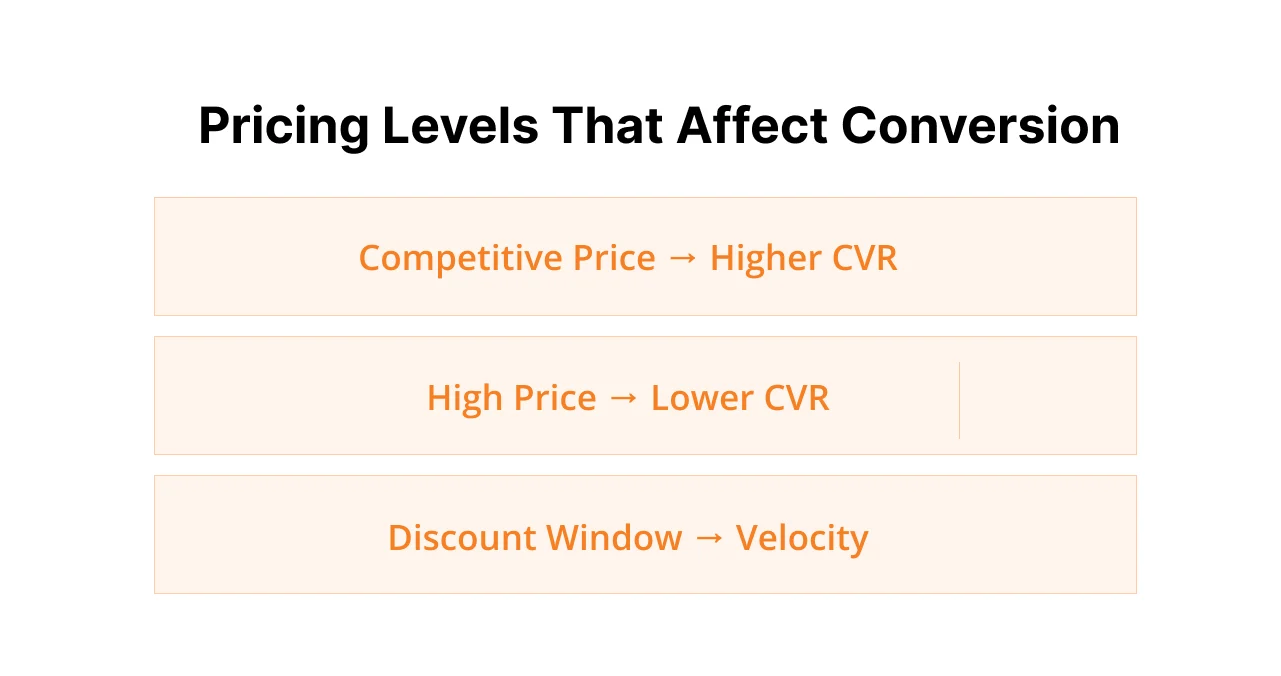
Your price isn’t just an ad setting. It’s a business decision that controls how well your ads convert. When your price is too high for your category, fewer clicks turn into sales, CPC rises, and Amazon PPC success becomes harder to achieve.
When your price is competitive, more shoppers buy. Conversion improves, cost per sale drops, and your Amazon advertising success grows because spend is working with demand instead of against it.
Price Positioning Sets Your Expected Conversion Rate
Shoppers on Amazon compare your price with similar products in the category. If your price doesn’t match the value you show, fewer people buy and your cost per customer goes up. Your ad results depend on how strong your value looks for the price you charge, and this plays a big role in long-term Amazon PPC success.
A strong Amazon PPC team reviews the pricing signals that influence conversion, including:
- Price gaps within your category
- Competitor discount patterns during peak and off-peak periods
- Historical conversion reactions to price changes
- Price elasticity or how sensitive shoppers are to your price point
These insights help you understand how aggressive you can be with bidding and how much investment your pricing position can support. Without this Amazon PPC pricing context, campaign decisions often become expensive and inconsistent.
Profit vs Revenue Priorities Change Campaign Structure
Your pricing window changes what Amazon PPC campaign should aim for. During launch, you push for speed even if margins are lower. During growth, you balance scale with profit. During clearance, you lower bids but widen reach to move volume.
Your campaign setup must match the business goal behind each pricing phase so ads support the result you actually want.
Product Stage Sets the Right Amazon PPC Approach
Every product is at a different stage in its life. Your ads need to match that stage, or results start working against each other. When ads align with where a product stands, it creates steady progress and supports long-term Amazon PPC success.
Amazon PPC Must Match Where the Product Is in Its Business Stage
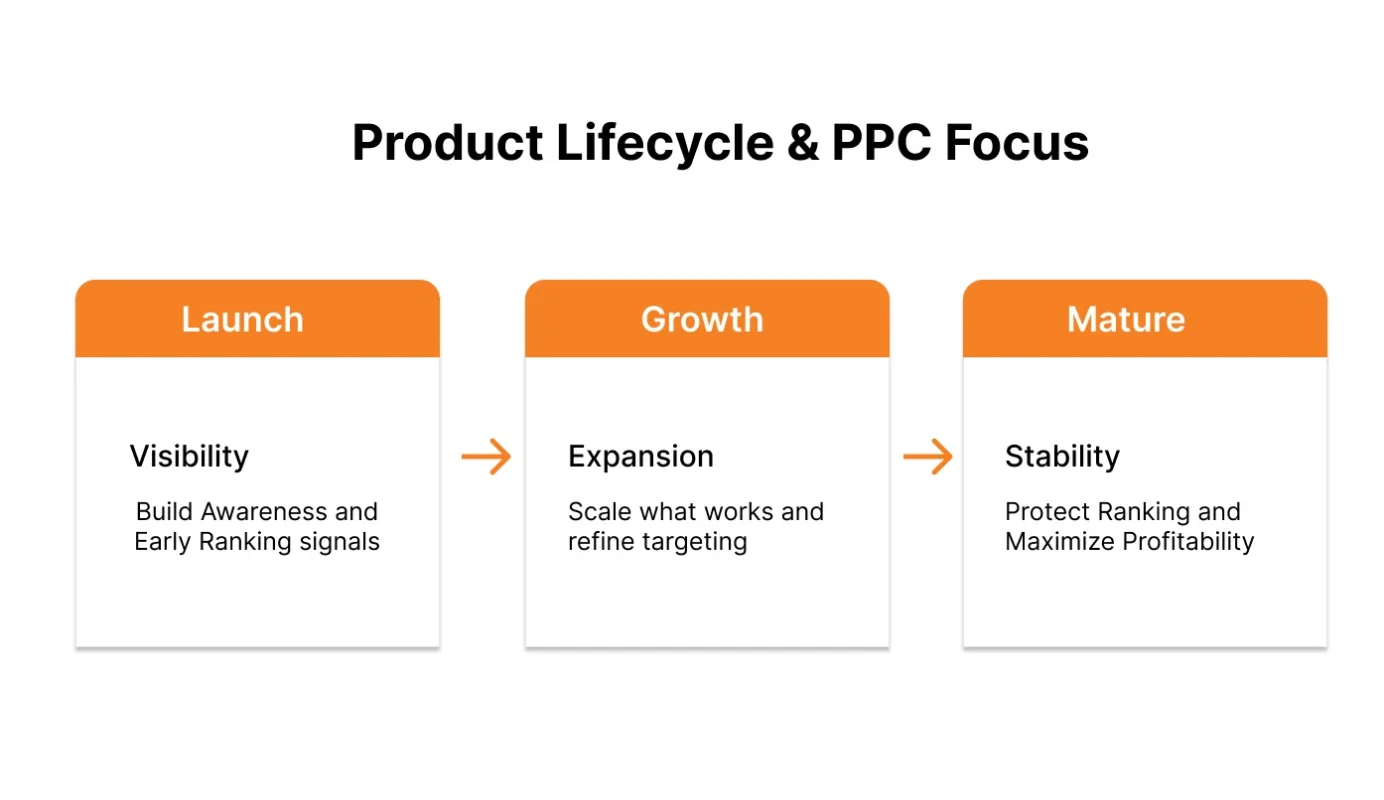
Your Amazon PPC advertising approach has to match the stage your product is in. A new product needs steady traffic and wide keyword coverage. The goal is to build an early ranking. Amazon needs enough signals to understand where your product belongs.
A growing product needs careful expansion. You move into new terms, tighten targeting, and improve efficiency based on what already works.
A mature product needs stability and strong profit. You protect ranking with steady visibility and avoid big tests that cause swings.
Your product stage decides which keywords matter, how much budget to use, and how predictable results should be. When this is ignored, advertising becomes expensive and confusing, and Amazon PPC success becomes harder to achieve.
Getting the Stage Wrong Wastes Spend
Ignoring lifecycle stages creates costly mistakes. If you hold a new product to mature ACOS targets, you restrict visibility and stall ranking. If you push launch-level budgets onto a mature SKU, you create margin loss and unnecessary volatility. Lifecycle is a real business constraint. Your Amazon PPC must follow it to achieve the right balance between ranking, efficiency, and profitability.
Catalog Economics Guide Budget and ASIN Priorities
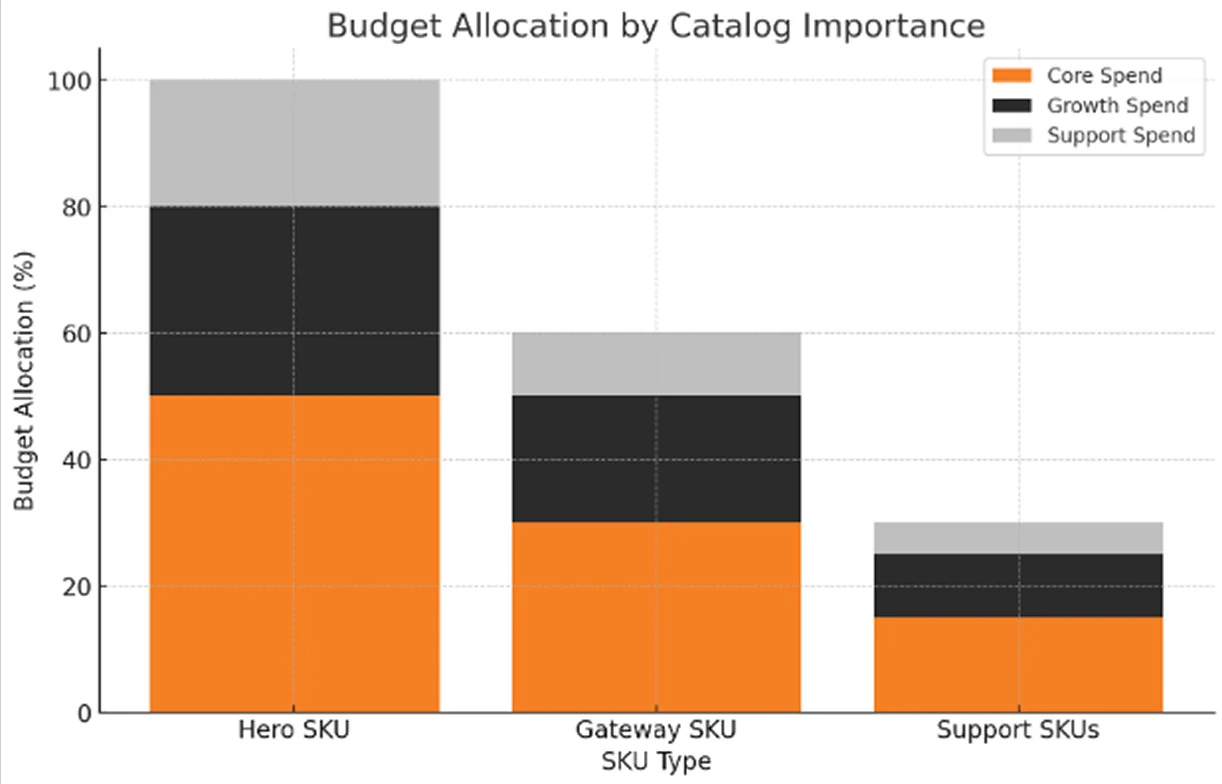
Your catalog isn’t just a list of products. It’s a system where each ASIN plays a role. Some bring traffic, some bring profit, and some help shoppers discover your brand. Your budget needs to follow these roles, not be spread evenly. That’s how you protect performance and build Amazon PPC success.
Parent–Child Structure Shapes Where Revenue Comes From
Your hero variation often drives most of your profit. Your weaker variations may exist to increase choice, not drive revenue.
Your Amazon PPC team must know:
- Which variations deserve aggressive visibility
- Which variations carry review strength
- Which variations should not receive spend
Without this understanding, ad money gets wasted and performance suffers. This clarity is key for long-term Amazon PPC success.
SKU Relationships Decide How Much to Invest
Some products lift the whole brand. Some compete with each other. Some introduce new shoppers to your category.
Your Amazon PPC setup must match these roles. When it doesn’t, campaigns end up fighting instead of supporting each other, and spend loses focus.
Creative Results Depend on Real Product Strengths
Your ad results depend on what truly makes your product better. Copying generic claims rarely works. Only real business insight shows why shoppers should choose you over others.
CTR and CVR Improve When Creative Shows Real Value
The brand’s creative performance depends on how clearly you communicate what makes your product worth choosing. Shoppers compare products fast, and they rely heavily on visuals and infographics to understand product’s value.
For Amazon PPC to work, you optimize product listing to express three things with absolute clarity:
- Your unique value: What you offer that competitors cannot.
- Your category-specific benefits: What shoppers expect in your niche and how you deliver them.
- Your competitive edge: Why your offer is stronger, safer, simpler, or more reliable.
When your images, bullets, and videos reflect these real value drivers, two things happen immediately:
- Your CTR increases because shoppers see relevance and quality at a glance.
- Your CVR rises because the benefits match their expectations and solve their specific problem.
Weak creative forces Amazon PPC campaign to work harder and spend more to convert traffic. Strong creative amplifies every dollar you spend because it aligns with real shopper intent and communicates your offer with precision.
AI Creative Still Needs Human Business Insight
AI can help you create many ad versions fast, but more versions don’t mean better strategy. AI can change layouts and messages, but it can’t know what truly sets your product apart. Only you understand your market, your shoppers, and the real reasons your product wins.
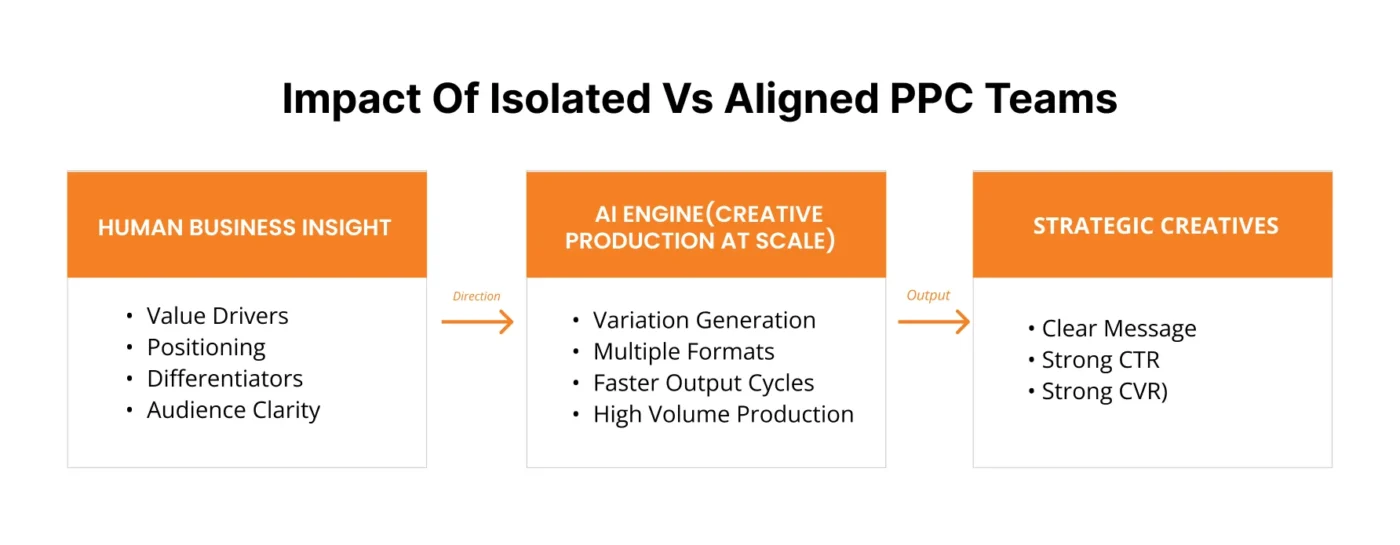
Your business insight must define:
- Your positioning
- Your differentiators
- Your category promises
- Your core value message
AI then amplifies these inputs by producing creative options faster than manual workflows. When AI works with a strong business direction, your creativity becomes sharper and more consistent. When AI works without guidance, the results become generic, mismatched, and unfocused.
Business-Led Forecasting Protects Budget, Margin, and Ranking
Business-led forecasting keeps your Amazon PPC spend tied to what your business can really support. It helps protect profit, ranking, and builds steady Amazon PPC success instead of reacting to daily swings.
Forecasting becomes powerful when it uses real business inputs.
Forecasting Must Include Business Variables, Not Just Seasonality
Most brands only look at seasonality when forecasting PPC on Amazon. That leads to shallow plans and quick reactions. Teams focused on Amazon PPC success use deeper business signals, because these decide how much you should spend, not just how much you want to spend.
You must forecast and report Amazon PPC performance using:
- Cashflow cycles: How much budget is available for Amazon business ads in each period.
- Production lead times: How long it takes to manufacture and restock after scaling.
- Inventory arrival windows: When replenishment lands and how much buffer exists.
- Margin shifts: How profitability changes across months or phases.
- Competitor pricing behavior: How aggressive competitors become in peak periods.
These signals tell you the right timing for Amazon ad business growth. They decide:
- When to push harder because you have stock and profit room.
- When to stay steady because you must protect margin.
- When to hold because scaling will cause inventory risk.
Forecasting only works when it reflects real business conditions, not just search trends. That’s how you align ads with Amazon advertising business growth instead of reacting to traffic alone.
Forecasting Helps Avoid Overspend and Under-Investment
Forecasting protects you from emotional decisions. It shows when scaling is safe and when it becomes risky for your Amazon for business setup.
If demand rises and you have inventory, margin room, and cash ready, you should increase spend to capture growth. This prevents missed opportunities in Amazon PPC and supports stronger ad performance.
If demand slows and stock is tight or margins shrink, you should ease back. This avoids waste, protects profit, and prevents ranking drops that hurt long-term results.
Forecasting lets you plan Amazon business ads around how your business really operates, not just what dashboards show today. With a business-led forecast in place, your Amazon PPC becomes predictable, controlled, and aligned with sustainable growth.
What a Business-Focused PPC Partner Really Does
A strong Amazon PPC partner doesn’t start with campaigns, bids, or keywords. They start with your business. They learn your margins, your stock flow, your product priorities, and your pricing before touching your ad account. This approach builds systems that fit your real limits and goals, which is why it leads to steady Amazon PPC success instead of short-term wins.
Turns Your Business Model Into Keywords, Bids, and Budgets
Your business model becomes the base for your Amazon PPC setup. Your goals decide which keywords matter and how your funnel should look. Your profit limits guide how high bids can go, so you don’t scale past what you can afford. Your product roles decide how budgets are spread across SKUs. A smart partner uses these inputs to shape your Amazon PPC success around how your business actually works, not a generic template.
Builds Plans Around Real Limits and Real Chances
Your business changes over time, and your ads need to change with it. A strong partner watches the signals that matter, like stock levels, margin shifts, demand patterns, and pricing windows. These decide when to push, when to protect, and when to hold steady. Instead of reacting only to charts, they adjust based on what your business can handle. This protects profit during risk periods and supports Amazon PPC success when growth is possible.
Protects Ranking With Steady Signals
Ranking depends on consistent signals. When Amazon PPC matches business reality, those signals stay clean. You scale only when stock allows it. You hold visibility when margins support it. You protect ranking when price or supply shifts. This creates steady momentum and makes positions easier to grow and defend. A business-focused partner keeps your ads stable enough to climb and strong enough to hold what you earn, supporting long-term Amazon business success.
Final Takeaway
Effective Amazon PPC depends on business insight, not tactics. Margins, inventory, pricing, and lifecycle data shape every decision and determine how predictable your results can be. When your Amazon PPC follows these signals, you scale with control. When it does not, performance becomes unstable and costly.
Your next step is to assess whether your current Amazon PPC structure reflects your real business conditions. If it does not, you may be leaving growth and efficiency on the table.
AMZDUDES offers Amazon PPC services that drive consistent and profitable performance. If you want a partner who understands your numbers and aligns with your goals, our team is ready to help.Book a free consultation with us today.