

Key Takeaways
- Amazon algorithm evolution: Amazon’s ranking system has evolved from the A9 algorithm to the A10 algorithm.
- A10 prioritizes customer-focused signals: The A10 algorithm evaluates how well listings match shopper intent, how customers interact with listings, and whether sellers drive quality traffic and maintain strong account performance.
- 6 factors affecting A10 algorithm: Buyer intent and relevance, external traffic, seller authority, click-through rate (CTR), sales rate, and conversion rate determine ranking.
- Amazon A9 vs A10 algorithm: A9 focused on keyword matching, internal metrics, PPC influence, and sales velocity, while A10 emphasizes search intent, external traffic, organic sales, customer engagement, and seller authority.
- 4 strategies to optimize for A10 algorithm: Drive external traffic, optimize listings for engagement, build strong seller authority, and focus on organic sales to position your listing for higher ranking.
Amazon has continuously evolved its search algorithms over time. Initially, the platform relied on the A9 algorithm, which has now evolved to the A10 algorithm. This shift represents a significant change in how products are ranked on Amazon.
For many sellers wondering why their Amazon listing isn’t ranking the way it used to, understanding the Amazon A9 vs A10 algorithm shift may explain the change.
The Amazon ranking algorithm has changed, and strategies that once worked may no longer deliver the same results. Sellers now need to focus their efforts in the right direction to stay competitive. In practice, this begins with understanding how Amazon’s ranking algorithm works.
In this blog, we’ll explain Amazon’s ranking system, break down the differences between the Amazon A9 vs A10 algorithm, and explore the tactics for Amazon product listing optimization to rank higher.
How Amazon Algorithm Works?
Amazon operates as a product search engine designed to connect shoppers with the most relevant products they are likely to purchase. When a customer enters a query in the search bar, Amazon’s algorithm analyzes thousands of listings and ranks them based on specific signals to determine which products appear first in the search results.
These signals can be different as per the algorithm, but the core objective of Amazon’s algorithm is to increase the likelihood of purchase.
What Is the Amazon A10 Algorithm?
The Amazon A10 search algorithm is the company’s newest version. It is an evolution of the A9 ranking system designed specifically to improve search accuracy and deliver better shopping experiences for customers.
The A10 algorithm focuses heavily on aligning search results with what customers are searching for and how well products meet those needs. Amazon A10 algorithm takes a deeper dive into the customer journey. It’s no longer just about keywords and sales. A10 prioritizes buyer intent and product relevance. Now, Amazon is looking at things like how customers engage with your product page, whether your product is driving external traffic, and even how trustworthy you are as a seller.
6 Key Factors Affecting A10 Algorithm
The A10 algorithm works by analyzing several key factors that directly impact your product’s ranking in search results:
1. Buyer Intent and Relevance
A10 places significant emphasis on understanding what buyers are searching for and providing them with the most relevant products. Amazon first evaluates whether a listing matches the search query through keyword placement in the listing, which is a key part of Amazon SEO and listing optimization to rank higher. The products that align with specific search terms and user behavior are more likely to rank higher and attract relevant shoppers.
2. External Traffic
A10 now values external traffic more than previous versions of Amazon’s ranking system because it signals strong product demand coming from outside the marketplace. Traffic coming from sources such as Google search, social media platforms, influencer marketing, blogs, and email campaigns can positively impact organic ranking.
3. Seller Authority and Account Performance
A seller’s authority plays a crucial role in the A10 algorithm. Amazon also evaluates account performance level metrics, including low return rate, effective Amazon inventory management, and shipping performance. Sellers who consistently deliver positive customer experiences are positioned for a higher ranking on Amazon.
4. Click-Through Rate (CTR)
Click-through rate (CTR) measures how often shoppers click on a product after seeing it in search results. A high CTR indicates that your product is appealing and relevant to shoppers. Amazon gives preference to such listings, which positively influences your ranking.
5. Sales Rate
Amazon prioritizes products that consistently generate sales without heavily relying on promotions or ads, as this indicates a strong customer demand. Listings with higher sales rank higher on search results because they demonstrate proven market performance.
6. Conversion Rate
The A10 algorithm goes beyond just clicks and tracks how often these clicks result in a purchase. A higher conversion rate signals that your product not only attracts interest but also meets customer expectations, resulting in a higher ranking.
Amazon A9 vs A10 Algorithm Key Differences
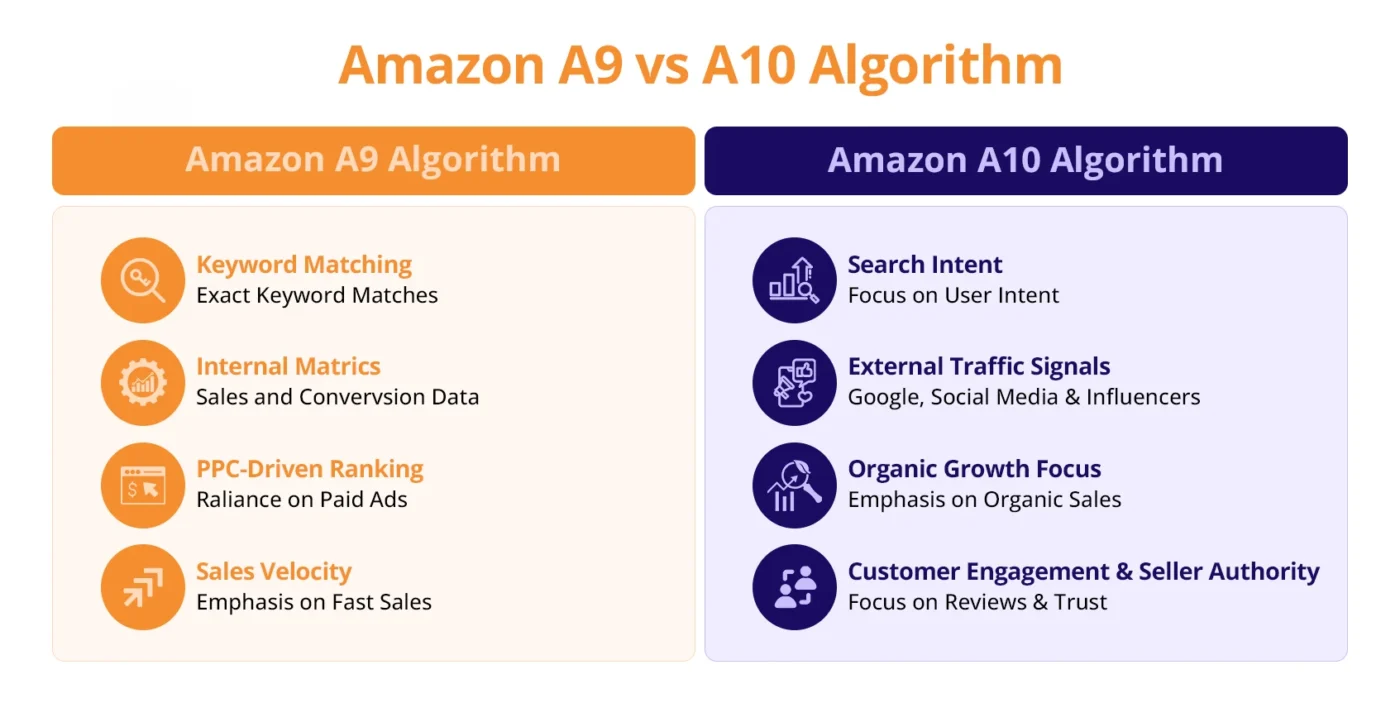
Now that you know what A10 is all about, let’s explore the Amazon A9 vs A10 algorithm differences.
1. Keyword Matching vs Search Intent
The old algorithm relied on exact keyword matches to determine whether a product listing should appear for a specific search query. If your product listing missed the exact search terms, you were left far below in ranking.
Now the current A10 algorithm emphasizes overall search intent. It still evaluates keywords but also considers how well the entire listing content aligns with what the shopper is actually looking for.
2. Internal Metrics vs External Traffic Signals
The A9 algorithm mainly relied on internal marketplace metrics to determine ranking. Factors such as sales velocity, conversion, and pricing were evaluated for ranking. While these factors remain important, the A10 algorithm expands its evaluation by also considering external traffic.
Now, Amazon cares about how much your listings attract high quality traffic from outside Amazon with sources like Google search, social media campaigns, influencer promotions, and many more.
3. PPC-Driven Ranking vs Balanced Organic Growth
With the A9 algorithm, Amazon PPC campaigns often played a major role in improving product visibility and sales velocity. PPC campaigns often guaranteed higher rankings, even if your organic sales weren’t great.
While paid ads are still relevant, they are not the deciding factor as A10 focuses more on organic sales. It demands that sellers focus on sustainable growth rather than heavily relying on ads.
4. Sales Velocity vs Customer Engagement & Seller Authority
A9 strongly prioritized sales velocity, rewarding listings that generated frequent purchases. If your product sold well, you ranked higher. It’s as simple as that. While sales performance remains an important factor, A10 also considers how customers interact with your listing. Are they clicking? Watching your product video? Spending time reading the details? A10 also evaluates seller authority by looking at your history, feedback, and how well you handle customers.
The biggest difference between A9 and A10 is the addition of external signals and increased focus on seller authority, relevance, and organic growth. The differences are considerable, and understanding them can help you adjust your strategy to be favored by new rules.
How to Optimize for Amazon’s A10 Algorithm in 2026
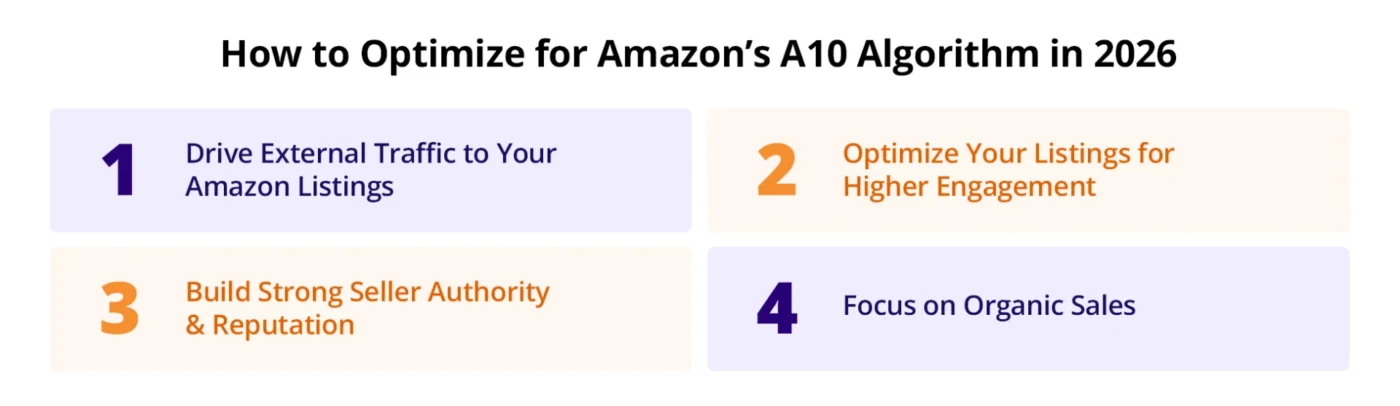
Amazon is more competitive than ever, and understanding the Amazon A9 vs A10 algorithm helps sellers adapt their strategies to rank higher in search results. Here’s how you can optimize your strategy for better ranking.
1. Drive External Traffic to Your Amazon Listings
Amazon now prioritizes products that bring traffic from outside its platform. Driving external traffic to your Amazon listing signals to Amazon that your product is in demand. To stay competitive, sellers should utilize social media marketing or partner with influencers to direct traffic from other platforms to their Amazon listing.
2. Optimize Your Listings for Higher Engagement
Amazon favors listings that keep shoppers engaged. As a seller, you can improve your product detail page by optimizing amazon product listing titles to attract shoppers with relevant keywords. Focus on creating descriptions that genuinely address customer needs and include secondary keywords naturally. Along with that, using A+ content and videos can provide an engaging shopping experience.
3. Build Strong Seller Authority & Reputation
Build your reputation as a trustworthy seller. To improve your seller authority, you should maintain high feedback scores while keeping the order defect rates low. Encourage more reviews, as 96% of shoppers read reviews before purchasing. You can send follow ups that remind buyers to provide feedback. Provide excellent service and customer support to maintain a strong seller rating.
4. Focus on Organic Sales
Focus on generating sales without heavily relying on advertising campaigns. Build customer trust with your services for repeat purchases. You can also offer discounts and use a subscribe-and-save option to encourage repeat purchases.
Conclusion
Success on Amazon begins with understanding how the platform’s ranking system works. When sellers know the factors that influence the Amazon algorithm, they can implement strategies that improve rankings.
With this guide, you now have a clearer understanding of the Amazon A9 vs A10 algorithm and how Amazon’s ranking system has evolved.
You are now ready to adapt and thrive in the A10 era with our strategies. Implement these strategies right away and watch the difference in your ranking.
If you need help optimizing your Amazon business strategy to accommodate the A10 algorithm, we are here. Get in touch with us to get Amazon SEO services from our Amazon specialists.
Book a free consultation call now.
Frequently Asked Questions
What is the Amazon A10 algorithm?
The Amazon A10 algorithm is considered an evolution of the A9 system that places greater emphasis on customer experience and organic growth signals. In addition to keywords and sales performance, A10 also evaluates factors like external traffic, seller authority, and customer engagement.
How can sellers optimize their listings for the Amazon A10 algorithm?
To optimize for the A10 algorithm, sellers should focus on keyword-optimized listings, high-quality product images, and compelling descriptions that match customer search intent. Improving engagement metrics like click-through rate and conversion rate can also strengthen rankings.
What is the difference between the Amazon A9 vs A10 algorithms?
The Amazon A9 vs A10 algorithm difference mainly lies in how Amazon evaluates product rankings in search results. The A9 algorithm primarily focused on keyword relevance, sales velocity, pricing, and PPC-driven performance to determine which listings should appear higher in search results.
The A10 algorithm expands on this by placing greater emphasis on buyer intent, external traffic, seller authority, and customer engagement.
Why is external traffic important for Amazon rankings?
External traffic indicates that a product has demand beyond Amazon’s marketplace. When visitors arrive from sources such as Google, social media platforms, or blogs and convert into customers, Amazon interprets this as a positive ranking signal.
Does Amazon still use the A9 algorithm?
Amazon has not officially confirmed replacing the A9 algorithm, but many experts believe it has evolved into what is commonly referred to as the A10 algorithm. This newer version reflects changes in how Amazon evaluates ranking signals such as external traffic, seller authority, and customer engagement.