
Key Takeaways
- Structure Prevents Crisis: Effective operation management stops “micro-errors”, like small listing tweaks or inventory lags, from compounding into major account health threats.
- Sync Listings, Inventory, and Ads: Disconnected departments lead to risk. Ensuring your advertising pauses when a listing is under review or low on stock protects both your budget and your account standing.
- Adopt a “High-Risk” Protocol: Not all products are equal. Establishing a stricter review process for sensitive categories or high-volume SKUs prevents accidental policy violations where they matter most.
- Habitual Compliance Over Emergency Fixes: Consistency is your best defense. Daily alert monitoring and pre-emptive document organization turn compliance into a routine habit rather than a stressful reaction to a warning.
- Operational Control Enables Scale: As your business grows, internal visibility often declines. Implementing structured operation services ensures that your quality control and account safety keep pace with your sales volume.
As an Amazon business grows, daily work increases quickly. More products, more inventory movement, more ads, and more changes made every week. Most sellers focus on sales and spend, but very few stop to control how everyday actions affect account safety.
This is where Amazon operation management becomes important. It is simply the process of controlling daily Amazon work so mistakes do not turn into serious problems. When operations are handled casually, risk builds quietly. When operations are structured, issues show up early and stay manageable.
This guide explains what Amazon operation management really involves, where sellers usually lose control, and how simple risk management habits protect accounts over time.
What Amazon Operation Management Actually Controls
Amazon operation management covers the actions that directly affect how Amazon views your account. These actions may seem routine, but together they decide whether your account feels reliable or risky to the platform.
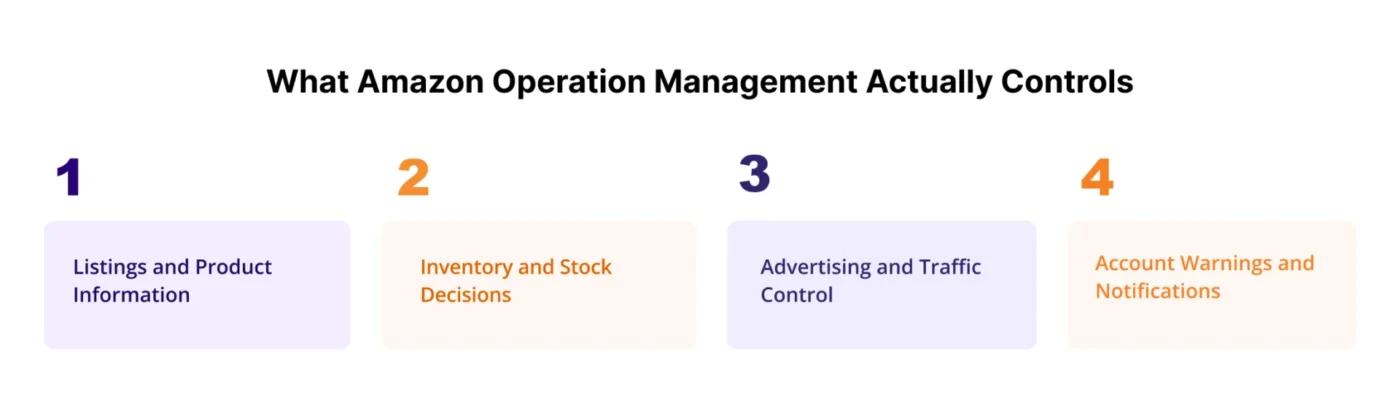
1. Listings and Product Information
Every change made to a product listing can affect account safety, even if the change looks small. Titles, bullet points, images, backend keywords, and variations are all checked by Amazon systems. Sellers often update listings to improve clicks or conversions, but when changes are made too often, wording becomes stronger, claims shift, or images are replaced without checking rules. Over time, these small edits add up and increase the chance of a listing getting flagged or suppressed.
To reduce this risk:
- Keep a simple record of major listing updates so you know what changed and when
- Review any edit that adds claims, benefits, or comparisons before it goes live
- Avoid frequent changes on listings that are already stable and performing well
2. Inventory and Stock Decisions
Inventory problems are one of the most common causes of account trouble, but they are often ignored until damage is done. Stockouts lead to order cancellations. Overstocking leads to stranded inventory. Data mismatches between invoices, quantities, and sales raise trust issues.
Most inventory risk does not come from bad intent. It comes from reordering based on guesses instead of real sales data. When inventory decisions drift away from reality, account performance starts to suffer.
A simple way to stay in control is to review inventory management weekly against actual sales speed, avoid sudden large restocks without checking sell-through, and fix quantity mismatches early instead of letting them pile up.
3. Advertising and Traffic Control
Advertising sends traffic to listings faster than almost anything else. This is helpful only when listings are clean and stable. Many sellers keep ads running even when a product is suppressed, outdated, or under review. This increases attention on listings that already have issues and raises enforcement risk.
To keep control, ads should always follow the condition of the listing. Amazon advertising should be paused when a listing shows warnings or suppressions, ad text should match exactly what is written on the product page without adding extra promises, and campaigns should be reviewed whenever listings are updated so ads never push traffic to unchecked content.
4. Account Warnings and Notifications
Amazon usually gives signals before taking serious action. These signals appear as warnings, notifications, or performance alerts. The problem is not that sellers do not receive them, it is that they are noticed late or ignored because sales are still coming in.
A simple habit makes a big difference: check notifications daily and keep a basic log of warnings, even if they are resolved quickly. When the same type of warning appears more than once, it is no longer a small issue. It is a pattern.
Where Amazon Operations Commonly Break Down
Most enforcement problems do not happen suddenly. They grow from repeated operational mistakes. Here is a simple view of where things usually fail:
| Common Issue | What Usually Causes It | Why It Becomes Risky |
| Listing suppression | Frequent unreviewed edits | Recovery options reduce over time |
| Performance warnings | Stockouts or cancellations | Signals unreliability |
| Policy violations | Strong claims or images | Automated checks flag patterns |
| Account reviews | Data mismatches | Trust in seller declines |
These problems are rarely caused by one big mistake. They come from small issues that are not tracked or corrected early.
5 Practical Amazon Risk Management Strategies for Stable Accounts
Strong Amazon risk management does not come from reacting faster after problems appear. It comes from reducing the chances of those problems happening in the first place. Stable accounts are built by controlling how daily work is done, especially in areas that Amazon reviews more closely.
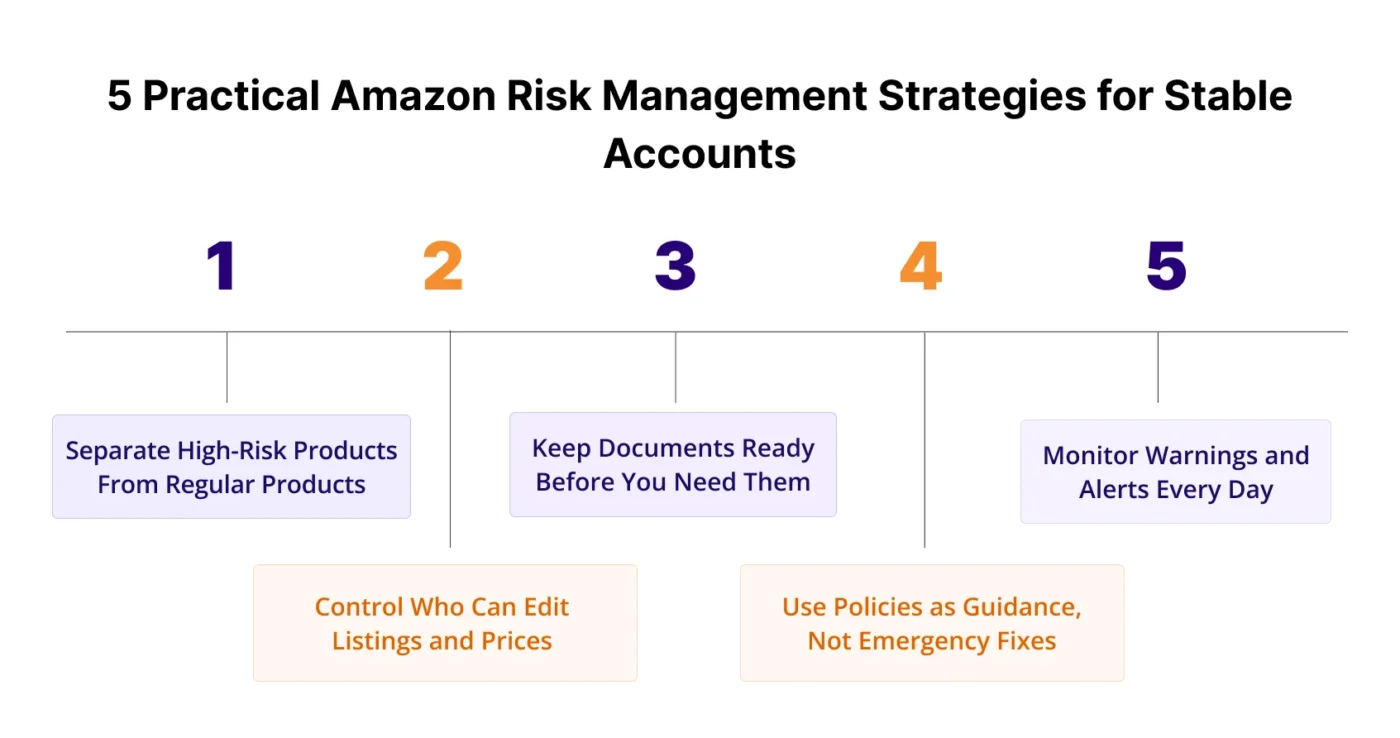
The strategies below focus on the most common causes of account issues and explain how sellers can control them using simple, repeatable habits.
1. Separate High-Risk Products From Regular Products
Not all products are treated equally by Amazon. Some categories, claims, and product types are reviewed more strictly because they carry higher customer or platform risk. Examples include products with health claims, regulated categories, branded items, or listings that rely heavily on benefits and comparisons.
The mistake many sellers make is handling all products the same way. High-risk products get edited just as often as low-risk ones, sometimes by the same people and without extra checks. Over time, this leads to casual edits on listings that should be handled very carefully.
High-risk products should move slower. They should be updated less frequently, reviewed more carefully, and checked against policies before any meaningful change is made. Simply separating these products into a different review flow reduces the chance of accidental violations and makes problems easier to spot early.
2. Control Who Can Edit Listings and Prices
A large number of Amazon issues are caused by access problems, not bad decisions. When too many people can edit listings or prices, changes happen quickly and without context. If something goes wrong, it becomes difficult to identify who made the change or why it was made.
Listings and pricing should never be open to everyone on the team. Bulk uploads, variation edits, and price changes carry risk and should be handled by a limited number of trusted users who understand the consequences of mistakes.
Reducing access does not slow growth. It reduces errors. Fewer editors mean fewer accidental violations, clearer accountability, and faster problem resolution when issues appear.
3. Keep Documents Ready Before You Need Them
Many sellers only look for invoices, supplier agreements, or authorization letters after a warning or suspension appears. At that point, time pressure is high, and responses are often rushed or incomplete.
Documents should be collected and stored in advance, especially for products that are more likely to be reviewed or challenged. This includes branded items, imported products, and listings with higher sales volume.
Having documents ready ahead of time improves response quality, shortens resolution time, and reduces the chance of issues escalating further. It also allows sellers to respond confidently instead of scrambling under stress.
4. Use Policies as Guidance, Not Emergency Fixes
Policies are often treated as something to check only after something breaks. This usually leads to quick edits, partial fixes, and repeated mistakes because the root issue was never addressed.
Amazon compliance central should be used earlier in the process, when planning listing updates, launching new products, or changing product details. Reading policies at the planning stage helps sellers understand limits before they cross them.
When policies guide decisions instead of reacting to problems, sellers avoid changes that are difficult to reverse later and reduce the risk of repeated warnings.
5. Monitor Warnings and Alerts Every Day
Warnings and alerts are early signals, not background noise. They are Amazon’s way of showing that something needs attention before stronger action is taken.
The most common mistake is ignoring alerts because sales are still coming in. By the time sellers act, the same issue may have repeated several times, making recovery harder.
Notifications should be reviewed daily through Amazon compliance connections, even during busy sales periods. Early fixes show responsibility and prevent small issues from growing into serious account restrictions. When the same warning appears more than once, it should always trigger a deeper review of daily operations.
How Amazon Operation Services Help You Stay Compliant
Once sellers reach the point where internal control starts slipping, compliance usually becomes harder to manage at the same time. This is because compliance is not one task or one department. It touches listings, inventory, ads, documentation, and daily decisions. When these areas are handled separately, mistakes happen even when teams know the rules.
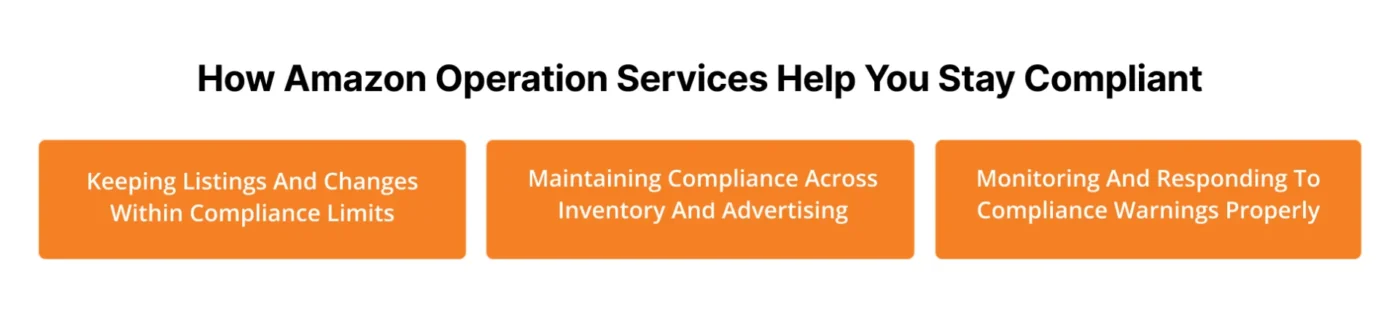
This is where structured Amazon operation services such as AMZDUDES play a practical role by making compliance part of everyday execution instead of a reaction to problems.
1. Keeping Listings and Changes Within Compliance Limits
Many compliance issues begin with listing changes that are not reviewed closely enough. Operation services help by adding review steps before updates go live. Listing edits, claim changes, image updates, and bulk uploads are checked against Amazon compliance requirements so risky changes are stopped early, not after a warning appears.
This reduces accidental violations and keeps stable listings from being disrupted by unnecessary edits.
2. Maintaining Compliance Across Inventory and Advertising
Compliance is not limited to listings. Inventory errors and advertising mismatches often trigger account issues. Operation services help ensure inventory data stays aligned with sales and documentation, and that ads always match what is written on the product page.
By reviewing ads when listings change and pausing traffic to listings with warnings or suppressions, services reduce the chance of drawing attention to problem areas and increase overall account stability.
3. Monitoring and Responding to Compliance Warnings Properly
Warnings and alerts are easier to manage when someone is consistently watching them. Amazon operation services monitor notifications through Amazon compliance connections, respond within defined timeframes, and make sure fixes are complete before replies are sent.
Because changes, documents, and past issues are already tracked, responses are clearer and more accurate. This reduces repeated warnings and prevents the same compliance problems from returning.
Conclusion
Most Amazon account problems don’t happen all at once. They build over time through everyday actions that aren’t reviewed or controlled. Small listing edits, inventory mistakes, ad mismatches, or ignored warnings can slowly turn into serious issues if left unchecked.
This is where Amazon operation management plays a key role. When daily work is structured, compliance becomes routine and risk stays visible. Sellers catch problems earlier, avoid repeat mistakes, and maintain more stable growth as their business scales.If you want to restore the account health of your Amazon account, our Amazon account health service can help. We manage the documentation and submission process correctly so you can regain access and expand with confidence. Book a free consultation call now.