
Key Takeaways
- Outsourcing Amazon PPC adds structure you can’t replicate internally. A dedicated partner maintains daily discipline, protects efficiency, and keeps campaigns stable as competition shifts.
- It reduces operational strain without reducing control. With the right reporting and communication, you stay in the driver’s seat while specialists handle execution.
- Expertise matters more than ever. As Amazon’s ad products evolve and CPCs rise, brands benefit from partners who understand clean segmentation, match-type control, and marketplace-specific nuances.
- Outsourcing supports growth when internal bandwidth breaks. Expanding catalogs, seasonal peaks, and launch cycles require more consistency than most internal teams can sustain.
- Not every brand needs a partner today. Smaller or early-stage sellers with simple catalogs can run PPC in-house until complexity increases. Outsourcing becomes valuable when the workload outpaces internal capacity.
Most sellers reach a point where their Amazon ads stop feeling manageable. CPCs climb. TACoS moves without a clear reason. Campaigns start reacting to competition instead of influencing it. What used to be a few simple optimizations now requires daily checks, consistent bid logic, and the ability to read performance patterns before they turn into problems.
For wholesale and exclusive sellers, the stakes are higher. Margins must hold. MAP needs to stay intact. The Buy Box depends on both price and PPC pressure. A single week of weak campaign management can affect visibility, sell-through, and your relationship with the brand you represent.
This growing operational load is why many sellers consider outsourcing. It is not about losing control. It is about getting the structure and consistency that PPC needs to stay profitable.
This guide walks you through when outsourcing Amazon PPC makes sense, what a good partner should provide, and how to decide if it is the right move for your brand.
Why Outsourcing Amazon PPC Is a Strategic Advantage
Amazon’s PPC advertising environment changes fast. New ad formats, shifting auction behavior, and added audience features make PPC a discipline that rewards specialization. A partner who works inside Amazon every day can spot trends earlier, structure campaigns more cleanly, and maintain the consistency that performance depends on.
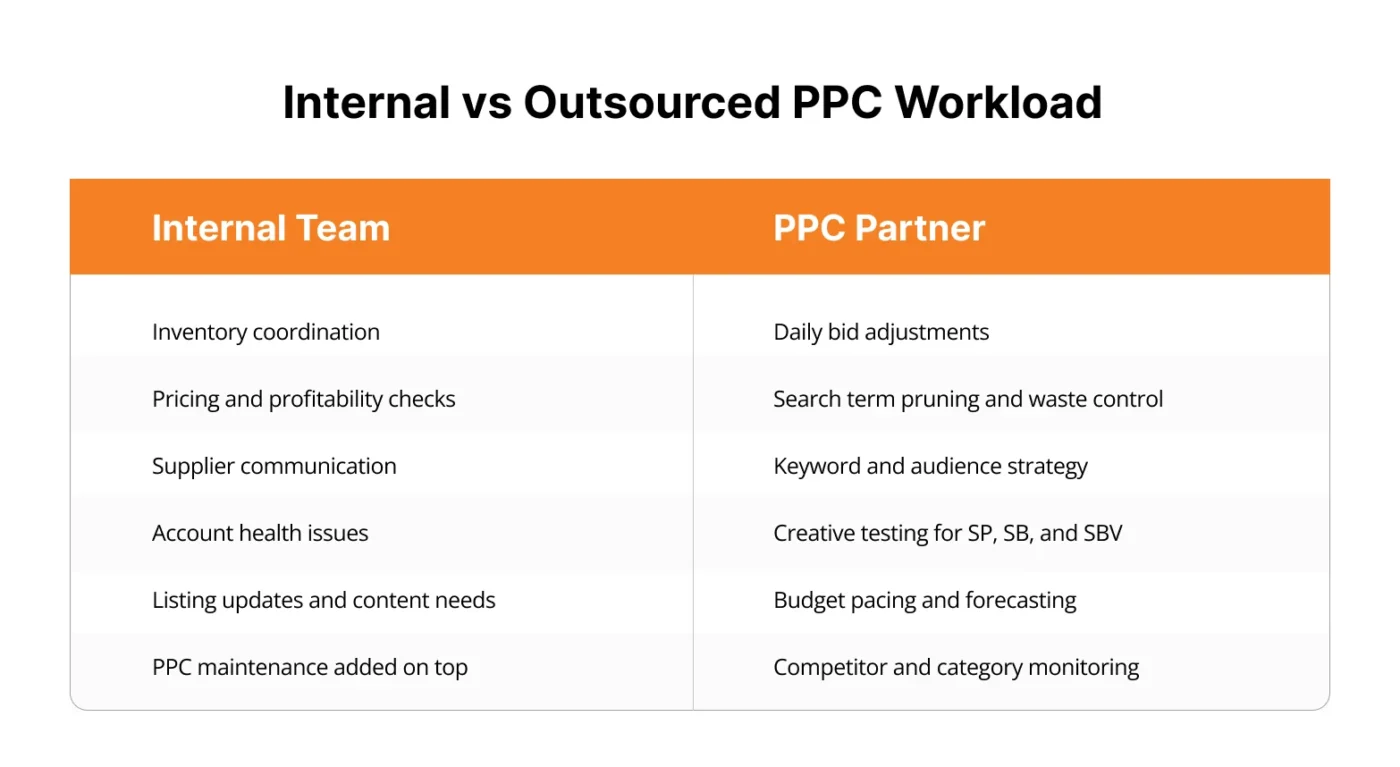
Outsourcing also frees your team from the daily maintenance PPC requires. Bid changes, search term pruning, budget pacing, and creative testing take continuous attention. When these tasks fall behind, wasted spend increases and campaigns lose efficiency. Shifting this workload to a dedicated team lets you stay focused on product, pricing, operations, and brand growth.
A capable PPC partner strengthens performance by keeping campaigns efficient and predictable. They maintain tighter match types, faster reaction times, and cleaner segmentation. This reduces waste and stabilizes TACoS, especially for brands managing multiple SKUs or expanding into new marketplaces.
You also gain access to tools and insights that most sellers do not use internally, such as DSP, Brand Analytics, and more robust audience and PPC keyword targeting. These tools allow for better testing, broader visibility, and a clearer understanding of how shoppers move through the funnel.
Outsourcing is not about giving up control. It is about tightening your system. A strong partner brings the expertise, discipline, and daily oversight needed to keep your ads efficient while your brand focuses on the bigger picture.
The Signals That Indicate to Outsource PPC Management
Outsourcing makes the most sense when PPC starts pulling attention away from the work that actually grows the business. The signs usually show up gradually and are easy to miss until performance becomes inconsistent.
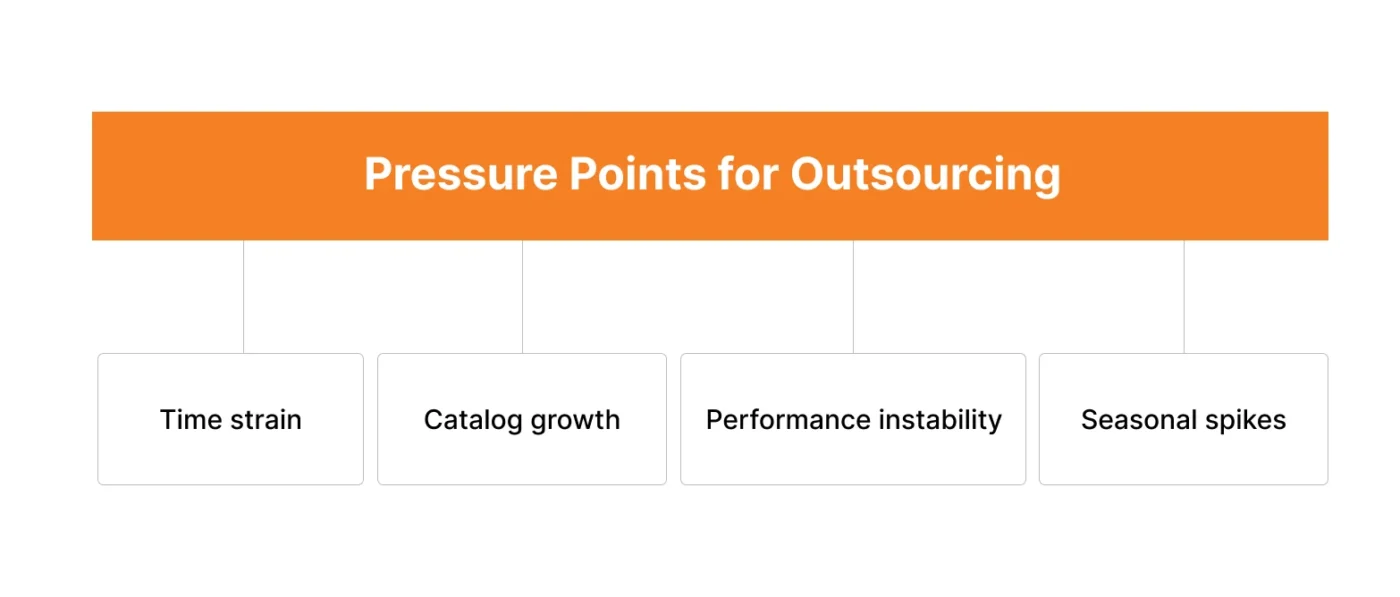
One of the clearest indicators is time. PPC requires steady, almost daily oversight. If campaign checks, bid adjustments, and search term reviews keep getting delayed because operations, supply chain work, or seller communication take priority, performance will eventually slip. That is often when brands realize they need dedicated support.
Another signal is stability. When TACoS moves unpredictably, or when campaigns deliver different results each week without any major changes in price or inventory, it suggests the account needs more structure and consistency than an internal team can give it while managing everything else.
Brands also consider outsourcing when the catalog grows. More SKUs mean more keywords, more variations, more campaign types, and more places where spend can get misallocated. This complexity becomes harder to manage without a team that handles it every day.
You may also need external help during launch cycles or seasonal periods. These moments require extra planning, faster reactions, and precise pacing. Internal teams often do not have the bandwidth to maintain that level of attention.
If any of the following apply, outsourcing Amazon PPC is worth considering:
- PPC tasks repeatedly fall behind more urgent operational work
- Performance fluctuates without a clear explanation
- Your catalog or marketplaces are expanding
- Seasonal peaks or launches require more structured planning
Outsourcing becomes valuable when PPC is too important to manage reactively. It is about ensuring your campaigns receive the level of focus they need to stay efficient as your brand grows.
What Defines a High-Quality Amazon PPC Partner
Choosing the right PPC partner matters as much as the decision to outsource. A good team should make your advertising predictable, disciplined, and easier to manage. A poor fit will create more confusion, add noise to your data, and take your campaigns in the wrong direction. Clear standards help you filter out the Amazon PPC advertising services that rely on generic playbooks and highlights the ones that understand Amazon at an operational level.
Amazon-Specific Expertise
The most important requirement is Amazon-specific expertise. PPC on this platform is different from Google or social channels. A partner should understand how Sponsored Products, Sponsored Brands, Sponsored Display, and DSP complement each other. They should be able to tie advertising decisions to inventory planning, pricing, Buy Box ownership, and catalog health. Without this context, even well-structured campaigns can work against your broader business goals.
Proven Track Record
Experience is another critical factor. You want a team that has worked with growing brands, especially wholesale or exclusive sellers who depend on tight margins and brand relationships. Case studies, performance snapshots, and examples of real challenges they have solved will tell you far more than a generic promise of “improving ACOS.”
Collaboration & Reporting
Communication and reporting determine how much control you retain. A reliable Amazon PPC partner provides regular updates, explains changes clearly, and gives you the right level of visibility into spend, performance, and decisions. Good reporting tells you what happened, why it happened, and what will happen next. It should reflect your goals, not vanity metrics or spend-driven incentives.
Alignment With Your Business Model
The partner should also align with how your business operates. They must respect MAP, understand margin sensitivity, and protect the brand you represent. If you manage exclusivity or shared distribution, they need to work within those boundaries rather than push aggressive ad strategies that erode profitability.
Fair & Clear Pricing Model
Pricing is another area where clarity matters. Some agencies charge a flat fee, some take a percentage of ad spend, and others use hybrid models. What matters most is incentive alignment. Percentage-of-spend pricing often encourages higher spend rather than smarter spend. Choosing a structure that supports efficiency will help avoid conflicts later.
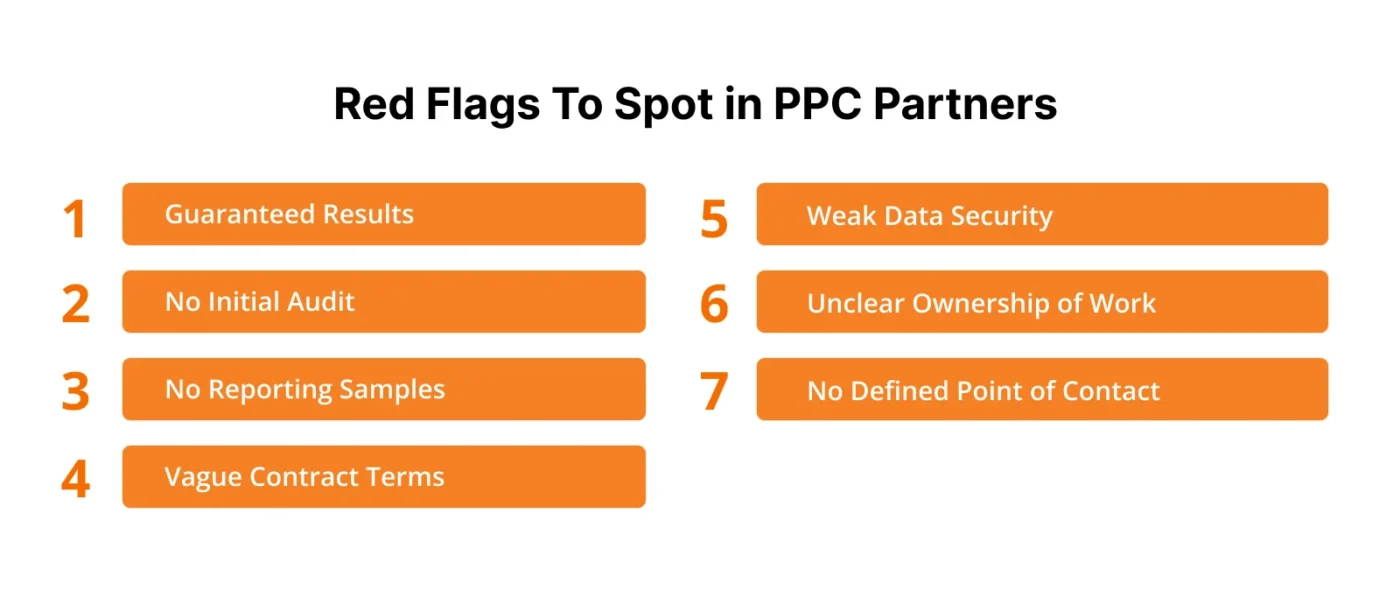
There are a few red flags worth noting. Be cautious of partners who guarantee results, refuse to provide an audit before beginning work, or cannot share reporting examples. Vague contract terms and weak data security are also signs to move on quickly. A strong partner will be transparent from the beginning and will show you how they work before asking for long-term commitments.
The right PPC partner makes your operations more stable and your decisions more confident. It should feel like gaining a team that understands your brand, not handing your account to someone who treats it like a template.
How a Professional PPC Partnership Actually Works
Outsourcing PPC should feel structured and predictable. A good partner makes the transition easy, gives you visibility at every stage, and ensures that nothing in your account moves without a clear purpose. Understanding the workflow helps remove uncertainty and shows what a mature operational process looks like.
Initial Audit
Every engagement should begin with a thorough review of your current setup. This includes evaluating campaigns, identifying structural issues, reviewing product listings, and examining keyword performance and historical spend. The goal is to understand what is working, what is holding the account back, and where efficiency can be gained without disrupting momentum.
Strategy Alignment
Once the audit is complete, both teams align on direction. This includes defining KPIs, agreeing on budget ranges, understanding growth priorities, and reviewing upcoming launches or seasonal events. A strong partner will also evaluate your competitive landscape and ensure the strategy fits the realities of your category.
Campaign Setup and Optimization
With strategy in place, the partner begins refining or rebuilding campaigns. This includes keyword research, structuring campaigns for clean data, tightening match types, establishing bidding logic, and addressing negative keywords. Creative assets for Sponsored Brands and Video are also reviewed or developed to match the new direction.
Ongoing Management
This is where outsourcing adds long-term value. Daily and weekly tasks such as bid adjustments, waste reduction, search term analysis, and creative testing are handled consistently. These small, frequent actions keep campaigns stable, prevent performance drift, and maintain efficiency as competition shifts.
Reporting and Review
You should receive clear reporting that explains performance trends, key changes, and upcoming priorities. Weekly summaries keep you informed, while monthly discussions focus on strategic adjustments and cross-team planning. A dependable partner ensures you always know what is happening and why.
Scale and Expansion
As your brand grows, your PPC structure should evolve with it. This stage includes adding new SKUs, entering new marketplaces, and activating DSP when the brand is ready for upper-funnel initiatives. Expansion happens gradually and intentionally, based on clean data and stable performance.
Transition or Exit Terms
A professional partner also plans for the possibility of transitions. If you ever choose to move PPC back in-house or shift providers, your data, structure, and reporting should remain accessible. Clear expectations around ownership and documentation protect your brand and ensure continuity.
A transparent process like this shows maturity. It gives you confidence in how your account is being managed and removes the guesswork that usually comes with outsourcing.
The KPIs That Keep You in Control Even When You Outsource
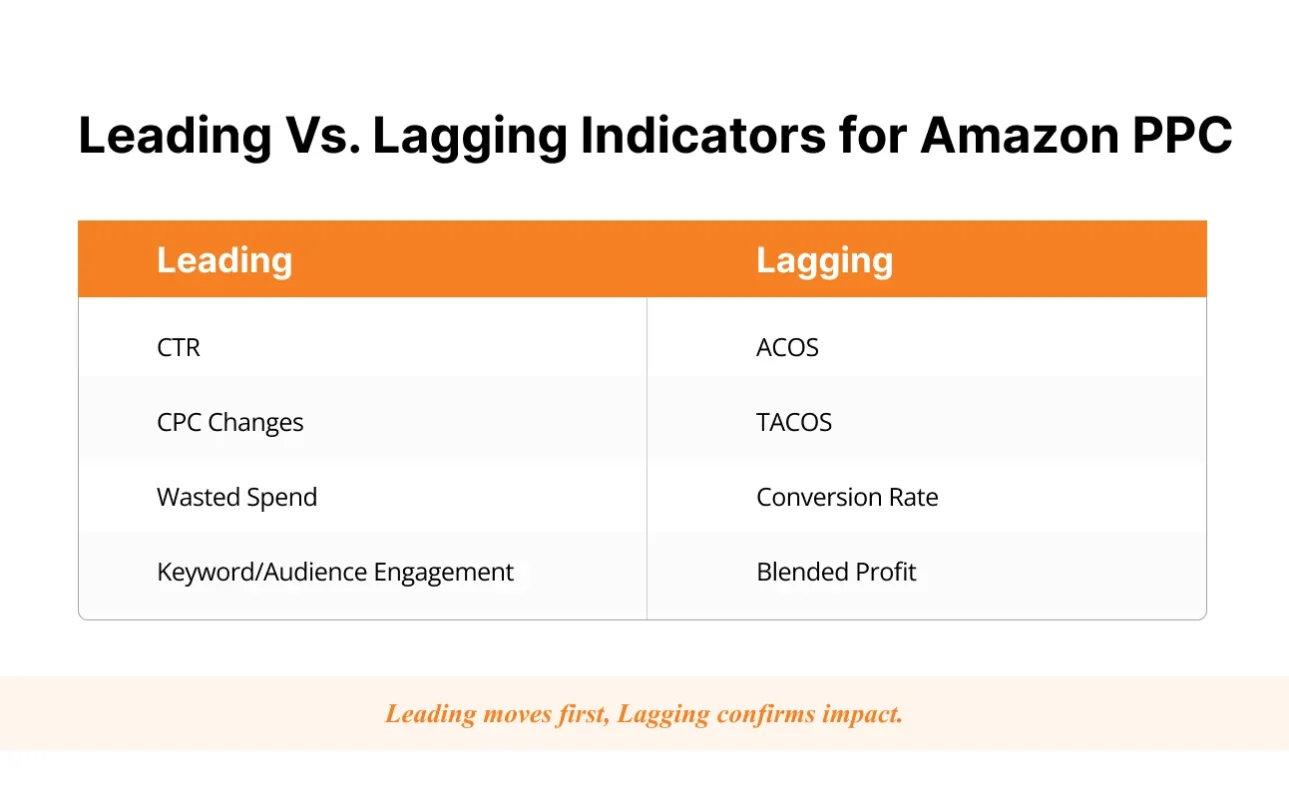
Outsourcing PPC works best when you still have a clear view of the numbers that matter. You do not need to manage campaigns yourself, but you should understand the indicators that show whether the account is being run with discipline. These KPIs help you confirm that the strategy is sound, the structure is stable, and your partner’s decisions are supporting profitable growth.
ACOS and TACOS
These two metrics give you a simple read on overall efficiency. ACOS helps identify how well campaigns convert, while TACOS tells you whether advertising is supporting total revenue. A strong partner will walk you through why each metric moves, not just report the change. When TACOS stays steady as sales rise, it is a sign that PPC is being managed with long-term thinking rather than short bursts of spending.
Conversion Health
Conversion rate is one of the clearest indicators of catalog strength. If CVR drops, it often reflects shifts in price, inventory, Buy Box stability, or listing quality. Your partner should be able to separate what is a PPC issue from what is a product or offer issue. This distinction prevents unnecessary bid increases and keeps decisions grounded in the full picture of your account.
Search Term Quality and Waste Control
You do not need to look at search terms yourself, but you should know whether irrelevant queries are growing or shrinking. Rising waste usually means the account is not being monitored consistently. A reliable partner keeps waste under control through regular pruning, clean segmentation, and structured campaign builds.
CPC Behavior and Competitive Pressure
CPC trends show what is happening in your category. A strong partner will explain whether rising CPC cost comes from competitive aggression, seasonal shifts, or broad targeting. The important part is not the cost itself but the reasoning behind it. Good Amazon PPC advertising management links CPC movements to actionable changes rather than reactive bidding.
Profit Stability
Blended profit after ads is what matters for wholesale and exclusive sellers. This metric shows whether your current ad spend aligns with your margin goals. A well-managed account keeps profitability consistent even as spend increases during launch periods or seasonal peaks. Your partner should treat profit as a guardrail, not as an afterthought.
Budget Allocation Across the Catalog
Spend should follow intention. If your growth depends on a set of hero SKUs, most of your spend should be focused there. When budgets start drifting toward low-priority ASINs without clear justification, it usually signals weak structure or broad targeting. Your partner should be able to show how each SKU fits into the larger strategy.
These KPIs are simple to follow and easy to review during weekly updates. They allow you to stay informed without being pulled back into daily PPC work. When these metrics trend in the right direction and your partner can explain each movement with clarity, you know your advertising system is being managed with the structure and discipline it needs.
The Real Risks of Outsourcing and How to Avoid Them
Outsourcing PPC can add structure and efficiency, but only when the partnership is managed responsibly. Understanding the common pitfalls helps you avoid surprises and choose a partner who supports long-term stability.
Loss of Control
This happens when reporting is unclear or communication is irregular. A reliable partner keeps you informed, explains changes, and ensures every action aligns with your goals. Transparency is the safeguard against losing visibility into your own account.
Partner Turnover and Fatigue
Many agencies operate with overloaded teams. Frequent handoffs or disappearing managers lead to inconsistent performance. You should know who manages your account and how continuity is maintained.
Misaligned Incentives
If a partner benefits from higher spend, strategy can drift toward volume instead of profitability. Clear budget boundaries and aligned KPIs prevent this. Efficiency should always come before scale.
Data and Access Issues
Your ad account holds sensitive business intelligence. Access should be limited, documented, and secure. If a partner is casual with permissions, that is a red flag.
Over-Dependence
A partner should strengthen your operations, not make you reliant on them. You should always understand the high-level strategy, know where data lives, and retain the ability to transition in-house if needed.
Listing and Offer Weakness
PPC cannot fix conversion problems rooted in poor content, pricing, or Buy Box instability. A good partner will tell you when the issue is not advertising and guide improvements instead of masking them with spend.
Inventory Blind Spots
Running ads without considering stock levels leads to wasted budget and distorted performance. A strong partner aligns PPC pacing with available inventory and incoming supply.
Addressing these risks openly builds trust. It shows that outsourcing is effective when handled with structure, communication, and aligned intentions.
Conclusion
Outsourcing PPC becomes the right move when advertising starts demanding more consistency and depth than your internal team can give it. If performance shifts without clear reasoning, if PPC tasks compete with core work, or if your catalog is outgrowing your current structure, a dedicated partner brings the stability you need.
The goal is not to give up control. It is to strengthen the operational backbone behind your ads so your brand can scale confidently. A disciplined partner keeps your campaigns efficient, your margins protected, and your decisions clearer.
If you want an honest assessment of where your PPC stands and whether your current setup is supporting growth, AMZDUDES can review your account and show you exactly where structure can be tightened. No pressure. Just clarity.
Frequently Asked Questions To Outsource PPC Agency
1. How do I outsource PPC campaigns to virtual assistants?
You can delegate basic PPC tasks to VAs, but only when the structure is already built by an expert. VAs can help with routine checks, keyword tagging, or weekly reporting, but they should not make strategic decisions or manage bidding logic. If you go this route, build the system first, then let a VA maintain it under clear SOPs.
2. How much does it cost to outsource PPC?
Most agencies charge either a flat monthly fee or a percentage of ad spend. Flat fees offer better alignment because they focus on efficiency, not inflated budgets. Depending on catalog size and complexity, you can expect costs ranging from a few hundred dollars for small portfolios to several thousand for large, multi-marketplace accounts.
3. Will I lose control of my campaigns if I outsource Amazon PPC?
No, not with the right partner. You keep ownership of strategy, access, and data. The partner manages execution, optimization, and reporting. A mature PPC agency provides transparency, explains changes clearly, and keeps you involved in high-level decision-making without overwhelming you with micromanagement.
4. How do I know if outsourcing PPC is the right move for my brand?
If PPC tasks are competing with core business work, if performance fluctuates without clear explanation, or if your catalog and launches are outpacing your internal bandwidth, outsourcing likely brings more stability. Brands with simple catalogs can keep PPC in-house, but growing or multi-channel brands benefit from dedicated, professional oversight.