
Key Takeaways
- Every Amazon return is inspected for authenticity, packaging, and functionality upon arrival at return centers.
- Good-condition items are resold through Amazon Warehouse, Amazon Renewed, or Amazon Outlet at discounted prices.
- Items unfit for resale are liquidated in bulk through Amazon Liquidation Auctions or recycled by certified partners.
- Despite sustainability goals, millions of returned items still end up in landfill or energy recovery.
- Amazon aims for zero product disposal through resale, donation, and recycling programs.
- FBA sellers have limited control Amazon handles returns automatically. FBM sellers inspect and refund manually with more control but higher costs.
- High return rates damage seller metrics, Buy Box eligibility, and account health.
When you return an Amazon order, the process seems simple: print a label, drop it off, and wait for your refund. But behind that simplicity lies a massive operation handling billions of items annually.
According to industry data, returns generate 6 billion pounds of landfill waste and 16 million metric tons of carbon emissions yearly. Online purchases are three times more likely to be returned than in-store items, and the National Retail Federation reports 10.3% of returns are fraudulent.
But what actually happens to those returns? This guide explains the complete journey of Amazon returns from your doorstep to resale, liquidation, or recycling.
What Happens to Amazon Returns: Step-by-Step
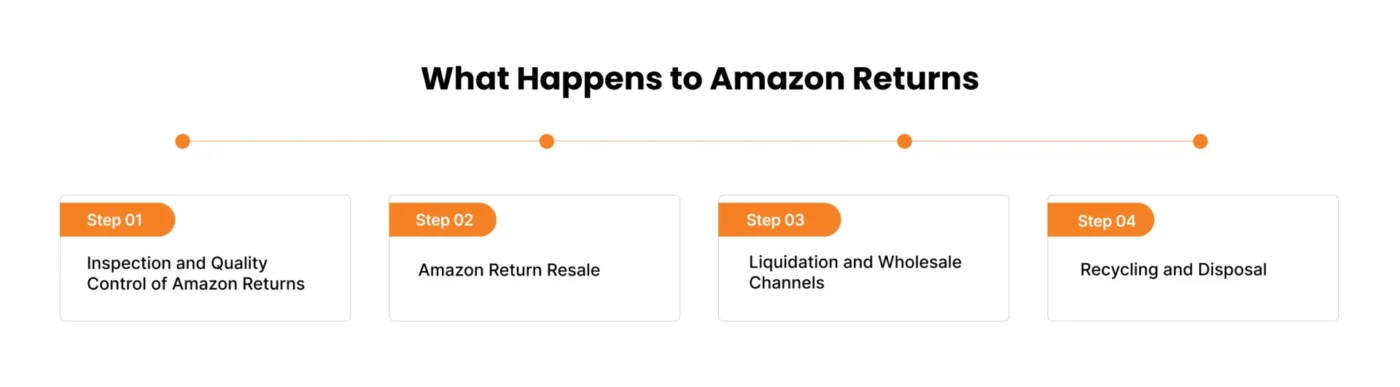
Step 1: Inspection and Quality Control
Every returned item arrives at an Amazon return center where it’s scanned, unpacked, and assessed for authenticity, condition, and completeness. Products are graded on packaging integrity, accessories, and functional performance.
Items in pristine condition are repackaged and reintroduced as “like new” inventory. Products showing even minor wear move to secondary evaluation, where their destination is determined
resale, liquidation, or recycling.
Step 2: Amazon’s Resale Programs
Products that are functional but not “new” enter one of Amazon’s return resale programs, such as Amazon Warehouse, Amazon Renewed, or Amazon Outlet. Each item is listed with a transparent condition grade like Used, Like New, or Very Good.
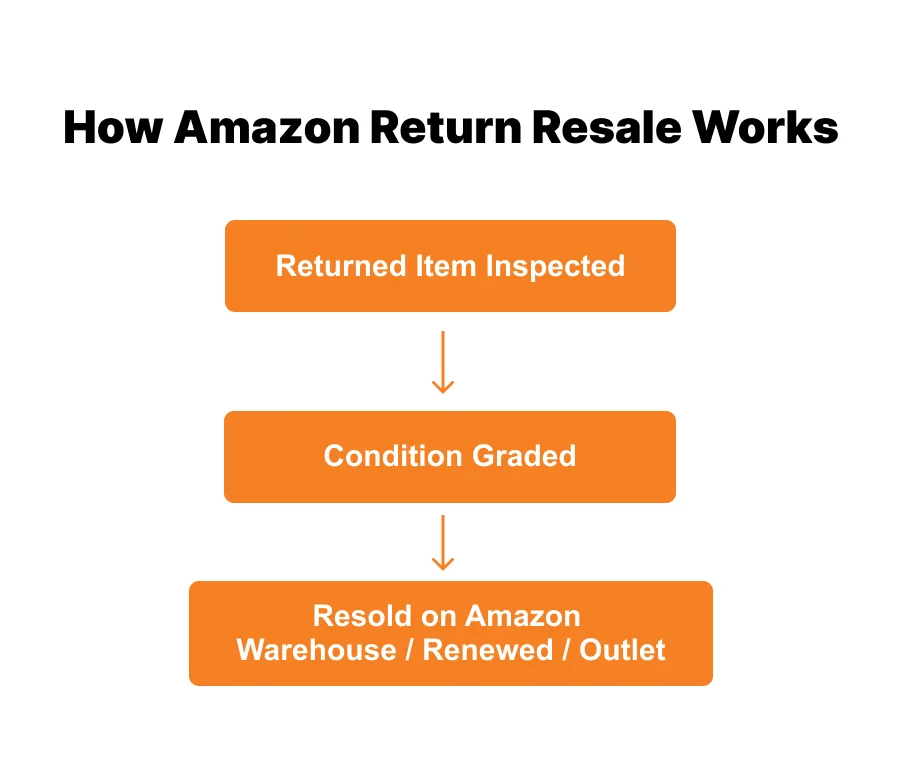
As former Amazon employee Raunak Nirmal explained, “If it’s a new product, Amazon would allow it to be resold as new, but it really needs to be in pristine condition for that to happen, and that’s rarer than you would expect.”
Only items in unused, unopened, original condition are resold as new. Everything else goes to discounted resale channels.
Step 3: Liquidation and Wholesale Channels
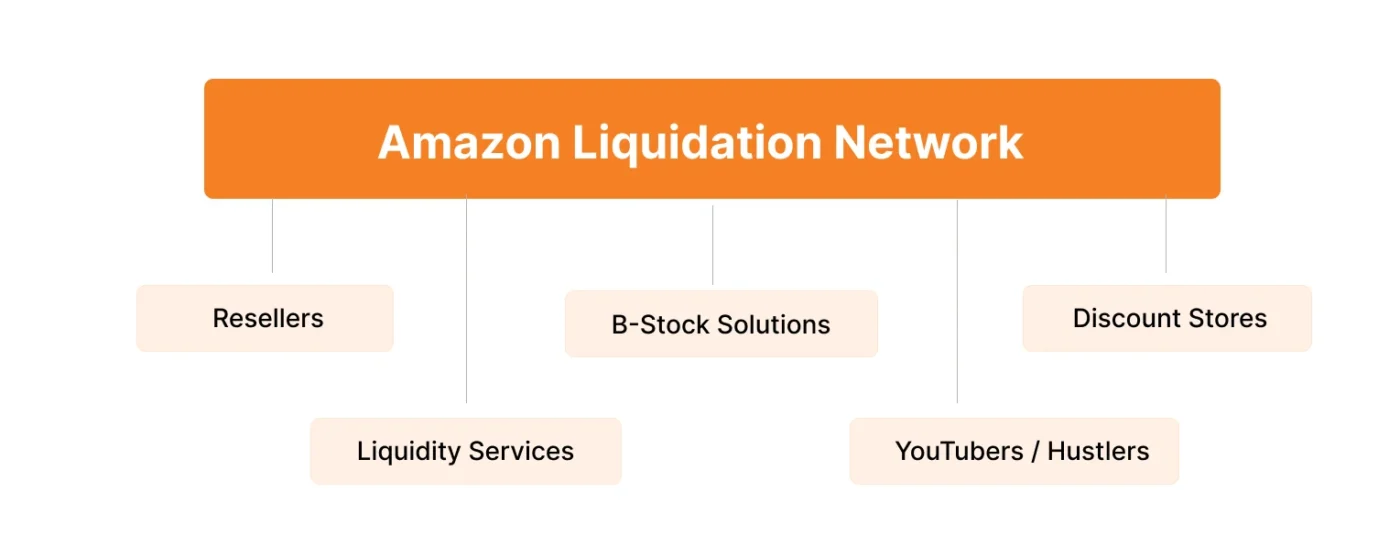
When items aren’t fit for Amazon’s resale programs, they enter bulk liquidation markets. Through Amazon Liquidation Auctions, products are grouped by category or condition and sold by the pallet or truckload to resellers.
Partners like Liquidity Services and B-Stock Solutions auction these lots to entrepreneurs and small businesses. Resellers buy pallets at discounted rates and resell them on eBay, Craigslist, or local shops.
Step 4: Recycling and Disposal
Items that can’t be resold or repaired are recycled or sent for energy recovery (burning for heat/electricity). Amazon states it’s “working toward a goal of zero product disposal” and prioritizes reselling, donating, or recycling over destruction.
Still, industry insiders confirm disposal remains common. Nike, for example, grinds unsellable shoes into material for running tracks, an approach Amazon aims to replicate through recycling partnerships and donation programs like FBA Donations, which has redirected 67 million items to charities since 2019.
The Amazon Return Process: End-to-End
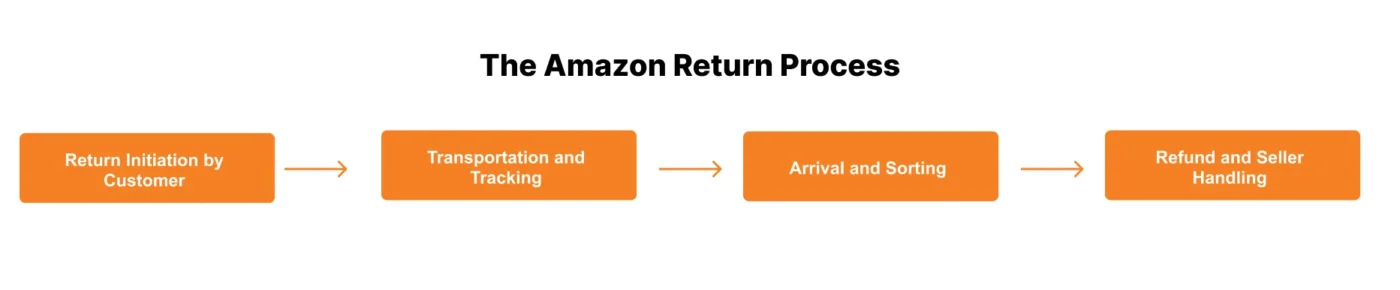
1. Return Initiation by Customer
It all starts when the customer clicks “Return or Replace Item.” A prepaid shipping label or QR code is automatically generated, which allows drop-offs at Amazon Lockers, UPS Stores, Whole Foods, or partner hubs, so no printer, box, or tape is required.
2. Transportation and Tracking
Each of the Amazon returns is assigned a tracking ID and routed through Amazon’s reverse logistics network. It is a vast system of Amazon returns warehouses designed for inbound items rather than outbound sales.
3. Arrival and Sorting
Once the Amazon returns are received, the system matches each product’s ASIN and order ID to confirm authenticity. Items are then sorted by category and condition from repackaging candidates to liquidation lots or recyclables.
4. Refund and Seller Handling
For FBA sellers, Amazon issues refunds automatically after scanning the return, while FBM sellers must inspect and refund manually. Return reports in Seller Central track reason codes, refund amounts, and item disposition. Sellers can also file SAFE-T claims for ineligible or damaged returns.
Does Amazon Resell Returned Items as New?
Yes, Amazon resells returned items as new, but only if the product is inspected and confirmed to be in unused, unopened, and original condition. If the returned item shows any signs of use, damage, or missing packaging, Amazon typically lists it under categories like “Used – Like New,” “Used – Very Good,” or “Amazon Warehouse Deals” instead of selling it as new.
The Cost and Complexity Behind Amazon Returned Goods
When you think about what happens to Amazon returns, you must know the cost and complexity associated with Amazon returns:
1. Reverse Logistics Overhead
From transport to inspection, sorting, and relabeling, each step of the Amazon return process adds cost.
2. Time Delays & Inventory Management
Amazon returns slow down restocking and distort demand forecasting. Returned products that re-enter FBA inventory must be re-verified before resale, delaying replenishment cycles and cash flow, especially during high-volume seasons like Q4.
3. Condition Disputes
Some buyers return used or incomplete products, and sellers have limited recourse. They can submit SAFE-T claims for reimbursement, but the manual review process adds administrative friction.
What Happens to Amazon Returns from Third-Party Sellers (FBA vs FBM)
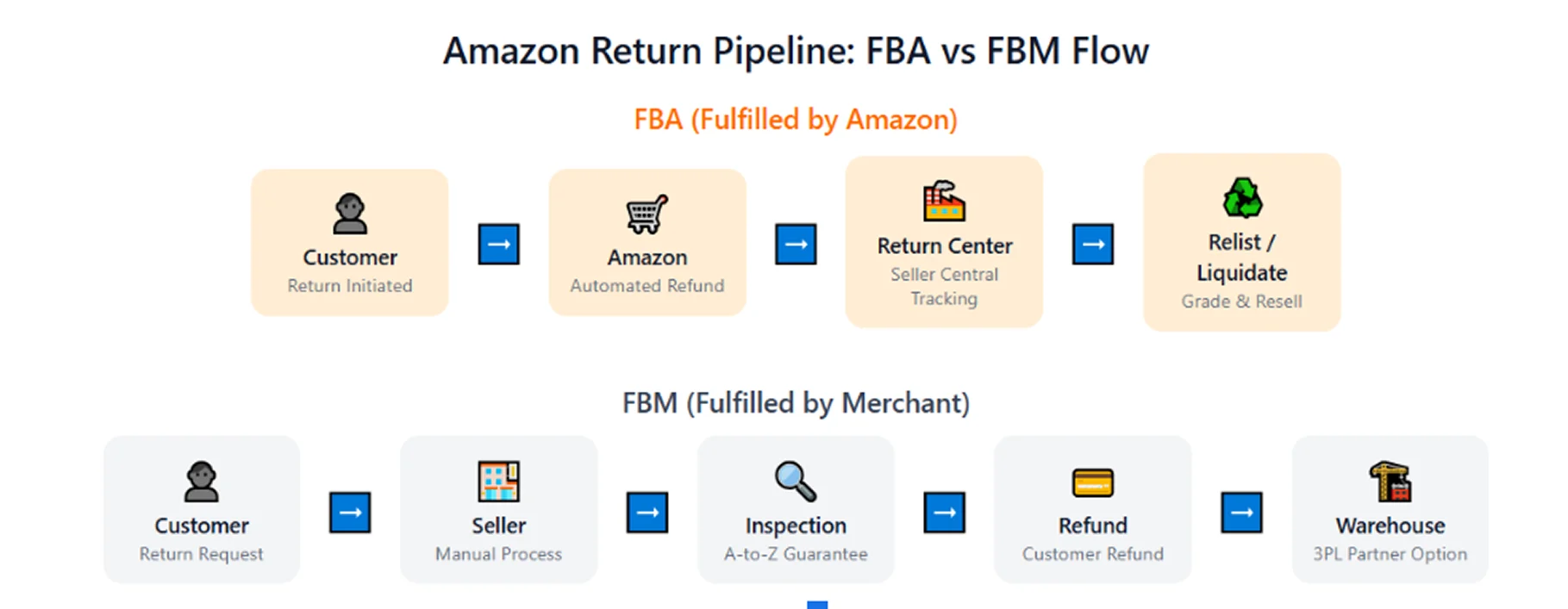
Here’s what happens to Amazon returns from third-party sellers:
1. FBA (Fulfilled by Amazon)
Amazon controls the entire returns pipeline from collection to inspection to relisting or liquidation. Sellers view every stage in Seller Central, including condition grades and refund reasons.
Amazon gives sellers four options for returned inventory:
- Return to Seller
- Disposal
- Liquidation
- FBA Grade and Resell (Amazon grades items and lists them under Warehouse Deals, Renewed, or Outlet)
Refunds are typically automated, though sellers pay a processing fee.
2. FBM (Fulfilled by Merchant)
Sellers handle their own returns: receiving, inspecting, and refunding customers directly. This allows more control but brings higher operational costs.
Amazon monitors return handling times closely. Delays or poor experiences harm account health and Buy Box eligibility. Many FBM sellers outsource returns to Amazon third-party logistics partners for efficiency.
Impact of Amazon Returns on Sellers and the Marketplace
Returns don’t just impact profit; they influence performance metrics, Buy Box share, and brand trust. High return rates can signal product quality or listing issues, while disputes drain time and resources. Since return-related metrics feed directly into your Amazon account health rating, a spike in returns can quietly erode standing even when individual complaints seem minor.
As one seller put it, “You’re forced to decide, recall the inventory to your warehouse, which is expensive, or dispose of it. For most of us, 80% to 90% of the time, disposal is the only viable option.”
This economic reality shows why Amazon introduced new seller-side programs: Liquidation, FBA Donations, and Grade & Resell. Each of them is designed to help sellers recover value without waste.
How Sellers Can Reduce Returns
The best return management strategy is preventing high return rates in the first place:
- Use Grade and Resell: Let Amazon handle returned FBA inventory instead of recalling it yourself
- Optimize product listings: Accurate descriptions, high-quality photos, and realistic expectations reduce buyer regret
- Maintain product quality: Poor-quality products drive returns; consistent quality reduces refund requests
- Monitor return reasons: Check Seller Central data to identify patterns (sizing issues, quality problems, misleading listings)
- Respond to customer inquiries: Quick, helpful support prevents return escalation
Conclusion
Most return problems don’t originate in the return center; they originate in your listing, advertising, and customer expectations. Misleading photos, unclear descriptions, and wrong ad targeting drive buyer remorse long before any return hits Amazon’s warehouse.
The best return strategy isn’t better return management. It’s fewer returns in the first place. A 5-10% reduction in return rate directly improves net profitability by 15-30%, far more than any operational fix.
This requires a unified approach: accurate product listings that set proper expectations, strategic advertising that attracts the right customer, and clear communication that prevents buyer regret.
If high return rates are eating into your margins, AMZDUDES, a full service Amazon Agency, brings together Amazon advertising, listing optimization, creative strategy, and customer insights into one unified system to help you prevent returns rather than manage them.
Book a free consultation call today.
Frequently Asked Questions
Q1: What does Amazon do with returned items?
Amazon inspects all returns for condition and authenticity. Good-condition items are resold through Amazon Warehouse, Amazon Renewed, or Amazon Outlet. Items unfit for resale are liquidated through Amazon Liquidation Auctions or recycled by certified partners.
Q2: Does Amazon resell returned items as new?
Only items in unused, unopened, original condition are resold as new. Items showing any signs of use, damage, or missing packaging are listed under “Used – Like New,” “Used – Very Good,” or Amazon Warehouse Deals instead.
Q3: Where do Amazon returns go?
Returns in good condition go to Amazon Warehouse or liquidation auctions. Items unfit for resale are recycled or sent for energy recovery. Some items are donated to charities through FBA Donations.
Q4: What happens if an Amazon return gets stuck in shipping?
Contact Amazon Customer Service with your tracking ID. The system tracks packages through the return process, and you’ll receive a refund once Amazon confirms the return delay or loss.
Q5: How do high return rates affect sellers?
High return rates damage seller metrics, reduce Buy Box eligibility, and harm account health. Returns also slow inventory restocking and distort demand forecasting, impacting cash flow and profitability.