
Key Takeaways
- Amazon PPC trend analysis goes beyond basic reporting It connects CPC, CTR, and CVR movement to show how shopper behavior and competition are really changing.
- In 2026, Amazon PPC trend analysis is essential for staying competitive. Rising CPC and constant algorithm shifts mean performance drops faster when trends are missed.
- Trend analysis turns past data into early signals. You detect creative fatigue, keyword decay, and intent shifts before revenue starts to soften.
- These trend signals guide smarter decisions. You adjust keywords, refresh creatives, and move budgets ahead of seasonal swings instead of reacting late.
- Brands that build continuous Amazon PPC trend analysis systems gain the edge. Even smaller teams can reduce wasted spend and stabilize performance with simple trend tracking.
Some days your Amazon PPC data feels familiar. Other days it behaves like a different market entirely. Search terms drift. CPCs pulse. Conversions rise and fall without a clear warning.
Most Amazon PPC teams notice these shifts only after performance weakens. That is when frustration builds. They try to adjust bids or rebuild targeting, but the real issue is deeper. The Amazon PPC trends patterns were changing long before the numbers made it obvious.
Continuous trend analysis closes that gap. When combined with tech- and AI driven Amazon PPC performance insights, it reveals where the market is moving, not just where it has been. These signals bring clarity. They surface competitive pressure, shifting audience behaviour, and creative fatigue with far greater precision.
This level of insight brings relief. It replaces uncertainty with structured forecasting. It protects efficiency. It helps you keep visibility stable even when your category feels unpredictable.
When you read ad trends consistently, you move from reacting late to leading early. That is how your Amazon PPC campaign strategy gains control, confidence, and sustainable profitability.
The Amazon PPC Trends Defining 2025 (What’s Changing Right Now)
Amazon advertising is changing faster than most brands realize. The brands that stay ahead are the ones paying attention early. When you understand these shifts sooner, you gain better visibility, use your budget more efficiently, and stay aligned with how shoppers are actually buying. Amazon PPC trends awareness helps you adjust before performance is affected, not after.
AI Is Now Determining the Sponsored Ads Placement
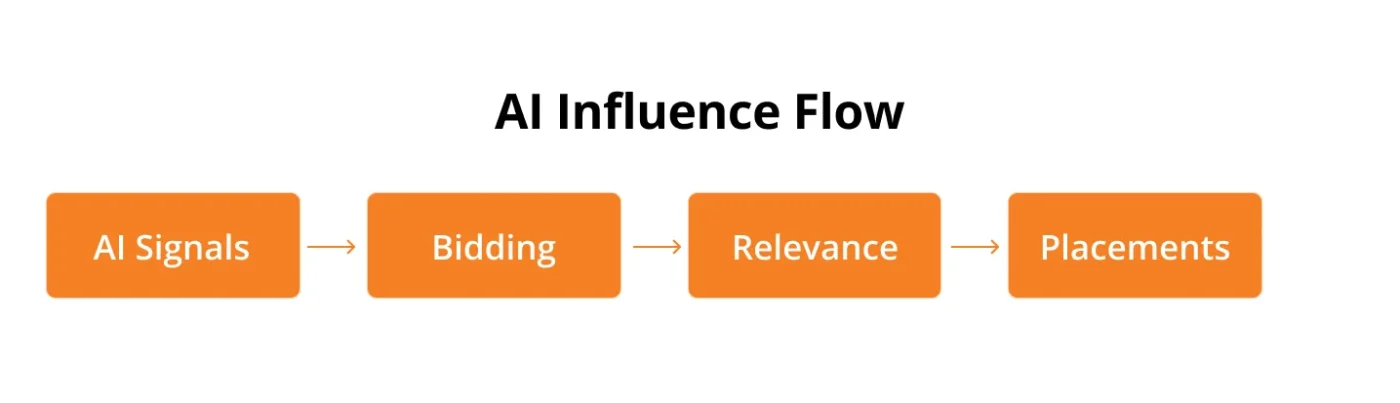
Amazon now relies heavily on AI to determine Sponsored Ads placement, where they appear, and how much each Amazon CPC costs. The algorithm reads patterns in shopper behavior throughout the day and adjusts automatically.
If your campaigns stay static for too long, they lose alignment with how Amazon is making decisions. Brands that review trends regularly stay in sync with the system and avoid falling behind as competition increases.
High-Engagement Creatives Are Changing What Performs
Shoppers are interacting more with video ads, richer visuals, and more engaging sponsored ad formats. Amazon pays attention to how people interact, not just whether they click. Ads that hold attention tend to perform better over time.
This means optimizing Amazon listing creatives is no longer optional. Regular updates, small variations, and new messaging help keep interest high and prevent ads from going stale.
Amazon PPC managers that watch creative performance closely tend to stay more stable, even in crowded categories.
Voice and Natural Searches Are Creating New Opportunities

Shoppers are moving away from short, simple searches and toward more natural questions and phrases. These longer, more specific searches show clearer intent and often have less competition.
Successful brands now adapt their keywords and product content to match how people actually speak and search. Tracking these patterns consistently helps you spot new opportunities early and adjust your campaigns before competitors catch on.
Privacy Changes Mean You Need Stronger Internal Tracking
Amazon is sharing less detailed shopper data as part of its privacy-first approach. As a result, quick decisions based only on visible console metrics are becoming less reliable.
Brands that build clearer internal tracking and rely on consistent performance patterns are better prepared for this shift. Strong measurement systems help maintain control over spend and results, even when platform data becomes more limited.
Engagement Quality Matters More Than Ever
Amazon increasingly rewards ads that show real shopper interest. Actions like watching a video, scrolling through images, comparing options, or exploring variations matter more than simple impressions.
Brands that design ads to guide shoppers through the buying decision perform better in the long run. Clear messaging and thoughtful creative flow improve visibility, stabilize costs, and make conversion results more predictable.
Together, these Amazon PPC trends explain why campaigns now require closer attention, more frequent review, and a stronger focus on how real shoppers behave, not just what the numbers say.
Why Brands Can’t Stay Competitive Without Continuous Trend Analysis
Amazon performance rarely drops overnight. It weakens slowly as the market shifts beneath the surface. Most Amazon PPC teams only notice once costs rise or sales slow. Continuous trend analysis helps you spot these changes early, so you can adjust spend, messaging, and positioning with confidence instead of reacting after efficiency is already lost.
1. Platform Changes Move Faster Than Reports
Amazon constantly updates how it decides which ads appear and where traffic flows. These changes reshape competition and visibility long before standard reports show a clear problem.
Amazon PPC management teams that watch trends closely stay aligned with where Amazon is sending traffic. Without it, many see rising costs and cannot explain the drop in efficiency.
The key advantage:
When you see changes early, you can adjust targeting and budgets before waste builds up. This protects both visibility and spending stability.
2. Creative Relevance Matters More Than Ever
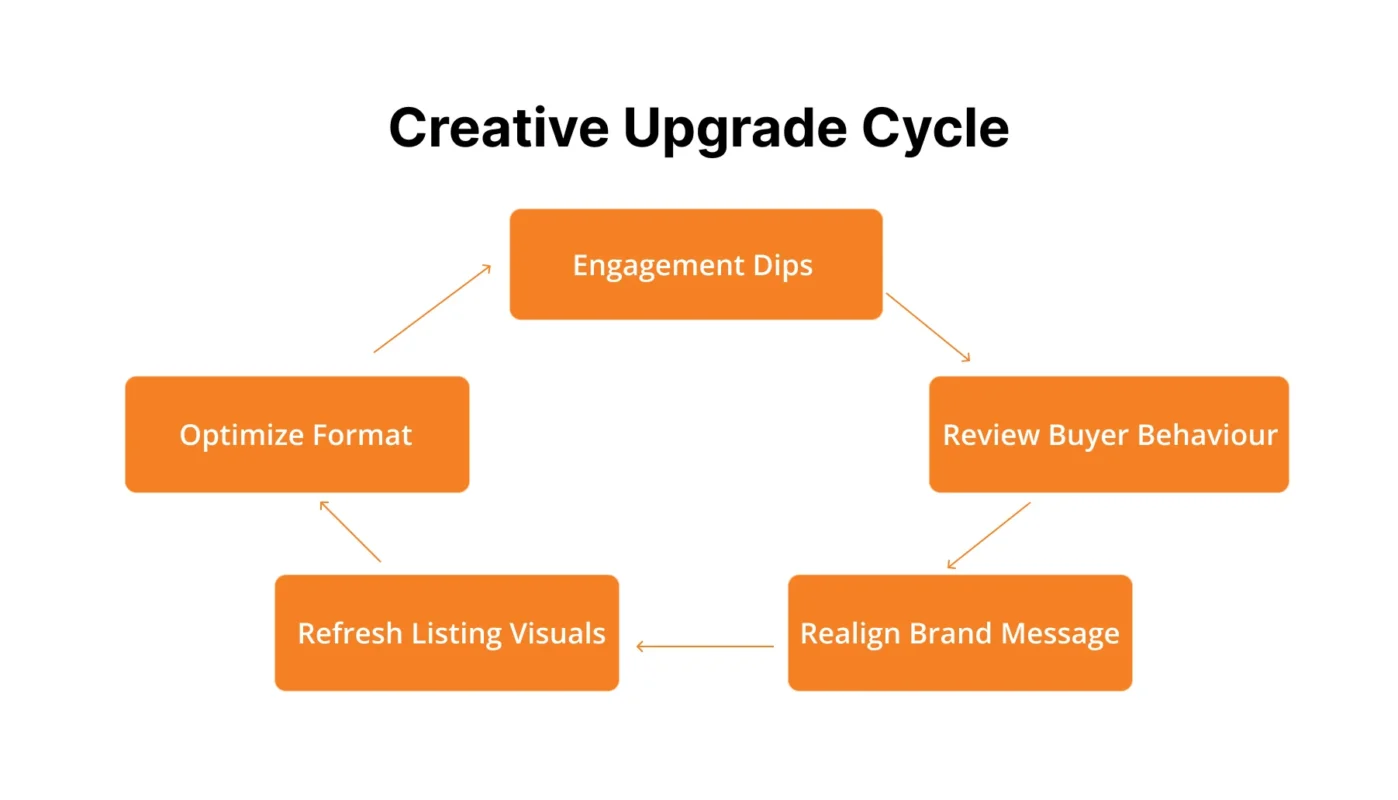
What shoppers respond to changes over time. An ad that performed well last quarter may struggle today simply because expectations have shifted. Amazon tests new formats, new placements, and new ways shoppers interact with ads, and performance follows those changes.
Brands using Amazon PPC trend analysis can tell the difference between a real message problem and a broader shift in shopper behavior. This helps you refresh visuals, update messaging, and adjust presentation in line with how people are actually browsing and buying.
3. Competitor Moves Affect Your Costs
When competitors adapt faster, they don’t just improve their own results. They change the cost structure of the entire category. Early changes in their strategy can raise Amazon ad clicks costs, reduce visibility, and limit placement access for everyone else.
If you react late, you often have to spend more just to recover ground you already held. Seeing trends early helps you avoid chasing inflated costs, missing visibility windows, or overpaying to regain lost positions. This is often the difference between steady growth and expensive recovery.
4. Better Timing Protects Profitability
Growth is not just about spending more. It’s about spending time at the right time. Amazon trends analysis shows when demand is building, when interest is slowing, and when certain ad types are becoming more expensive.
With this insight, you can move budgets earlier, focus on areas gaining momentum, and avoid scaling during unstable periods. Instead of reacting to what already happened, you plan ahead and protect long-term profitability.
How Amazon PPC Trend Analysis Turns Raw Data into Predictive Insight
Most Amazon PPC dashboards tell you what already happened. Trend analysis helps you understand what is likely to happen next. By looking at patterns over time instead of isolated numbers, you can turn scattered data into clear signals that guide smarter decisions around bids, messaging, demand planning, and competition.
1. Understanding CPC Increases Through Competition Changes
Rising cost per click is rarely random. It usually reflects changes in how competitors are spending, when they are more active, or where they are shifting focus.
By tracking CPC trends over time, you can tell whether costs are rising due to new competitors entering the space, seasonal demand building, or changes in how bids are being adjusted across the category. This turns CPC movement into an early warning system instead of a surprise expense.
2. Identifying Weak Keyword Through CTR and CVR Deterioration
A slow drop in click-through rate or conversion rate is often brushed off as normal fluctuation. In reality, it usually means shoppers are expecting something different than what the ad or listing is offering.
Watching these trends over time helps you identify when keywords are becoming overused or less relevant. You can step in early by updating messaging, adjusting Amazon PPC targeting, or shifting spend before those keywords start draining budget.
This allows you to:
- Refresh messaging for specific search groups
- Fine-tune targeting as shopper intent changes
- Move budget toward keywords showing stronger momentum
3. Reading Buyer Intent Through Search Terms and New Customers
Search terms often change before the rest of the market does. New phrases, longer queries, and shifts in wording reveal what buyers care about next.
When these changes are reviewed alongside new-customer performance, you gain a clearer picture of whether demand is growing, splitting into smaller segments, or becoming more competitive. This helps leadership decide where to scale and where to pull back with confidence.
4. Using Visibility and Placement Changes as Early Signals
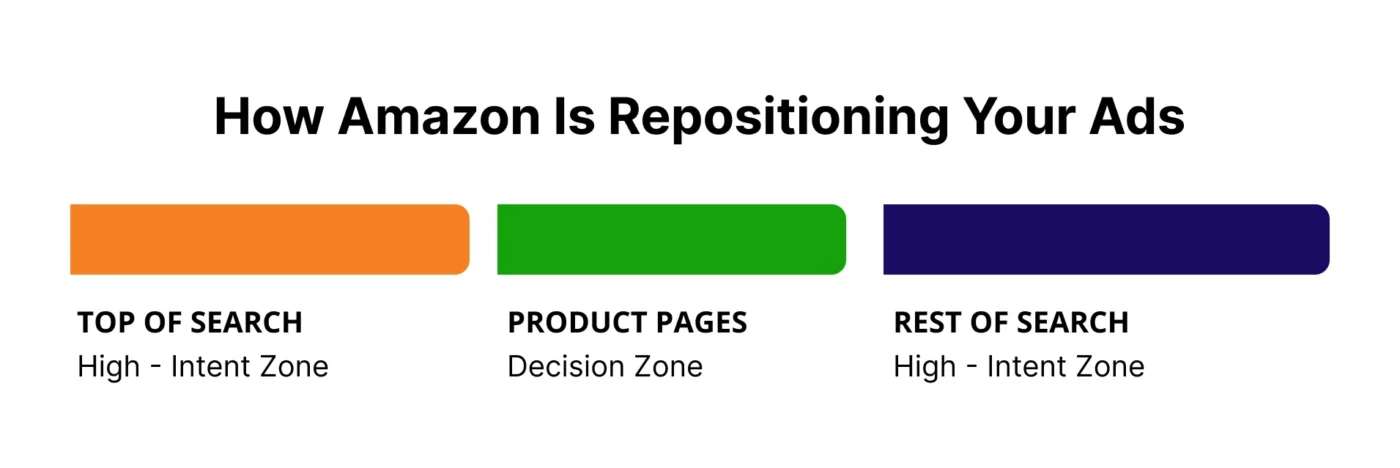
Amazon does not openly announce when it changes how ads are shown. Instead, those updates appear quietly through shifts in where and how often your ads show.
Amazon PPC trend analysis helps you notice these patterns early. Changes in visibility across search results or product pages often signal evolving priorities. Catching these shifts early helps you protect exposure and avoid wasting Amazon ad spend during unstable periods.
5. Spotting Poor Performing Creatives Before Sales Decline
Weak creatives do not usually show up first in sales numbers. It shows up earlier in how shoppers interact. Less scrolling, shorter attention, and fewer interactions with images or options are early signs that an ad is losing impact.
By tracking these engagement patterns over time, you can refresh creative direction before results slip. This keeps performance steady and prevents costly declines that are harder to reverse later.
Together, these insights show how trend analysis turns everyday Amazon PPC data into a practical system for staying ahead instead of reacting late.
The Core Trend Indicators You Must Monitor Consistently
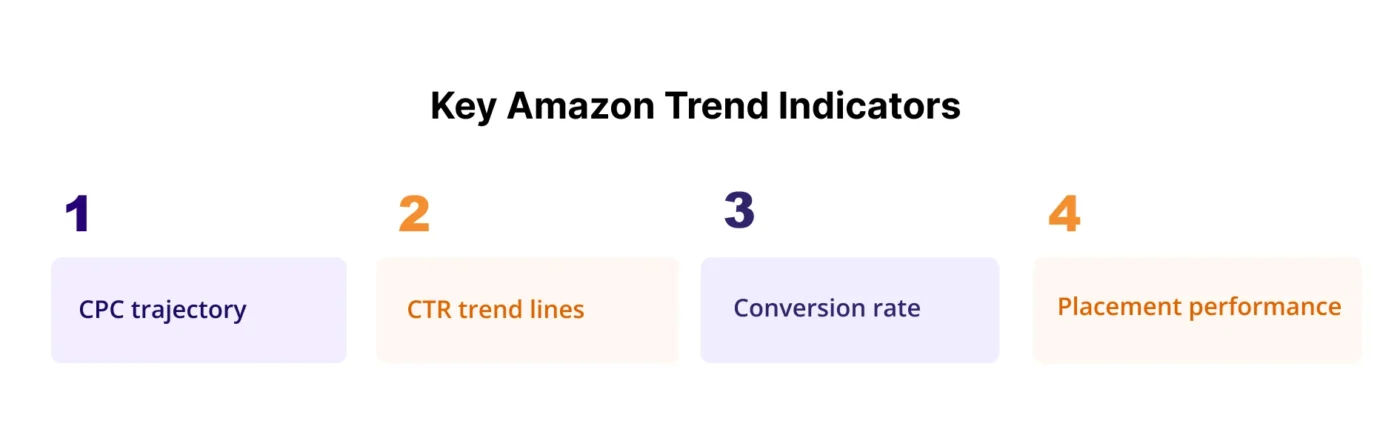
Certain numbers matter more than others when you’re trying to stay ahead on Amazon. These are not everyday check-in metrics. They are direction signals. When you follow them consistently, they show where the market is moving, how competition is changing, and whether shopper interest is strengthening or slipping.
Tracking these patterns over time turns raw Amazon PPC data into a clearer view of what’s coming next, not just what already happened.
1. CPC Trend
CPC trends show how competitive your category is becoming. When costs rise steadily, it usually means more sellers are bidding aggressively, demand is picking up, or seasonal pressure is building.
When CPCs ease, competition may be cooling or budgets may be pulling back. Watching how fast and how often CPC changes helps you plan to spend calmly instead of reacting late.
2. CTR Trend Lines
CTR trends show whether your ads are still matching what shoppers expect to see. When CTR starts to slide, it often means your message, image, or targeting no longer feels relevant at the moment of search.
When CTR improves, it’s a sign that your ads are connecting better with current buyer intent. Tracking this Amazon PPC trend early helps you catch discovery issues before they hurt sales or rankings.
3. Conversion Rate Direction
Conversion rate trends show how well your listing is meeting buyer expectations. A steady decline can signal friction, stronger competition, or changes in what shoppers care about most.
When conversion improves, it means buyers feel confident moving forward. Following this direction helps you find where the buying experience needs attention before problems grow.
4. Placement Performance
Placement trends reveal where Amazon is sending attention. When certain placements start delivering better results, it usually reflects changes in how Amazon values relevance or tests new formats.
If a strong placement weakens, it may mean competition has intensified or traffic is being redirected elsewhere. Watching placement movement helps you stay aligned with where opportunity is forming.
Together, these indicators give you a clearer, more stable way to understand Amazon PPC performance. When you follow them consistently, you stop reacting to surprises and start making decisions with confidence and control.
Turning Amazon PPC Trend Signals into Smarter Strategies
Trend signals only create value when you act on them. When you use these signals to guide how your Amazon PPC campaigns are built, adjusted, and scaled, your ads move with the market instead of falling behind it. This is how Amazon PPC trends awareness turns into real performance advantage.
1. Adapting Ad Formats as Placement Trends Change
When certain placements start performing better than others, it often means Amazon is favoring new ad types or experiences. Amazon PPC trend tracking helps you catch these shifts early.
This is the right moment to test updated visuals, stronger imagery, or more engaging Amazon ad formats where traffic is growing. Using placement trends to guide creative testing helps you stay ahead instead of reacting after everyone else has caught up.
2. Updating Keywords as Buyer Intent Evolves
The way shoppers search is always changing. New phrases gain traction while older keywords slowly lose value. Amazon PPC trend signals highlight these changes before performance drops.
By rebuilding your keyword groups around rising search behavior, you focus on what shoppers care about now. This means adding stronger mid-length searches, refining groupings, and removing keywords that no longer drive real demand.
3. Refreshing Creative When Engagement Starts to Slip
Drops in CTR or conversion are more than small performance changes. They often signal that your messaging or visuals no longer match how shoppers want to evaluate your product.
Using Amazon PPC trend data to guide creative updates helps you move from random refreshes to planned improvements. Your ads stay current, clear, and aligned with how buyers actually make decisions.
4. Shifting Budgets Before Seasonal Demand Peaks
Seasonal demand doesn’t appear overnight. It builds gradually. Amazon PPC trends analysis helps you see these shifts early so you can move budgets before competition heats up.
This approach helps you capture lower-cost traffic, protect rankings as demand rises, and avoid overspending once markets become crowded. Planned budget moves turn seasonality into an advantage instead of a scramble.
Conclusion
Amazon may feel unpredictable, but the signals are always there. This guide showed how continuous Amazon PPC trends analysis turns scattered Amazon PPC data into clarity, and how those signals drive smarter decisions across structure, creative, keywords, placements, and scaling.
The next step is building a system that reads these trends consistently. At AMZDUDES, our Amazon PPC Service is designed to interpret performance patterns and turn them into strategies that improve visibility, efficiency, and sustainable revenue growth. If you’re ready to move from reactive optimization to proactive, insight-driven performance, our team is here to support you.
Book a consultation with the best Amazon PPC agency today.