Key Takeaways
- A reliable PPC partner operates with structure, not intuition. Daily optimization, disciplined campaign control, and profit-focused decision paths create stability and prevent the volatility you experienced before.
- Evaluating strategic thinking is more important than reviewing services. Senior leaders should assess how an agency models risk, interprets category pressure, and prioritizes actions when multiple KPIs move at once.
- Stress-testing partners reveals operational maturity early. Limited-data audits, reverse briefs, and scenario-based evaluations expose whether a team can manage complexity or will default to generic tactics.
- Red flags are often visible long before performance collapses Guaranteed ACoS promises, template structures, unclear optimization cadence, and shallow reporting are strong indicators of future failure.
- The right partner delivers clarity, visibility, and long-term profitability. Teams with proven Amazon expertise, strong communication systems, and category-level insight are best positioned to support sustainable growth and prevent past mistakes from repeating.
When Amazon PPC campaigns fail, you feel it everywhere. Sales are low. Ranking drops. Margins shrink. The damage stays long after the agency is gone. Most brands look for a new Amazon PPC partner because they have already lived through that chaos. They trusted someone who promised results but never delivered clarity, control, or real optimization.
This guide helps you reset. It gives you a clear, expert framework to evaluate your next Amazon PPC partner with precision. You learn ‘how to choose the right Amazon PPC company’ by learning what real expertise is, how a reliable team protects visibility, and how proper systems keep your account stable.
By the end, you have a framework that helps you choose an outstanding Amazon PPC partner who supports growth, without overpaying for Amazon PPC services.
The Non-Negotiable Criteria You Must Use After a Failed Partnership
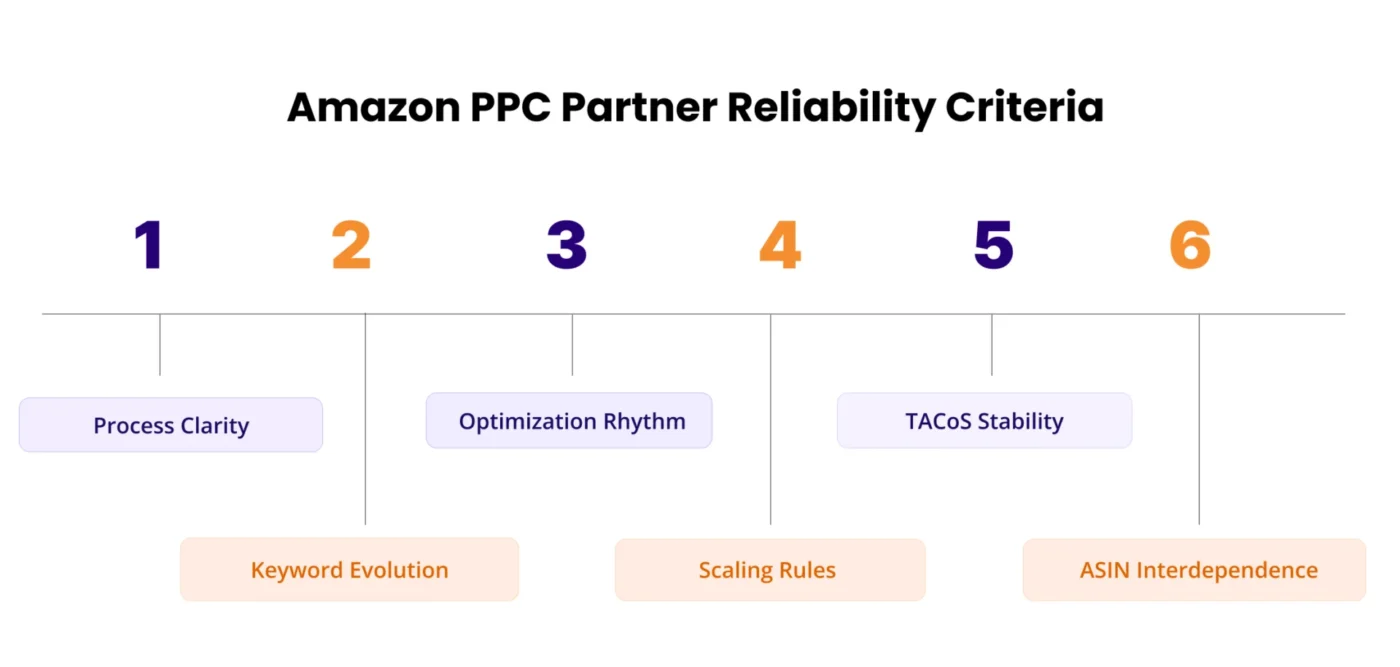
Your last Amazon PPC partner left you without clarity. Decisions felt random. The reporting lacked insight. And nothing in your account followed a predictable rhythm. That frustration is exactly why your next Amazon PPC partner must meet stricter, more disciplined standards. These criteria bring structure, visibility, and confidence back into your Amazon PPC decisions.
Clear Process Documentation
A reliable Amazon PPC partner works with structure. You should understand how they monitor performance, how they turn data into action, and how frequently they optimize. When an Amazon Ads partner can show you their workflow in a simple, consistent path, you gain clarity. That clarity removes the confusion you lived with before and gives you control over the process.
Keyword Management That Evolves With Product Maturity
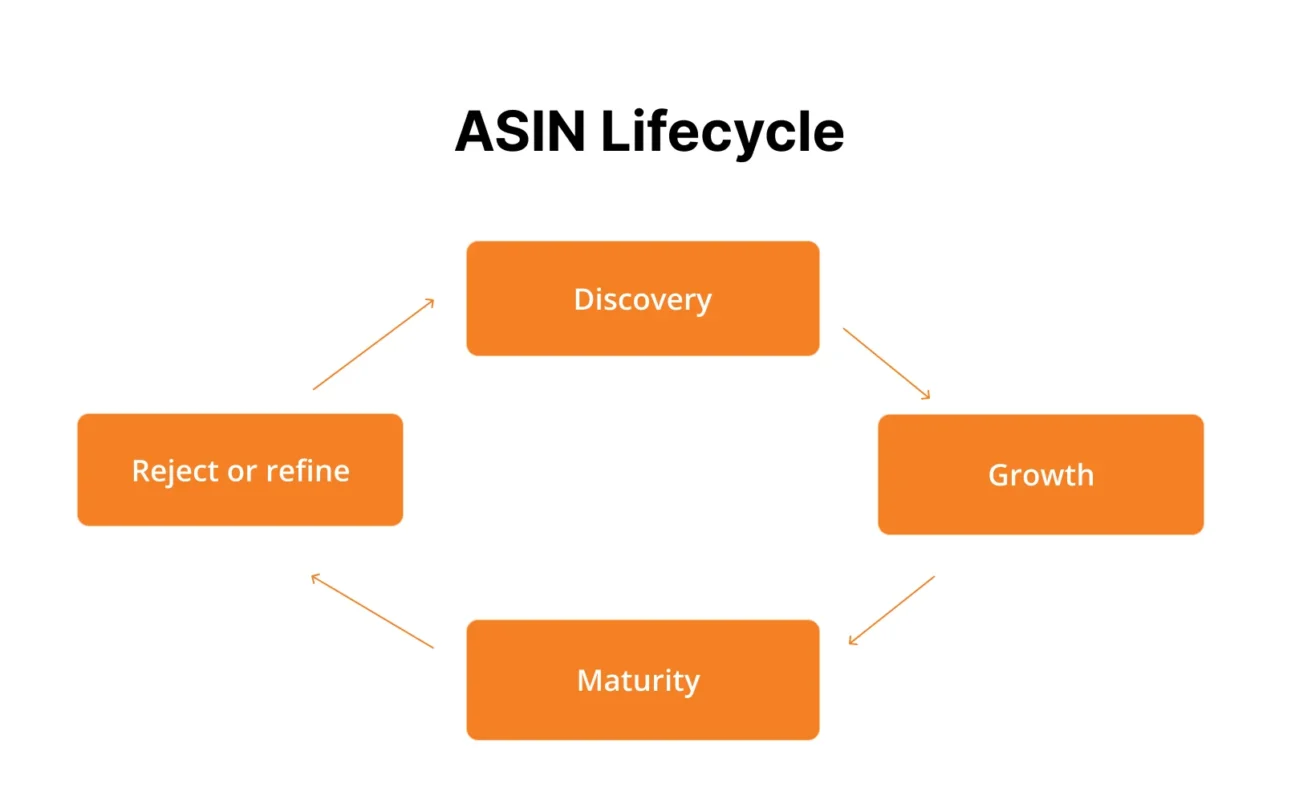
Your keywords should not look the same in month six as they did in week one. A reliable partner adjusts Amazon PPC keyword strategy as your ASINs move through different stages of growth. Early phases require discovery. Mature phases need precision. Decline phases need refinement. Partners who understand these shifts protect your efficiency and improve visibility without wasting money. This is where insight and optimization work together to keep your campaigns stable.
Bid Logic That Follows a Consistent Optimization Rhythm
Unpredictable bid changes are a sign of poor Amazon PPC management. A reliable partner operates with a steady rhythm. They know when to increase bids, when to pull back, and how conversion behavior should influence each adjustment. This rhythm brings efficiency into your campaigns and prevents the volatility that caused your previous frustration.
Tactical Rules for Scaling and Cutting Spend
Reliable partners do not rely on intuition. They rely on clear rules. These rules determine when a campaign is ready to scale, when budget needs to be reduced, and when restructuring is the better choice. This kind of decision-making protects profitability. It keeps your account from drifting into waste and gives you a predictable way to maintain performance even when competition rises.
Understanding How TACoS Reflects Overall Stability
ACoS only reveals half the picture. TACoS shows whether your Amazon PPC work is supporting long-term profitability. Your Amazon PPC partner should know how to read TACoS trends, how to balance paid and organic sales, and how to adjust strategy when your blended performance starts shifting. This understanding brings insight into the bigger impact of Amazon PPC, not just daily fluctuations.
Awareness of Multi-ASIN Interdependence
Your products influence each other. When one ASIN loses rank, others feel the impact. You can expect a seasoned Amazon PPC expert to understand these relationships. They should know which ASIN drives the most visibility, which one supports your conversion rate, and how Amazon PPC adjustments on one SKU can shift profitability across the account. This awareness ensures your Amazon PPC campaigns work together instead of pulling against each other.
A partner who meets these criteria brings precision, clarity, and stability into every part of your Amazon PPC management strategy. This is how you avoid repeating past mistakes and move into a partnership built on insight and control.
How to Vet an Agency’s Strategies Before You Hire Them
You need a partner who understands system behavior, category volatility, and how each adjustment affects profitability. The only way to avoid repeating past mistakes is to evaluate how an Amazon PPC agency reasons through complexity before they manage your spend.
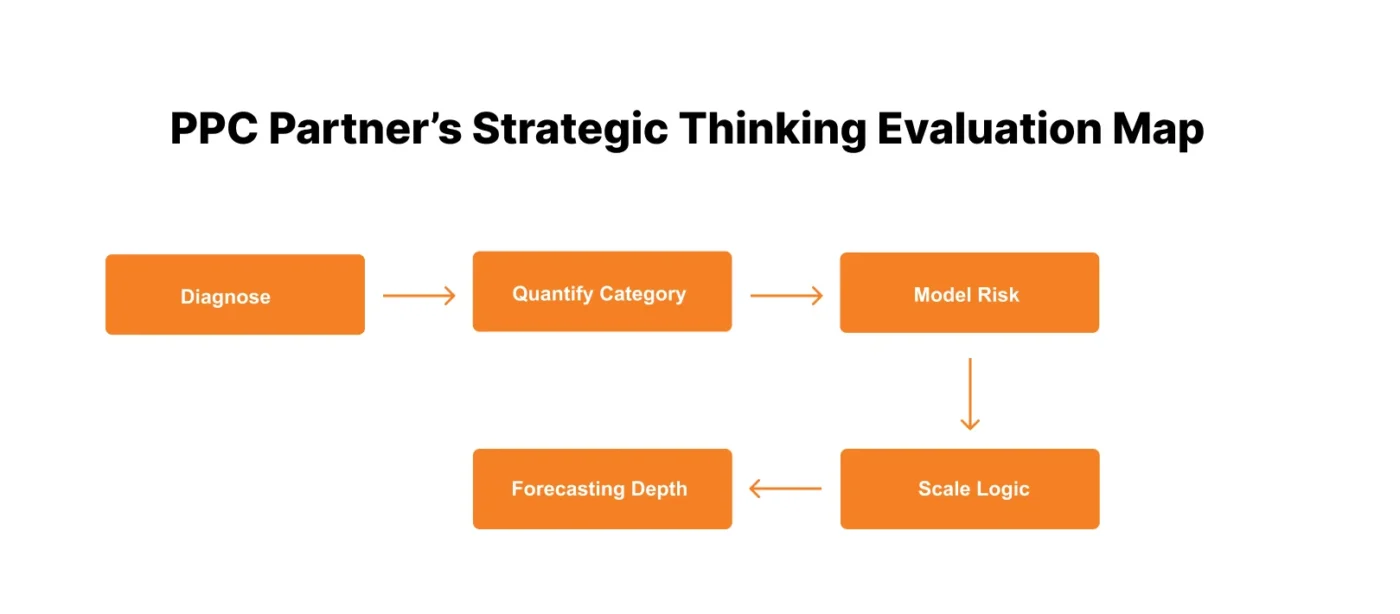
Assess Their Ability to Reverse-Engineer Failure Without Bias
A competent partner can analyze your historical performance and identify structural weaknesses with clarity. They should detect patterns in TACoS drift, margin pressure, and visibility loss. Their ability to connect cause and effect without guessing shows how they solve real problems when performance matters.
Evaluate Whether They Can Quantify Category Pressure
Many agencies acknowledge category trends. Very few can quantify them. Senior leaders should expect an Amazon PPC agency to explain how CPC cycles, competitor saturation, and conversion elasticity influence budget allocation. Their understanding must translate market conditions into practical forecasting and spend efficiency.
Observe How They Model Risk in High-Volatility Scenarios
Strategic thinking becomes visible when multiple KPIs move in different directions. Ask how they prioritize actions when CPC rises, conversion softens, or impression share shifts. You are looking for structured reasoning that isolates root causes and stabilizes performance without unnecessary reaction.
Understand Their Framework for Budget Scaling and Contraction
Scaling should be driven by data, not intuition. A strong partner can explain how they validate incremental revenue potential, how they treat rising CPC thresholds, and how they confirm elasticity before increasing spend. Their logic should protect profitability and maintain visibility during competitive swings.
Review Their Approach to Forecasting Across Multiple Variables
Forecasting reveals operational maturity. Effective partners integrate inventory flow, organic rank behavior, seasonal CPC patterns, TACoS movement, and contribution margin into their pacing models. They understand that forecasting is not about projecting spend but about predicting how the account will behave under pressure.
A partner who thinks at this level provides more than Amazon PPC optimization. They deliver stability, insight, and a decision system that aligns with how senior leaders operate. Evaluating their thinking before the partnership begins keeps you from repeating past failures and moves your brand toward better control.
Red Flags That Guarantee Your Past Amazon PPC Failures
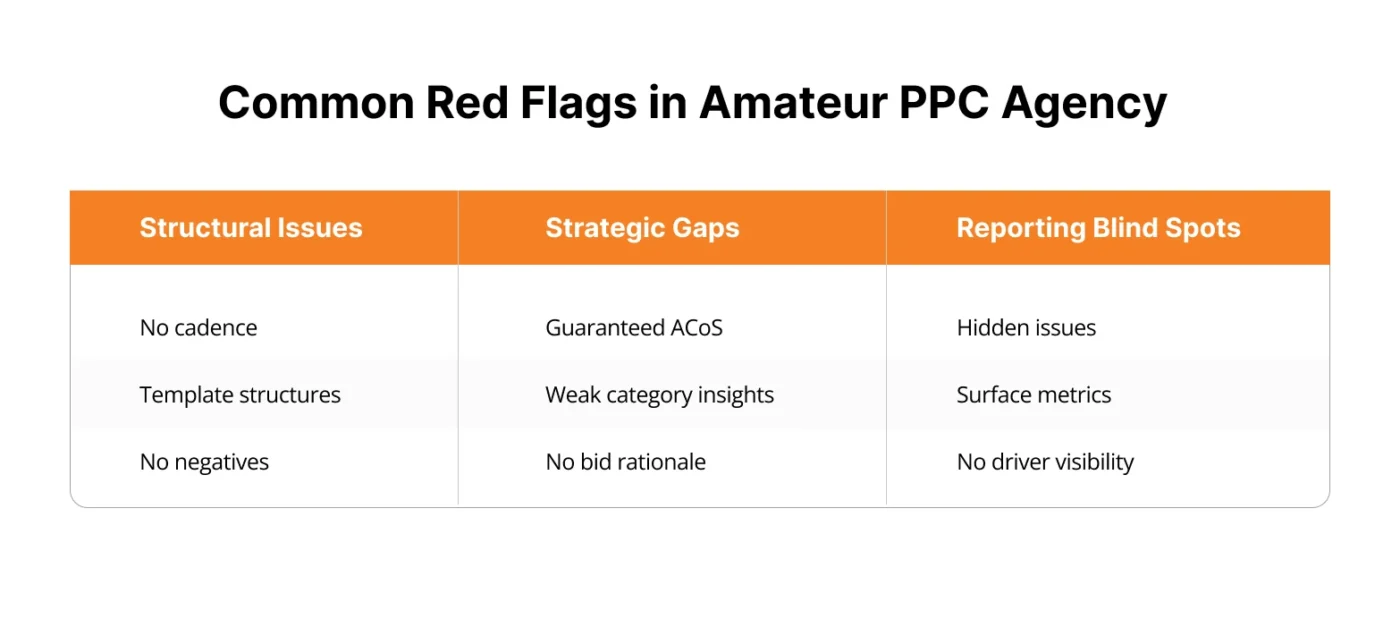
When an Amazon PPC partner fails, the warning signs are usually visible long before the results collapse. Senior teams do not lose money because the platform is unpredictable. They lose money because the partner they trusted relied on shortcuts, shallow strategy, or incomplete insight. These red flags show you exactly which agencies will repeat the same patterns that caused your earlier frustration.
One-Size-Fits-All Campaign Structures
If their structure looks identical across every client, you already know how the relationship will end. Template setups ignore lifecycle stages, SKU maturity, review strength, and category dynamics. This creates instability and wasted spend. A strong partner builds structures that reflect how your specific catalog behaves, not how their internal SOP was written.
No Clear Optimization Format
Random optimization destroys efficiency. When a partner cannot explain how often they adjust bids, review keywords, pace budgets, or verify performance shifts, you can expect volatility. A reliable partner works in a steady rhythm that keeps your visibility stable. Lack of cadence is the clearest sign you will repeat the same frustration you experienced before.
Weak Understanding of Your Category
Your category defines your CPC cycles, competitive intensity, and conversion thresholds. If a partner gives generic answers about your niche, they cannot support sustainable performance. Reliable teams articulate your category’s pressure points and connect them to forecasting, pacing, and optimization choices. Anything less exposes you to blind decisions.
No Negative Keyword Strategy
Wasted spend grows when keyword refinement is weak or nonexistent. If a partner cannot explain how they identify irrelevant queries, suppress wasted spend, or use negatives to protect efficiency, you will relive the same leakage that hurt your past performance. Effective keyword control is the difference between rising TACoS and controlled profitability.
Guaranteed ACoS Promises
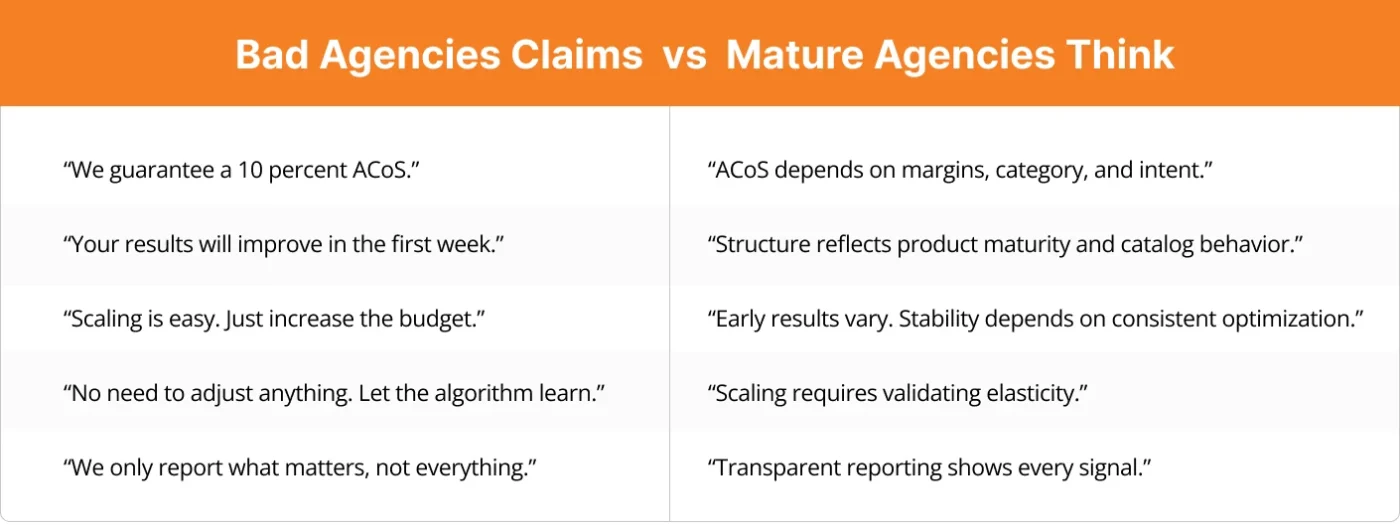
Any agency that promises a fixed ACoS before seeing your data is operating on assumptions. This is not confidence. It is incompetence. A reliable partner needs visibility into your margins, contribution structure, conversion behavior, and category volatility before making any commitment. Guaranteed ACoS is a signal that they cannot handle complex accounts and will rely on surface-level tactics that do not support profitability.
Reporting That Hides More Than It Reveals
An Amazon advertising campaign report should create clarity, not confusion. If a partner delivers reports that highlight surface metrics, exclude key data, or avoid explaining why performance changed, you are stepping back into the same uncertainty you escaped. Senior leaders need visibility, not filtered dashboards that mask structural issues.
No Clear Rationale Behind Bid Adjustments
Bid changes should follow logic. Not instinct. Not guesswork. When an agency cannot explain why they adjusted bids, what insight drove the decision, or how they expect performance to move next, they cannot manage your account with precision. Lack of rationale is the beginning of the same volatility you saw before.
These red flags reveal the agencies that will drain your budget, reduce your visibility, and weaken profitability. When you know how to spot them, you can avoid familiar mistakes and choose an Amazon PPC partner who brings structure, insight, and stability into every decision.
How to Stress-Test an Amazon PPC Partner Before You Let Them Manage Your Spend
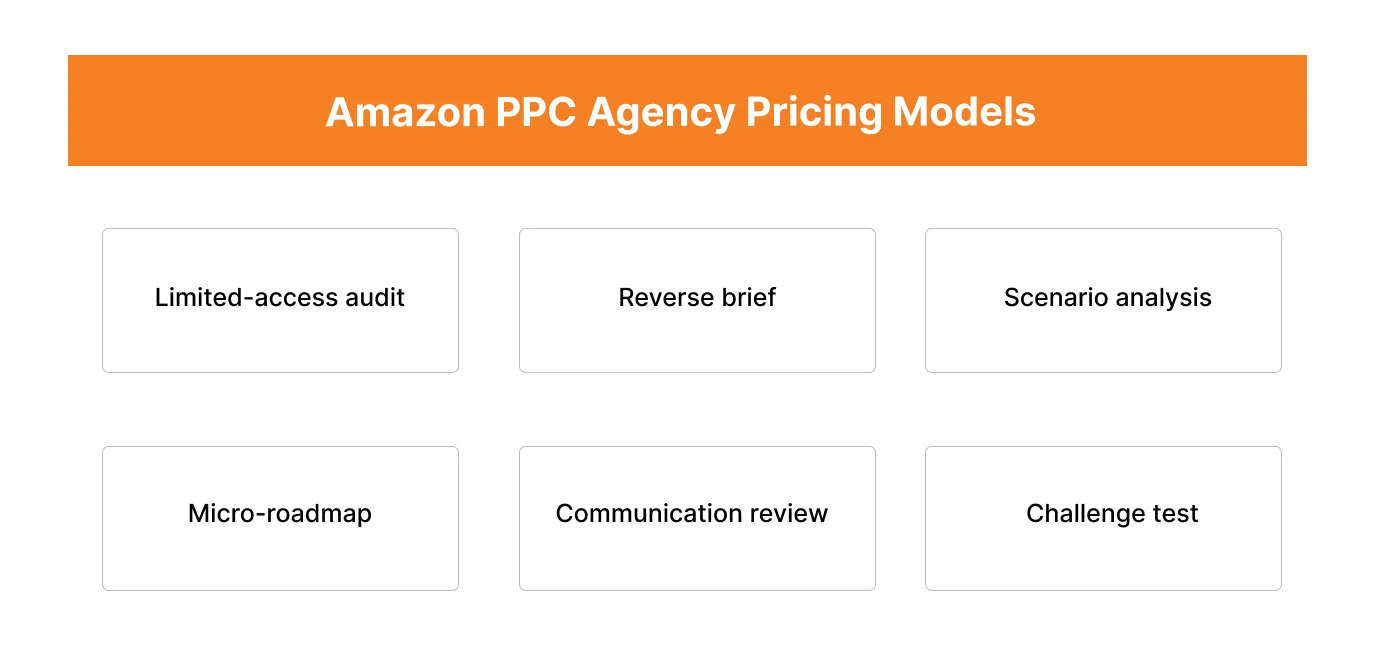
A seasoned Amazon PPC advertising agency does not rely on promises. They rely on controlled tests that reveal how an agency thinks, prioritizes, and operates under real constraints. A stress-test exposes their operational maturity before a single dollar is spent. It separates the partners who speak well from the partners who can actually deliver clarity, efficiency, and stability at scale.
Give Them a Limited-Access Amazon PPC Audit
A strong partner can extract meaningful insight from minimal access. Share only essential performance snapshots and a narrow window of ASIN data.
An expert-level partner should be able to identify:
- Structural inefficiencies
- Wasted spend drivers
- TACoS shifts that point to deeper issues
- Category-specific CPC pressure
- Missed visibility opportunities
If they need a full account deep-dive to explain obvious problems, they are not ready for high-stakes management.
Ask Them to Build a Reverse Brief From Your Data
A reverse brief forces an agency to interpret your business instead of repeating generic frameworks. They should articulate your product maturity, category pressure, competitive posture, and priority ASINs based solely on the data you provide. This reveals strategic clarity and demonstrates their ability to form accurate conclusions without being guided.
Create a Constrained Scenario and Watch Their Prioritization Logic
Do not ask generic questions. Give them a situation like this:
“CPC climbs 18 percent, conversion softens, TACoS rises two points, and inventory is tight. What do you do first?”
A strong partner will:
- Identify the dominant signal
- Rule out false positives
- Stabilize the account before optimizing it
- Justify sequencing with clarity
High-performing partners prioritize based on impact, not noise. Their reasoning during this pressure test shows how they handle volatility and whether they bring stability or chaos to your account.
Ask for a 30-Day Micro Roadmap and Look for Sequencing Logic
Short-term roadmaps reveal how agencies think about timing. You are looking for alignment with your inventory flow, review gaps, category behavior, and SEO ranking opportunities. A strong partner presents a clear logic path that shows how early actions build toward long-term efficiency and visibility.
Evaluate Their Communication Framework During the Test
How they deliver insights is as important as the insights themselves. Senior-level Amazon PPC partners communicate with clarity. They present patterns without flooding you with data. They frame actions with rationale instead of assumptions. Their communication during the stress-test shows whether they will bring calm and consistency into your Amazon PPC decisions or add to the confusion you experienced earlier.
Check Whether They Challenge Your Assumptions With Respect
A mature partner does not simply agree with every preference. They respectfully challenge assumptions when your goals conflict with profitability or category behavior. If they agree with everything, you are dealing with a service vendor, not a strategist.
Watch for:
- Data-backed reasoning
- Respectful challenge
- Alternative paths with pros and cons
- Clarity in how they justify risks
This shows how they will behave in real strategic conversations.
A stress-test does not evaluate how well an agency can pitch. It measures how they operate under constraints. When a partner demonstrates clarity, insight, and precision with limited information, you gain confidence that they can manage your spend with the structure and discipline you lacked in your last partnership.
Conclusion
Choosing your next Amazon PPC partner after a bad experience should feel clear, not risky. You now know how to spot real operational standards, test strategic depth, and avoid the red flags that lead to wasted spend and repeated frustration.
At AMZDUDES, we bring structure and stability through our Amazon PPC services. For more than five years, our team has worked exclusively in the Amazon ecosystem, managing over fifty brands across competitive categories with systems built to stay reliable even when conditions shift. If you want a partnership built on structure, transparency, and proven Amazon expertise, we would be glad to help you move into your next stage of growth. Book a consultation with us today.