
Key Takeaways
- AMC bridges the gap between surface-level reporting and actionable insights. Instead of knowing what happened, you can uncover why it happened and what to do next.
- Targeting use cases ensures ad spend goes to the audiences that matter most, from cart abandoners to high-value lookalikes. AMC creates precise segments that improve efficiency and reduce waste.
- Reporting use cases gives clarity inside the funnel path-to-purchase analysis, campaign overlap, and new-to-brand vs repeat buyer analysis, showing how campaigns work together.
- Attribution use cases prove ROI with accuracy, linear, time-decay, or position-based models ensure every touchpoint gets fair credit.
- AMC operates across industries, retail, automotive, luxury, real estate, and financial services brands, all of which use AMC to connect ad spend to verified business outcomes.
- Start small, scale smart pairs one reporting use case with one targeting use case, measure the outcome with a basic attribution model, then expand.
One of the most common problems for brands running Amazon advertising at scale is the inability to prove where results are actually coming from. The Amazon Ads Console shows impressions, clicks, and ROAS, but those top-line numbers do not explain which campaigns are working together, which audiences are genuinely driving profitability, or what the customer journey looked like before the final converting click. When the question is “we cannot prove the ROI of our current marketing spend,” Amazon Marketing Cloud is where the answer lives.
AMC gives you event-level data in a privacy-safe clean room environment, allowing you to answer questions that standard reporting cannot. You can map the complete path to purchase, build precision-targeted audiences from real engagement signals, apply attribution models that reflect actual shopper behaviour rather than defaulting to last-click, and connect Amazon advertising data to broader marketing channels and first-party sources.
The best entry point is the AMC Use Case Library, Amazon’s collection of pre-built SQL query templates, each with business context explaining why the query matters, step-by-step instructions for adapting it to your account, and interpretation guidance for acting on the results. You do not need to build AMC analyses from scratch. The library makes the most valuable use cases immediately accessible.
This guide covers 20+ Amazon Marketing Cloud use cases across analytics, audience creation, and advanced applications. Not sure which use case to start with for your specific situation? Use our AMC Use Case Recommender to answer three questions and get a ranked recommendation matched to your advertising challenge, ad mix, and goal.
Why AMC Use Cases Matter
Most brands eventually hit the same ceiling with the Amazon Ads Console. Impressions, clicks, and sales are visible, but those numbers do not show how different ad types interact, which audiences are driving genuine profitability, or what happens in the customer journey before and after the purchase.
Amazon Marketing Cloud changes this. Think of it as a secure data laboratory, a privacy-safe environment where you can ask deeper questions, dig into the full shopping journey, and build solutions designed around your brand’s specific growth challenges rather than the metrics Amazon surfaces by default.
With AMC use cases, you can:
- Map the customer journey with clarity: Understand every step buyers take from first impression to detail page view, to add-to-cart, to conversion. This visibility shows which campaigns build awareness and which ones close the sale – and which touchpoints are being over-credited or ignored by standard reporting.
- Create precision-targeted audiences: Retarget shoppers who watched a Sponsored Brand video but did not purchase. Build lookalikes of your highest-value repeat customers. Activate these segments directly in DSP or Sponsored Display, turning analytical insights into measurable campaign actions.
- Apply attribution that reflects reality: Move beyond last-click models. With AMC, you can use linear, time-decay, or position-based attribution to see the true impact of every channel and allocate budget with confidence rather than with assumptions.
AMC Data → Query / Use Case → Actionable Insight → Campaign Optimisation
The best part? You don’t need to do things from scratch. Amazon has built an AMC Use Case Library: This is the operating logic of every AMC use case: raw event-level data becomes a query, the query produces an insight, and the insight drives a specific campaign or targeting change.
AMC and the Use Case Library
The AMC Use Case Library provides ready-to-run SQL templates across three primary categories: analytics, audience creation, and attribution. Each template includes the business rationale for running the query, implementation guidance, and interpretation notes. For practitioners who are new to AMC, the library removes the requirement to write SQL from scratch, the infrastructure for advanced analysis is already built.
Analytics Use Cases
Standard Amazon Ads Console reporting answers “what happened.” AMC analytics use cases answer “why it happened” and “what to do about it.”
The questions most brands cannot answer without AMC:
- Which campaigns are actually driving new-to-brand customers versus recycling existing demand?
- How do different ad types work together in the path to purchase?
- Are you hitting the same audience twice and creating redundant spend?
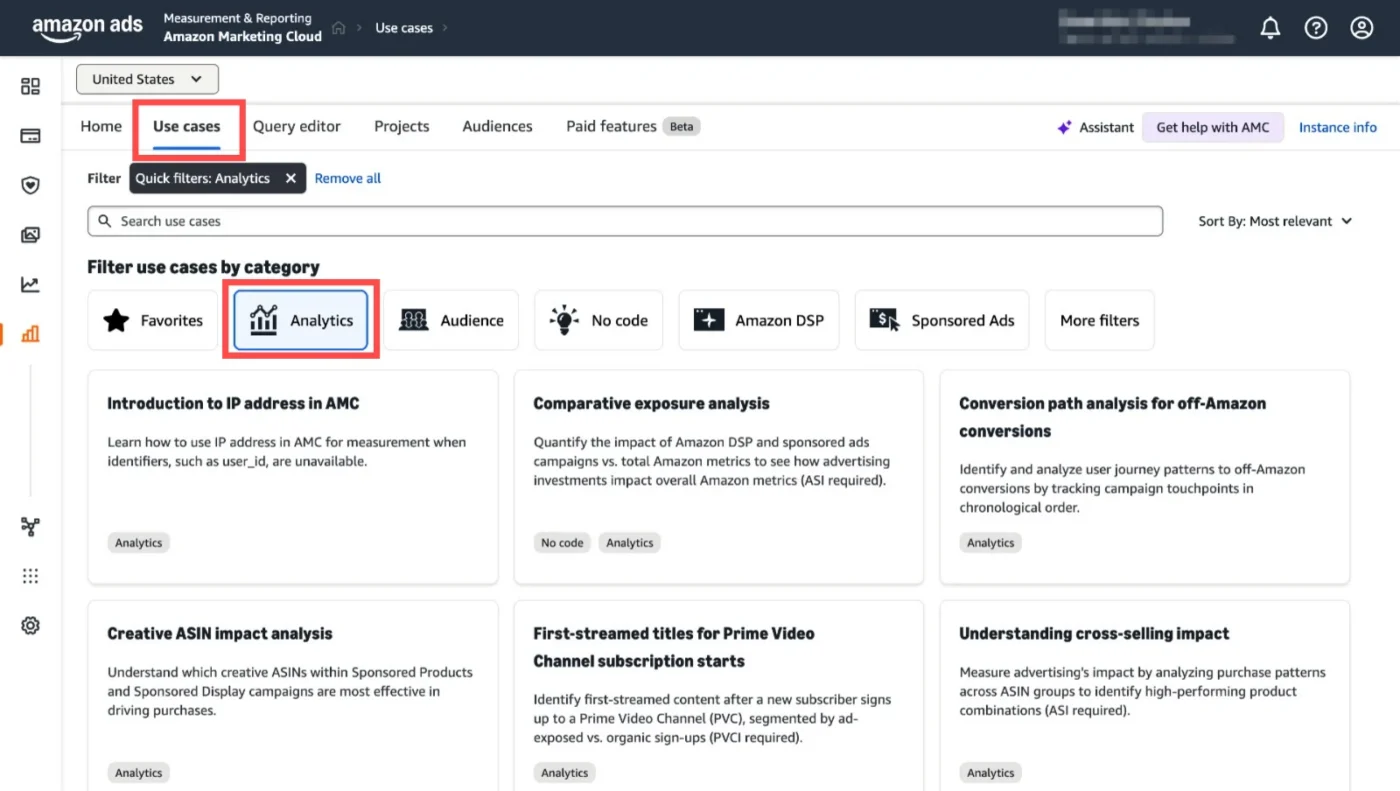
Here are the analytics use cases that address each of these questions directly.
1. Performance Deep Dive
Clicks and sales numbers only scratch the surface. AMC breaks results down by creative, placement, or shopper segment to show what is actually driving performance, not just the aggregate.
Example: Instead of stopping at “this Sponsored Products campaign generated $20K,” you see which ad groups drove new-to-brand customers, which ones brought repeat buyers, and how results shifted during promotional windows. That clarity focuses the budget where it has the greatest impact.
2. Audience Insights
Understanding who clicks is useful. Understanding who converts and what attributes they share is what allows targeting decisions to compound over time.
AMC connects audience attributes (age, household income, category affinity) to actual engagement and conversion data.
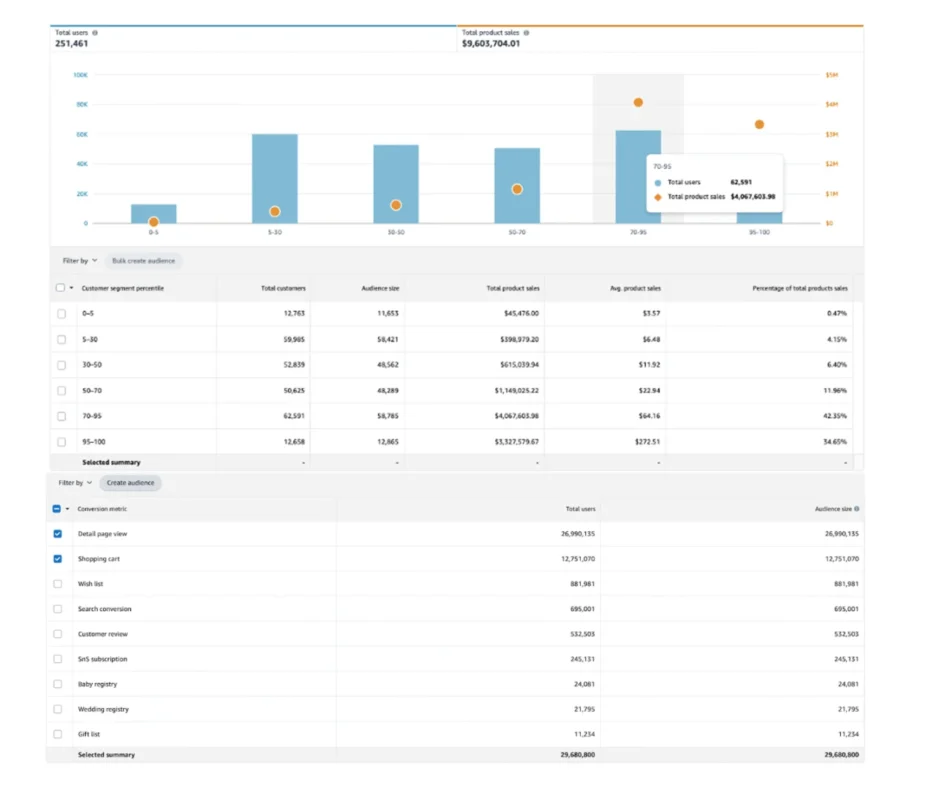
Step 1: Identify high-value audiences from conversion data.
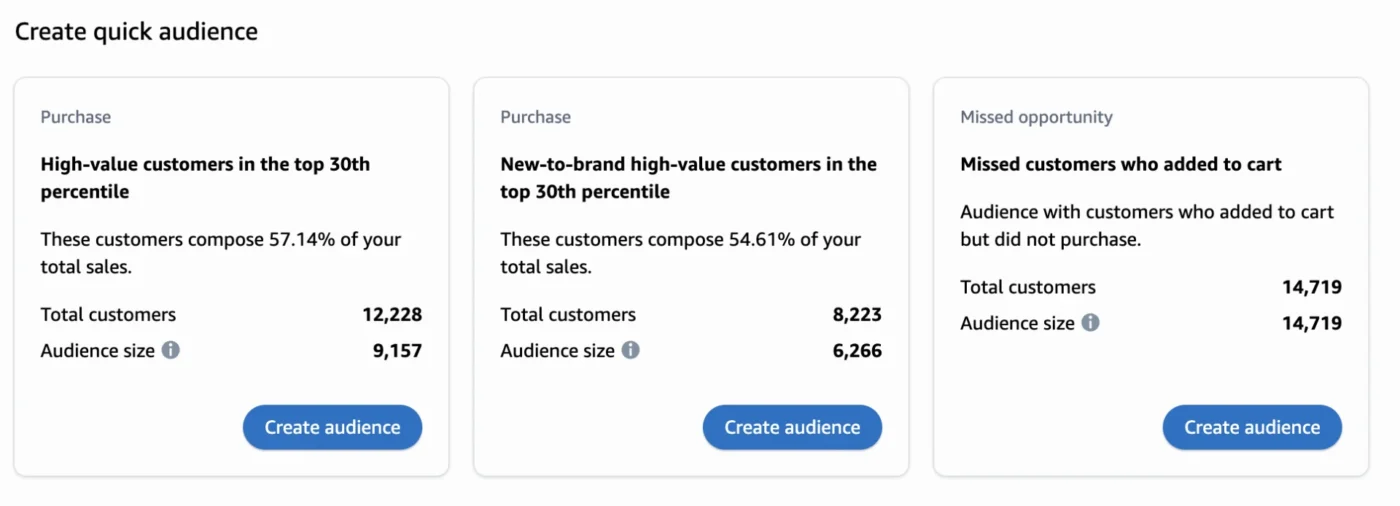
Step 2: Create audiences based on AMC recommendations.
Step 3: Build custom audiences from the user journey
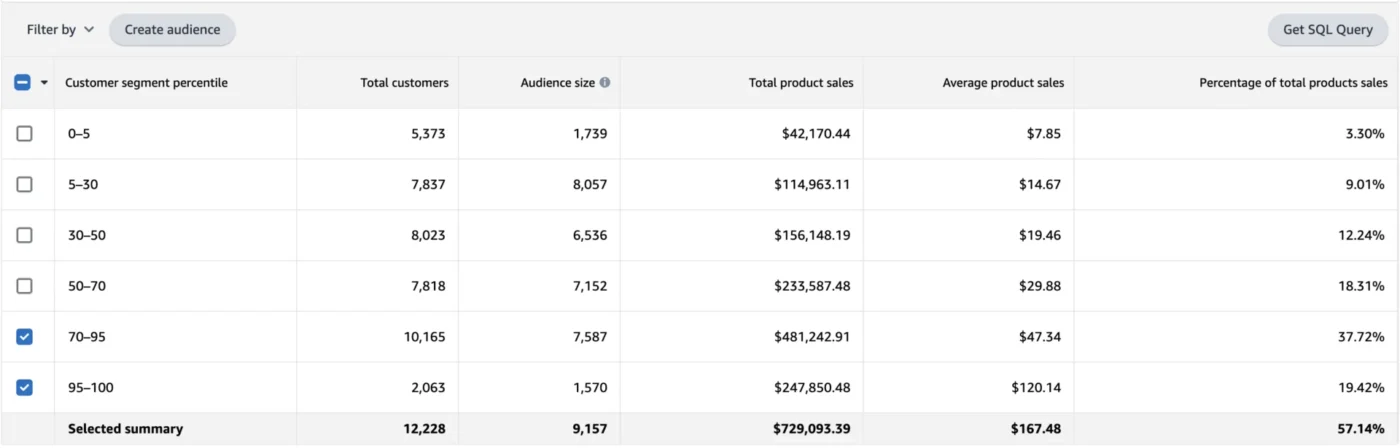
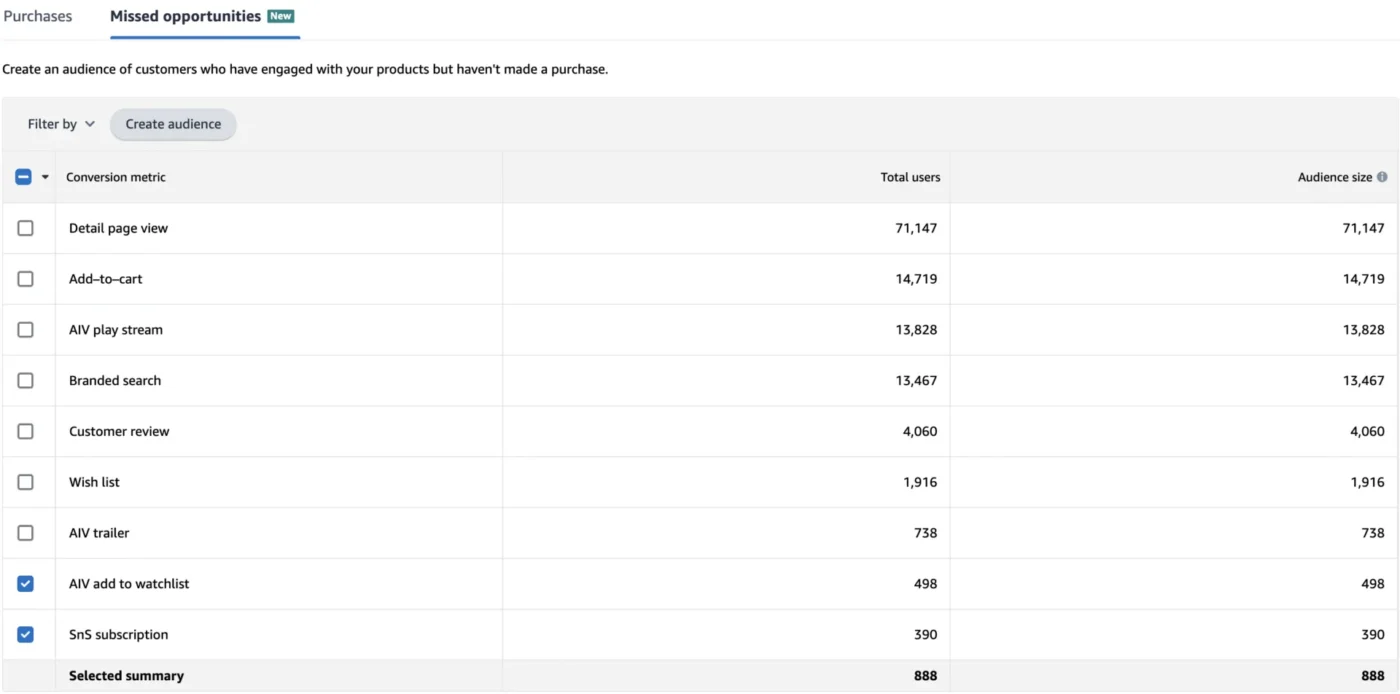
Example: Younger audiences may respond strongly to Sponsored Brand video ads while older audiences convert more reliably after Sponsored Display. That insight allows a media mix adjustment that improves efficiency without increasing total spend.
3. Shopping Journey Analysis
Every purchase follows a path. AMC maps the most common steps customers take before buying so you can identify where they engage and where they drop off.
Example: If AMC shows shoppers often click a Sponsored Brand ad and view the detail page but abandon before adding to cart, that signals a listing quality issue, not a campaign issue. The fix is in the product page content, review count, or offer, not the bid.
4. Media Mix Analysis
Different ad types contribute differently to the purchase journey. AMC quantifies the combined impact of Sponsored Ads, DSP, and Streaming TV, showing how each format contributes to the full funnel rather than crediting only the final touchpoint.
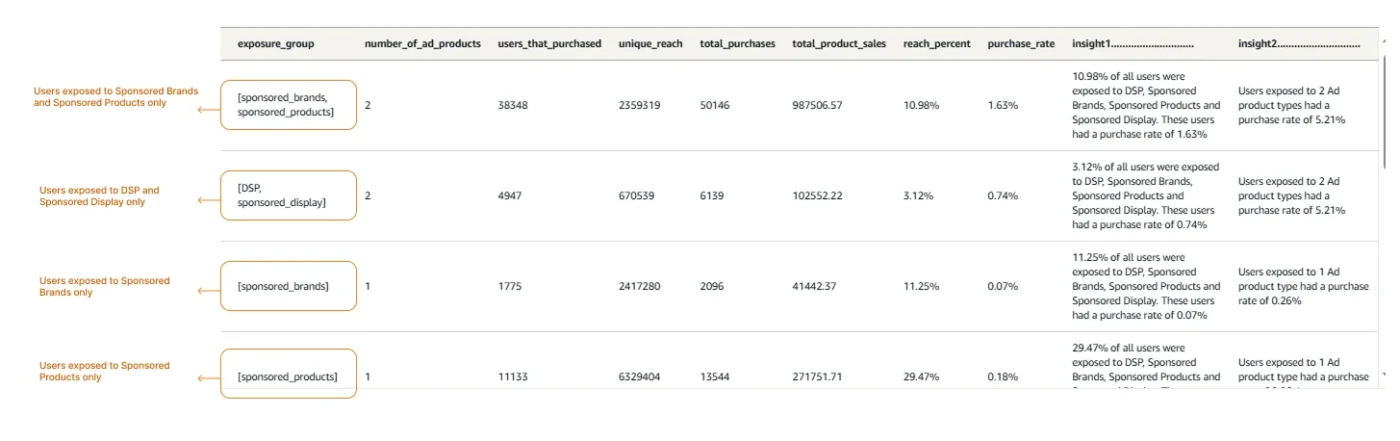
Example: Streaming TV may not appear to drive direct conversions in standard reporting. AMC might reveal that it consistently boosts Sponsored Products engagement in the days that follow, confirming its role in upper-funnel awareness that pays off downstream.
5. Omnichannel Impact Assessment
AMC does not limit attribution to Amazon-only sales. It can show how ads influence purchases across retail partners or DTC stores, providing a more complete view of advertising ROI for brands that sell across multiple channels.
Example: A DSP campaign may show minimal lift in Amazon orders but reveal a measurable increase in retail partner sales when cross-channel data is brought into AMC.
6. Custom Attribution Models
Last-click attribution systematically over-credits the final touchpoint and under-credits the awareness and consideration stages that made the final click possible. AMC provides the flexibility to apply linear, time-decay, or position-based models so credit is distributed in proportion to each touchpoint’s actual contribution.
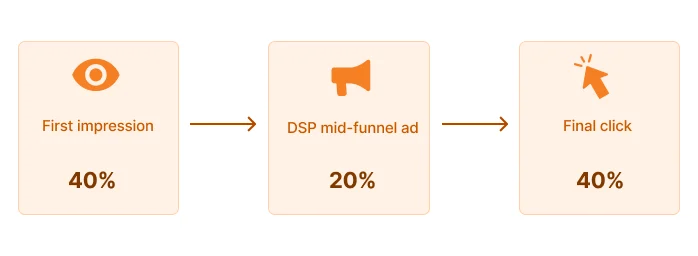
Example: Instead of assigning 100% credit to the last Sponsored Product click, a position-based model might assign 40% to the first impression, 20% to a mid-funnel DSP ad, and 40% to the final click. This shows each channel’s real contribution and produces more accurate budget allocation.
7. Path-to-Conversion
AMC breaks down the exact sequence of ad exposures that led to a sale step by step, giving visibility into how campaigns build on one another across the funnel.

Example: 70% of conversions begin with Sponsored Brand ads, are reinforced by DSP retargeting, and close with Sponsored Products. With that knowledge, campaign investment can be designed to mirror the journey that actually produces sales.
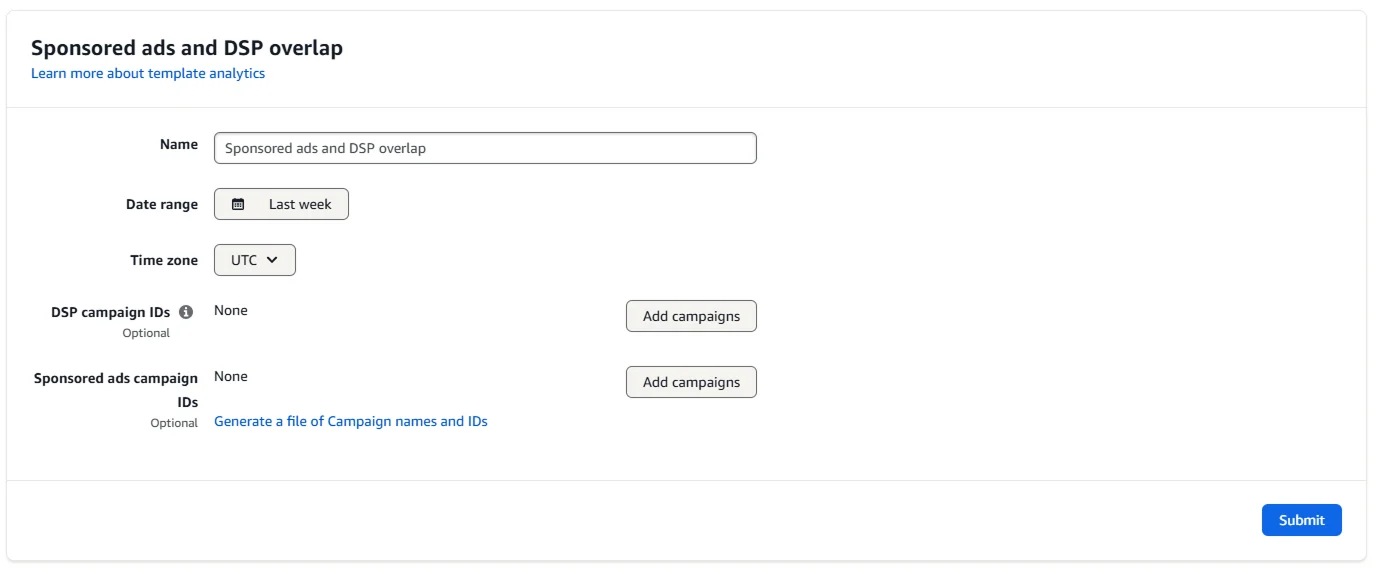
8. Overlap Analyses
When multiple campaigns reach the same audience, you risk paying for redundant impressions without generating incremental reach. AMC overlap reports show exactly where this is happening.
True or false: Overlap reports help advertisers see the overlap of audiences across their brand portfolio. True. This is one of the core functions of AMC overlap analysis, identifying where budget is being duplicated across campaigns targeting the same shoppers, and redirecting that spend toward genuinely new audience segments.
Example: If 40% of a DSP audience is also receiving Sponsored Display ads, AMC surfaces the redundancy, freeing budget for incremental reach rather than frequency on the same shoppers.
9. Campaign Measurement
Campaigns rarely work in isolation, but standard reporting treats them that way. AMC shows performance in context, revealing how campaigns support each other across the funnel.
Example: A Sponsored Brands campaign with low ROAS in the console might be playing a critical awareness role that enables Sponsored Products conversions downstream. AMC makes this relationship visible and measurable.
10. Reach & Frequency Optimization
Ad exposure has a diminishing returns curve. Too much frequency produces fatigue; too little means missed opportunities. AMC identifies the optimal frequency threshold for each audience segment.
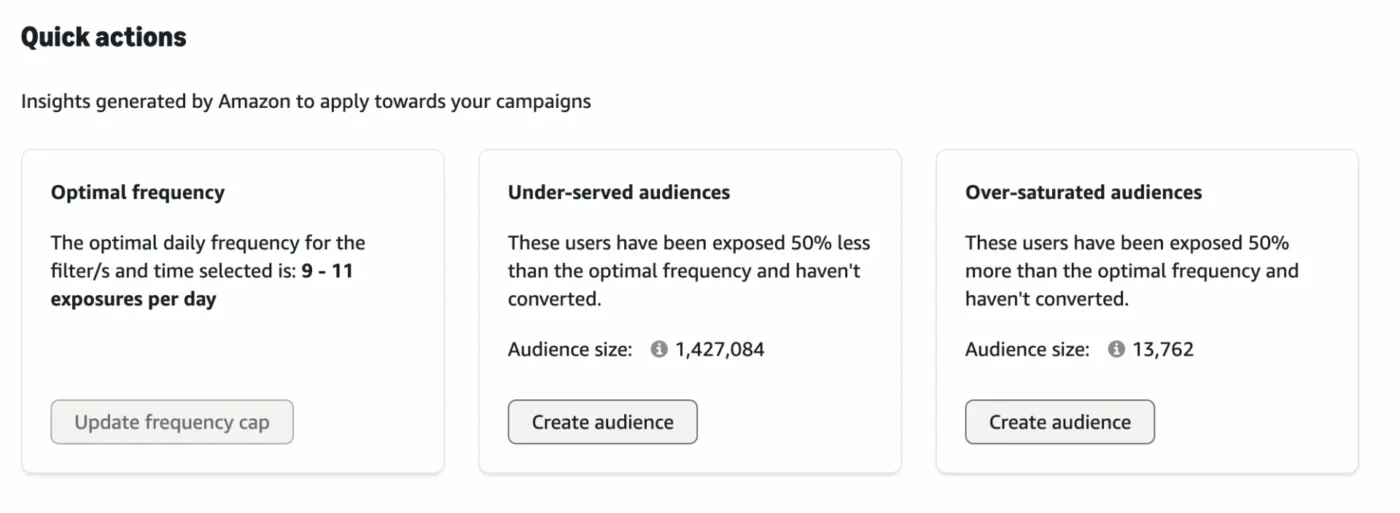
Example: If conversion rates plateau after five impressions, frequency can be capped there and spent redirected to new audiences, maximizing both reach efficiency and budget utilization.
11. Technical Queries
Some of the most impactful AMC analyses start with data hygiene. Technical queries allow merging datasets, formatting identifiers, or grouping SKUs under parent ASINs for cleaner, more accurate analysis at the brand or product line level.
Example: Consolidating multiple SKUs under a parent ASIN allows campaign performance to be viewed at the brand level, ensuring reporting reflects the actual catalogue structure rather than individual SKU fragments.
12. Audience Refinement
Not every audience segment deserves equal spend. AMC allows refinement based on margin contribution, purchase history, and conversion probability, ensuring retargeting budget goes to the segments most likely to generate strong returns.

Example: Instead of remarketing to all cart abandoners equally, focus on those who abandoned high-margin products. This concentrates a retargeting budget where the return potential is highest.
13. Supply Optimization
Advertising and inventory management must work together. AMC reveals which products perform best under which channels, allowing the budget to be aligned with both supply capacity and channel efficiency.
Example: If one SKU consistently converts through DSP but not Sponsored Products, shifting spend toward DSP avoids wasting budget on placements that underperform for that specific item.
AMC Measurement Solutions: Video and Streaming TV
Two specific measurement questions appear consistently in practitioner searches and certification assessments:
What measurement solutions can you use to measure the impact of online video ads? Amazon Marketing Cloud, Amazon Attribution, Amazon Brand Lift, and third-party measurement tools. AMC specifically enables path-to-conversion analysis showing how video ad exposure influences downstream purchase behaviour at the individual event level.
What measurement solutions can you use to measure the impact of streaming TV ads? Amazon Marketing Cloud, Amazon Attribution, Amazon Brand Lift, and third-party measurement tools. AMC’s clean room environment is particularly valuable for streaming TV measurement because it allows matching ad exposure data with purchase signals in a privacy-safe way that standard console reporting cannot replicate.
Audience Creation Use Cases
The question most brands are asking: “How do I stop spending on broad audiences and focus only on the shoppers who actually drive growth?”
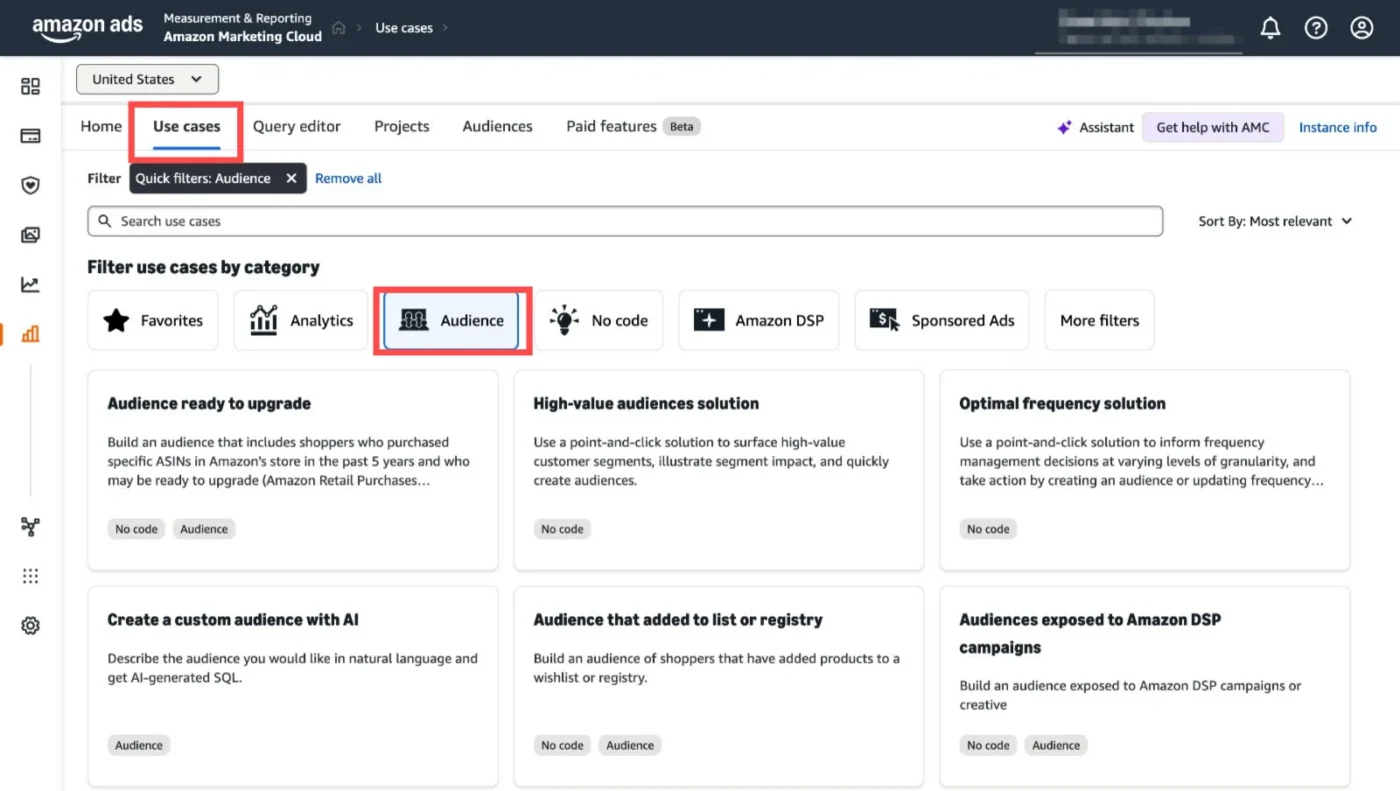
AMC audience creation use cases answer this by building data-driven segments from real engagement and conversion signals, then activating them directly in DSP and Sponsored Ads.
1. Ad Engagement Audiences
Shoppers who interact with ads often show intent even if they do not purchase immediately. AMC captures these engagement signals and allows re-engagement through the right channel at the right time.
Example: A Sponsored Brands Video campaign drives high engagement but low immediate conversions. AMC builds an audience of those viewers who can then be re-engaged through Sponsored Products or DSP, keeping the brand present as those shoppers continue their consideration process.
2. Cart Abandoners
Cart abandonment represents recoverable revenue. AMC enables retargeting audiences built specifically around cart abandonment events, reconnecting with high-intent shoppers who paused before completing checkout.
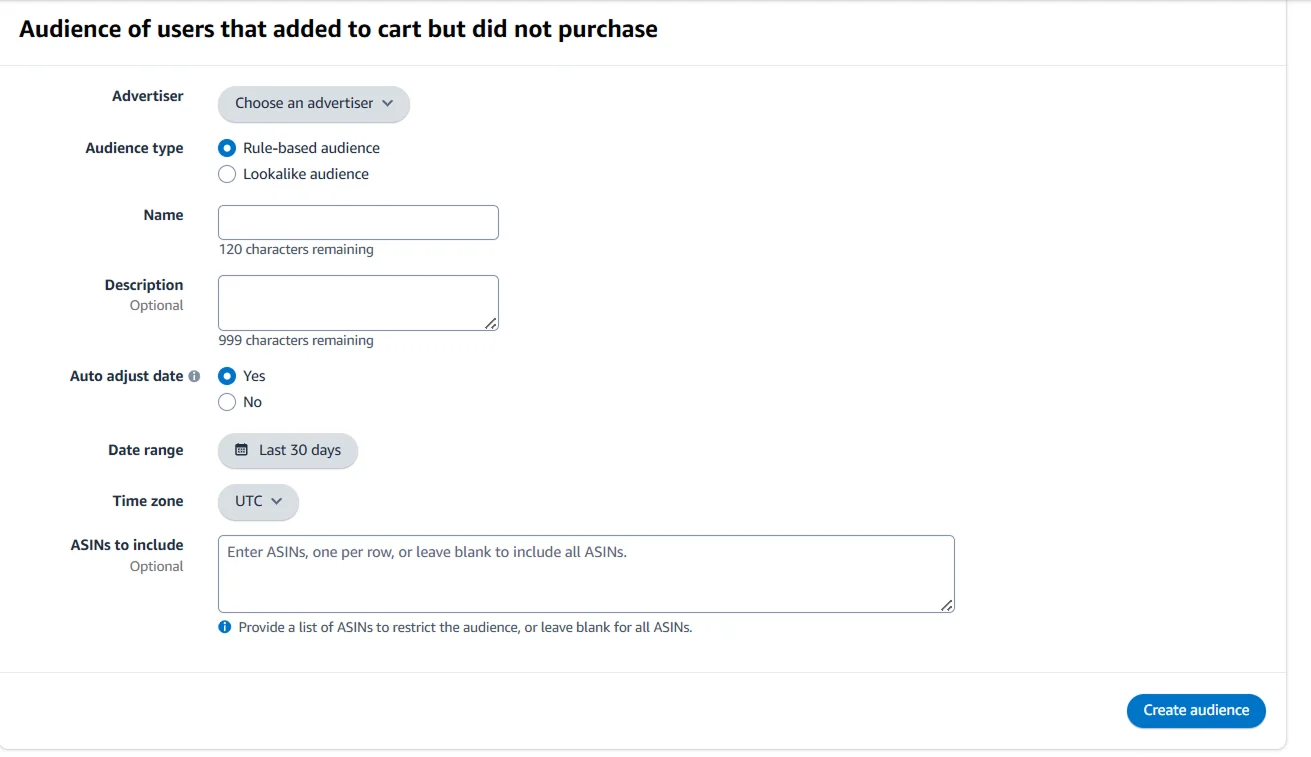
Example: A shopper adds a $50 skincare product to their cart but does not complete the purchase. AMC enables a Sponsored Display reminder or DSP retargeting campaign, giving the shopper another opportunity to complete the order.
3. High-Value Lookalikes
Top customers often share common behavioural patterns. AMC identifies these patterns and enables lookalike audience creation at scale, targeting new shoppers who share the characteristics of the brand’s most valuable existing customers.
Example: The top 10% of customers purchase across multiple categories at above-average frequency. AMC identifies similar shoppers across Amazon, enabling efficient new-customer acquisition that targets the right profiles rather than broad demographic categories.
4. Custom Audiences from DSP and Sponsored Ads
Shoppers engage with multiple ad types before deciding. AMC combines these cross-format interactions into custom audiences that reflect the full journey enabling retargeting that accounts for all prior touchpoints, not just the most recent one.
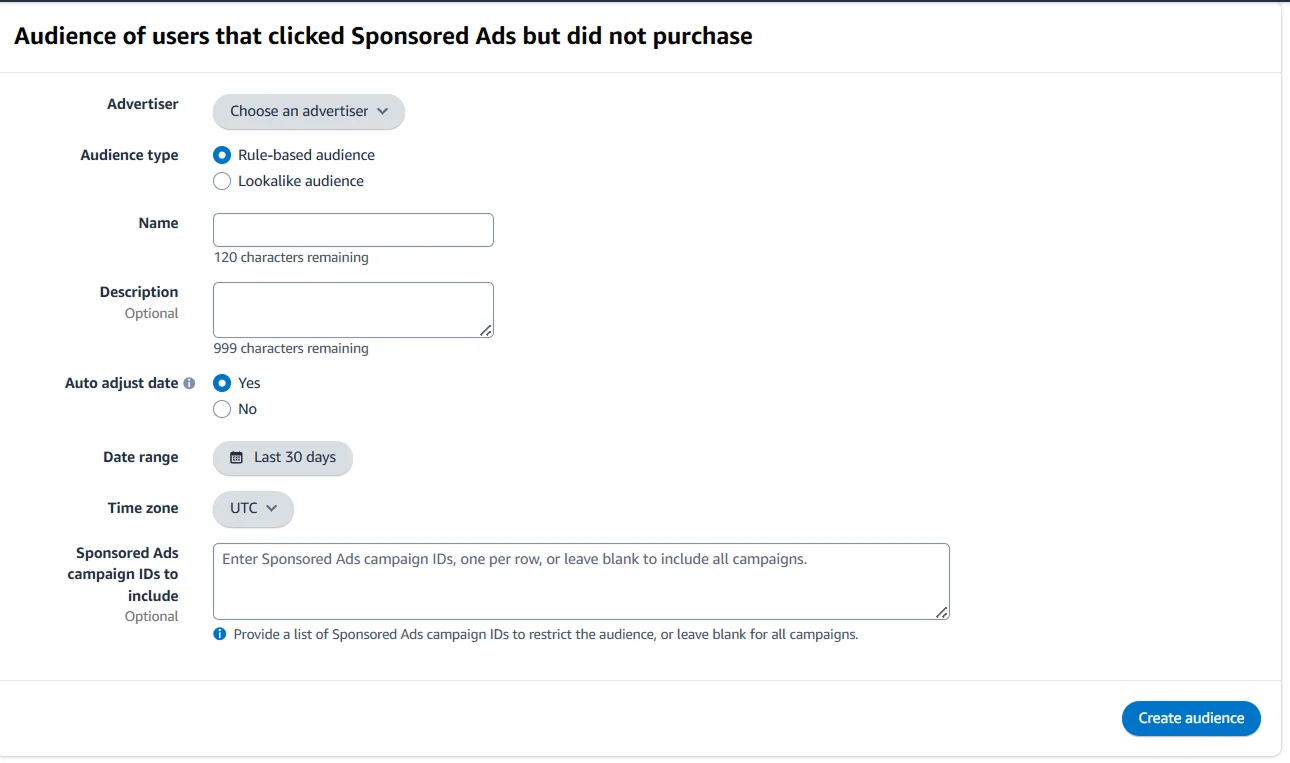
Example: A shopper clicks a Sponsored Brand ad, views a product page, but does not purchase. AMC records this sequence and enables a DSP to retarget the audience, delivering relevant ads at the next stage of the journey.
5. Conversion-Event Audiences
AMC enables audience definition based on specific conversion events rather than broad behavioural signals, allowing differentiated strategies for product viewers, cart adders, single purchasers, and lapsed buyers.
Example: A supplement brand targets shoppers who viewed the protein powder detail page but did not buy, while simultaneously building a segment of buyers who purchased once but have not reordered within 60 days. Two distinct audiences, two distinct messages, two distinct campaign objectives.
6. First-Party Data Integration
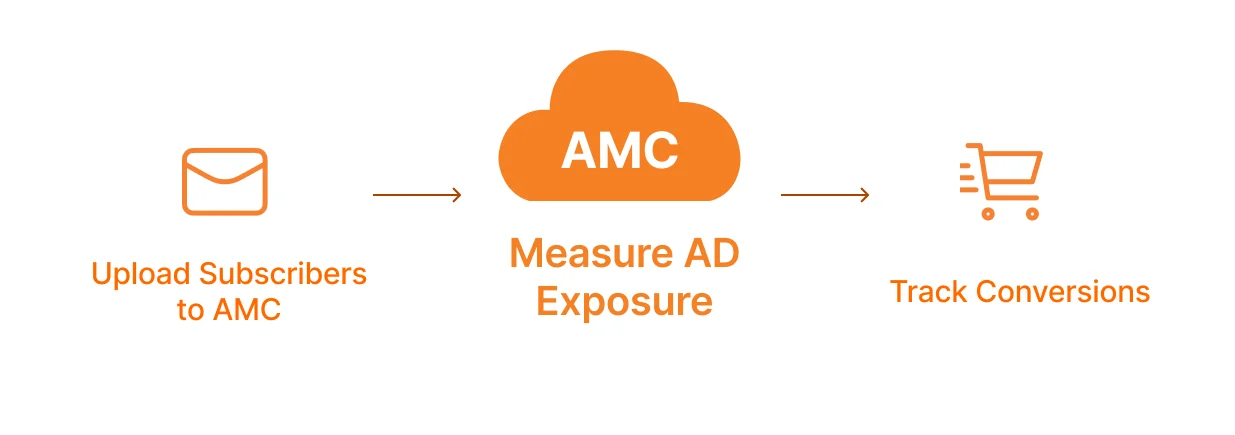
AMC allows first-party data upload, CRM lists, loyalty programme data, and email subscribers, which can be enriched with Amazon signals for stronger targeting and more complete customer intelligence.
Example: Upload newsletter subscribers into AMC, then measure how many saw Amazon ads and later converted. This creates alignment between off-Amazon and on-Amazon strategies, ensuring every touchpoint contributes to the same growth objective.
7. Sandbox Testing
The AMC sandbox environment allows analysts to test queries, refine audience logic, and validate SQL before running analyses in production.
Why is the AMC sandbox a helpful environment for testing queries? The sandbox provides a safe environment to build and refine SQL queries against sample data without affecting live campaigns, incurring costs, or producing misleading results from incomplete analysis. It is the correct environment for learning AMC query structure, training new team members, and validating query logic before applying it to actual campaign data. Any query that will be used in production should be tested in the sandbox first.
Example: An analyst building a cart-abandoner audience segment tests the query logic in the sandbox to verify that the correct event parameters are being captured before applying the query to live campaign data
At AMZDUDES, AMC is part of how we connect Amazon advertising decisions to the full picture of what is driving results. As a full-service Amazon agency, we manage Amazon PPC alongside listing creative, inventory forecasting, and customer insights – and AMC is the layer that makes the connections between these visible: which ad exposures are driving new-to-brand acquisition, which campaigns are supporting organic rank, and where budget is creating genuine incremental growth versus capturing demand that would have converted anyway.
Connecting the Dots: Targeting, Reporting & Attribution
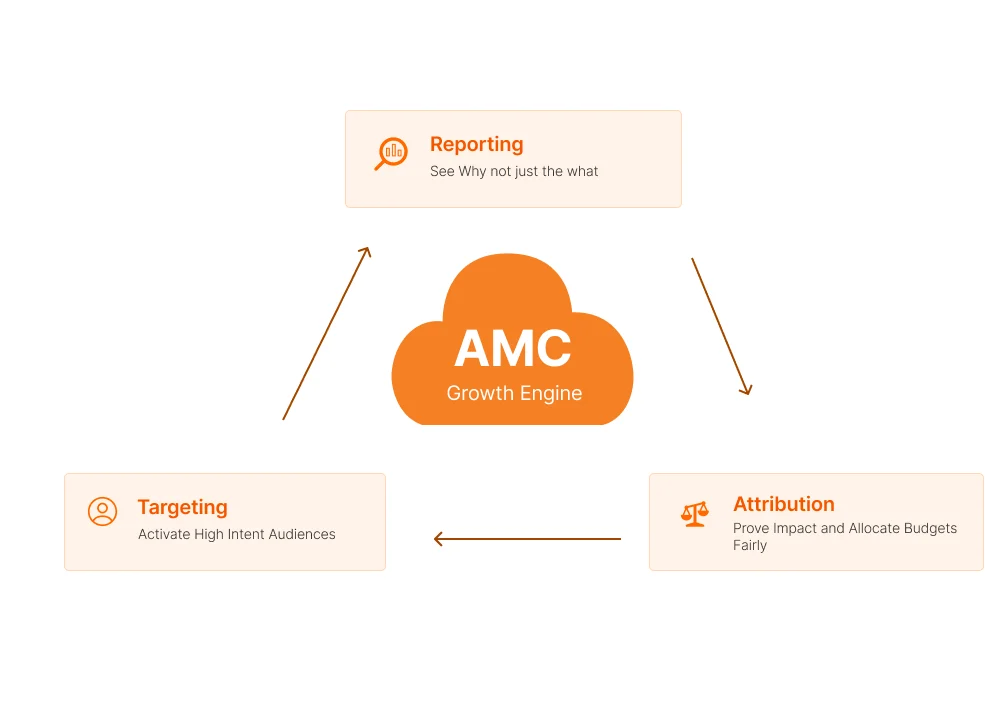
Individually, AMC use cases deliver strong value. The real power emerges when they operate as a closed loop, reporting generates insights, targeting activates them, and attribution validates the impact.
Targeting: Smarter, More Precise Reach
AMC enables audiences built from demonstrated intent cart abandoners, ad engagers, high-value lookalikes, and first-party data segments. The outcome is more relevant campaigns at every funnel stage, with spend concentrated on audiences that have already signalled interest rather than broad demographic proxies.
Reporting: Clarity Inside the Funnel
Standard console reports show what happened. AMC shows why it happened, how campaigns interact across formats, where shoppers disengage in the journey, which ad types create the strongest momentum, and where frequency is generating redundancy rather than reinforcement.
Attribution: Proving ROI with Accuracy
Custom attribution models replace last-click defaults with frameworks that distribute credit in proportion to each touchpoint’s actual contribution. This produces more accurate budget allocation, more confident investment decisions, and a clearer understanding of which channels are genuinely driving growth.
Example Workflow in Action
- Reporting: Shopping journey analysis reveals that most shoppers add to cart after engaging with Sponsored Brands ads.
- Targeting: Build a cart-abandoner audience from these high-intent shoppers and reach them through DSP.
- Attribution: Apply a custom model to see how Sponsored Brands drove awareness, DSP re-engaged, and Sponsored Products closed the purchase, with credit distributed accurately across all three.
This closed-loop insight to targeting, attribution to optimisation is what transforms AMC from a measurement tool into a strategic growth engine.
Advanced & Emerging AMC Use Cases
Once core reporting and targeting use cases are operational, AMC evolves into a broader strategic platform connecting Amazon data to external channels, supporting predictive modelling, and enabling rigorous incrementality measurement.
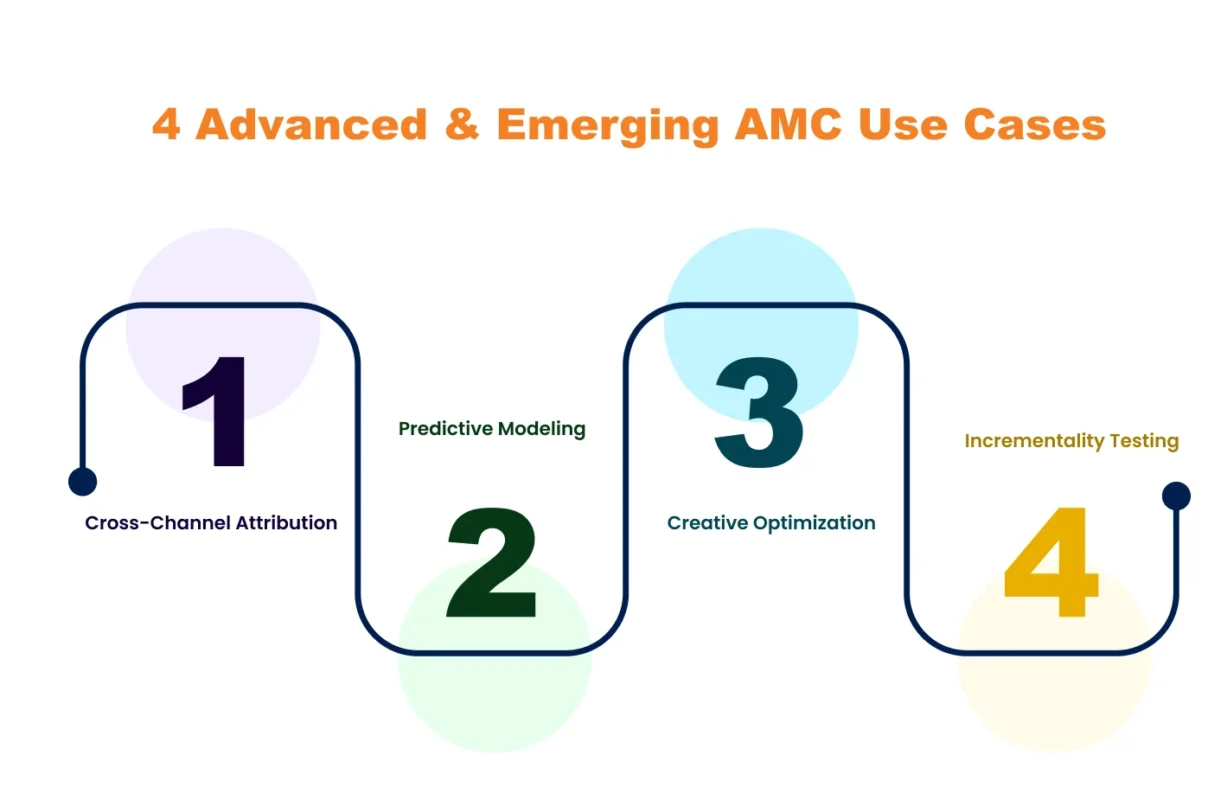
Here are some of the most impactful advanced and emerging use cases worth exploring:
1. Cross-Channel Attribution
Shoppers move between Amazon, Google, Meta, retail stores, and DTC sites before purchasing. AMC connects Amazon’s event-level data with external platform data, revealing Amazon’s role in the broader customer journey.
Example: Combining AMC data with GA4 or Meta Ads reporting might reveal that Amazon DSP impressions increase branded search queries on Google, or that Amazon ad exposure improves Meta remarketing conversion rates. These insights enable media mix optimisation across the full customer journey, not just within Amazon.
2. Predictive Modelling
AMC’s event-level behavioural data supports predictive models for customer lifetime value, repeat purchase probability, and churn risk, enabling proactive campaign decisions rather than reactive optimisation.
Example: A supplements brand analyses reorder cycles for protein powder and predicts when customers are most likely to repurchase. Retargeting campaigns are timed around these predicted windows, improving retention efficiency and reducing the cost of reacquisition.
3. Creative Optimization
AMC connects audience behaviours with creative engagement outcomes, identifying which creative messages resonate with specific segments and informing creative strategy at the audience level.
Example: A fashion brand learns that audiences acquired through Sponsored Brands Video respond better to lifestyle imagery, while DSP remarketing audiences convert more strongly with product-focused creative. AMC data shapes the creative brief, ensuring the right message reaches the right audience rather than applying one creative across all segments.
4. Incrementality Testing
The most important question in advertising: is spending driving incremental growth, or capturing conversions that would have happened without the ad exposure? AMC enables clean-room incrementality testing by comparing exposed and unexposed groups, producing a verified lift measurement rather than attributed credit.
Example: A beverage brand compares exposed and unexposed groups for a DSP campaign and measures the incremental sales lift directly attributable to ad exposure. This provides the evidence needed to scale the campaign with confidence, not assumption.
AMC Across Industry Verticals
AMC is not limited to direct-to-consumer retail. Brands across automotive, luxury, real estate, and financial services use AMC to connect advertising exposure to verified business outcomes, mapping awareness-stage ad exposures to consideration signals, dealer visits, or purchase intent events that occur weeks or months later.
For US brands in these verticals, AMC’s privacy-safe clean room architecture makes it possible to analyze attribution patterns that would otherwise be invisible because the customer journey spans multiple channels, long consideration periods, and offline conversion events that standard reporting cannot connect to ad exposure data.
Recent AMC Developments
Amazon has continued expanding AMC’s capabilities. Key developments include expanded first-party data integration for direct upload and enrichment, enhanced DSP audience activation with shorter latency between AMC analysis and campaign deployment, new measurement templates in the Use Case Library covering streaming TV and online video attribution, and improved multi-advertiser functionality that allows agencies and distributors to manage multiple AMC instances from a single interface.
Frequently Asked Questions
What is Amazon Marketing Cloud?
Amazon Marketing Cloud is a privacy-safe, cloud-based clean room environment that allows advertisers to perform custom analytics, audience analysis, and attribution modelling using event-level data from Amazon Advertising. Unlike the Ads Console, which provides aggregate campaign reporting, AMC enables query-level analysis of individual touchpoints across the customer journey, answering questions about path-to-purchase, campaign overlap, audience behaviour, and attribution that standard reporting cannot address.
What does Amazon DSP stand for?
Amazon DSP stands for Demand-Side Platform. It is Amazon’s programmatic advertising platform that enables advertisers to buy display, video, and audio ad placements both on Amazon properties and across third-party websites and apps – using Amazon’s audience data to reach shoppers based on their shopping behaviour, browsing history, and purchase signals. AMC and Amazon DSP are closely connected. AMC analysis frequently produces audience segments that are activated directly in DSP campaigns.
What is the AMC Use Case Library?
The AMC Use Case Library is Amazon’s collection of pre-built SQL query templates for Amazon Marketing Cloud. Each template includes the business rationale for running the query, step-by-step implementation guidance for adapting it to a specific account, and interpretation notes for acting on the results. The library covers analytics, audience creation, attribution, and advanced use cases. It is accessible through the AMC interface and is the recommended starting point for brands new to AMC.
Do I need SQL knowledge to use AMC?
Basic SQL knowledge helps adapt pre-built templates to specific account contexts. The AMC Use Case Library provides ready-to-run queries that require minimal SQL modification for the most common use cases. Advanced custom analyses, building new queries from scratch, joining multiple datasets, or creating complex audience logic require more substantial SQL proficiency or a technical partner who can develop and manage queries on the brand’s behalf.
How is AMC different from the Amazon Ads Console?
The Ads Console shows aggregate campaign metrics, impressions, clicks, ROAS, and ACoS at the campaign and keyword level. AMC provides event-level data across the full customer journey, enabling analysis that connects individual ad exposures to specific conversion events across time and across multiple ad formats. The Ads Console tells you what happened. AMC helps you understand why it happened and what to do about it.
What are the best starter AMC use cases?
Shopping journey analysis (to understand the most common path to conversion), cart-abandoner audience creation (to re-engage high-intent shoppers), and custom attribution modelling (to see which channels genuinely deserve credit). These three use cases together create the closed-loop insight from reporting, activation through targeting, and validation through attribution that demonstrates AMC’s value quickly and builds the foundation for more advanced analyses.
Is AMC only useful for large advertisers?
Smaller brands can benefit from AMC, though the depth of insight scales with ad spend and data volume. The most valuable use cases, particularly path-to-conversion analysis and custom attribution, require sufficient event data to produce statistically reliable results. Brands spending above $10,000/month on Amazon advertising typically have enough data volume to generate actionable AMC insights. Below that threshold, results may be directionally useful but statistically limited.
How does AMC improve campaign performance?
AMC creates a closed loop: reporting use cases generate insights about what is working and why, audience creation use cases activate those insights as targeting segments, and attribution use cases validate whether the changes produced incremental results. This cycle, insight, action, measurement, refinement, is what transforms AMC from a reporting tool into a strategic growth engine. Over time, each iteration of the loop produces more precise targeting, more accurate attribution, and more efficient budget allocation.
Turning AMC Insights Into Advertising That Actually Drives Profit
AMC produces data. What determines whether that data translates into better business outcomes is whether the insights connect to the right decisions about targeting, creative, inventory, and the structure of the campaigns those insights are meant to improve.
As a full-service Amazon agency, AMZDUDES manages AMC as part of a connected system where advertising data informs listing creative decisions, inventory forecasting, and customer insight strategy simultaneously. The questions AMC answers, which audiences drive new-to-brand growth, which campaigns support organic rank, and where budget is creating genuine incremental lift, are most valuable when the team acting on them can see the full account picture, not just the advertising layer in isolation.
If AMC is on your roadmap but you are unsure how to connect its outputs to your broader Amazon growth strategy, book a free consultation. No commitment, a direct conversation about where AMC fits in your specific account and what it would take to get it working.